
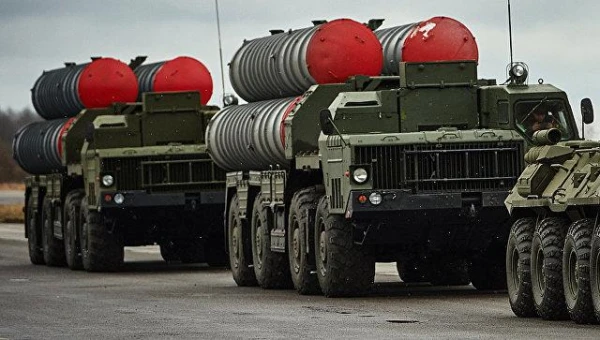
The sudden U.S. operation to capture Nicolás Maduro was a cold shower for arms manufacturers from China and Russia, claims UNIAN.
Venezuelan military had Chinese-made air defense radars at their disposal when the U.S. launched a sudden airstrike to capture the now-former leader of the country, Nicolás Maduro, earlier this month. However, they appear to have been ineffective.
The operation "Absolute Resolve" involved more than 150 American military aircraft, and none were shot down, according to Business Insider. One helicopter was hit, reportedly by a machine gun, but remained operational.
It is reported that Venezuela is equipped with a number of Chinese mobile JY-27A radars, which Beijing has advertised as advanced systems. The Chinese side claimed that this radar is capable of detecting stealthy targets, such as American F-22 and F-35, at a distance of over 150 miles (about 240 km). The success of the sudden raid by U.S. special forces in the center of Caracas – part of a larger mission that involved not only stealth aviation but also fourth-generation aircraft and helicopters – indicates that something went wrong in the defense.
However, the problem may not lie so much with the technology as with the operators, the media reports. After the raid, a Japanese journalist asked a representative of the Chinese Foreign Ministry what Beijing thought about the fact that the "large amount of military equipment" sold by China to Venezuela turned out to be "of little practical use." The Chinese representative merely condemned the U.S. strike in response.
What is Known About Chinese Radars
The Chinese JY-27A is a long-range radar used for detecting and tracking enemy aircraft in protected airspace.
Introduced in 2014, the system consists of a radar mast with multiple antenna panels supported by separate control and support vehicles. Chinese sources claim it is equipped with jamming protection features. A newer version, the JY-27V, has since been developed.
When Venezuela purchased the JY-27A from China last year, there were claims that the radars managed to lock onto several F-35B fighters off the Venezuelan coast, potentially jeopardizing the "one-sided transparency" advantage of the American military. "That's all great, but it really only matters at the moment of conflict," said Michael Sobolik, a senior fellow at the Hudson Institute.
It is possible that the systems could not withstand complex attacks in the electromagnetic spectrum (EW), or they were misused by the operators. In any case, if they did not work effectively, they were of little use for air defense. Radar systems are what inform air defense crews about targets and the necessary weapons. "If you don't have functioning radars, you are an easy target (sitting duck)," the expert added.
What Else is Known About the U.S. Operation
U.S. military leadership stated that American aviation was able to suppress Venezuelan air defense, which was estimated to include a number of Russian-made systems (S-300VM batteries, Buk-M2 complexes, old S-125 Pechora-2M launchers), as well as Chinese radars. Some of these systems are powerful weapons, but they are not the latest variants used by the exporters themselves.
Subsequently, U.S. Secretary of Defense Pete Hegseth mocked the effectiveness of Russian air defense. Nothing was mentioned about the Chinese radars in that speech.
The media writes that a key point for air defense is how the network operates as a whole, and the effectiveness of the operator is vital here. In the case of Venezuela, the necessary conditions for successful air defense operations may have been lacking.
A study by the Miami Strategic Intelligence Institute, which brings together experts on Latin America, assessed the state of Venezuela's air defense as critical as early as last year. The report stated that over 60% of the radar fleet was non-functional, combat aviation rarely flew, and the country received minimal technical support and few spare parts from exporters.
Venezuela purchased Chinese radars and Russian anti-aircraft missile batteries to modernize its air defense, but the "hardware" alone cannot compensate for internal deficiencies.
An analysis by The New York Times showed that some of Venezuela's air defense equipment was in storage or malfunctioning, leaving the country unprepared for a U.S. attack. It was also reported that Venezuelan military lacked spare parts and technical training to keep systems operational.
Even if the failures lie with the Venezuelan military, the ineffective operation of Russian and Chinese systems sends a "pretty powerful signal," Sobolik believes. It increases confidence in U.S. capabilities and raises questions about the capabilities of rivals, although there are nuances regarding the human factor.
U.S. officials stated that during the raid in Venezuela, no American aircraft or personnel were lost. Of the 150 aircraft and nearly 200 American military personnel involved in the mission, one helicopter came under fire, and seven service members were injured.
Other News About the Recent Operation
Earlier, UNIAN reported that the praised Russian weapons became a cause of a fateful defeat for Venezuela. Venezuela was unable to maintain and operate the Russian S-300 air defense system.
Additionally, we also reported that the Russian oil company will retain its assets in Venezuela despite the U.S. operation. They emphasized that these assets were acquired at full market value and approved by Venezuelan regulators.









Leave a comment