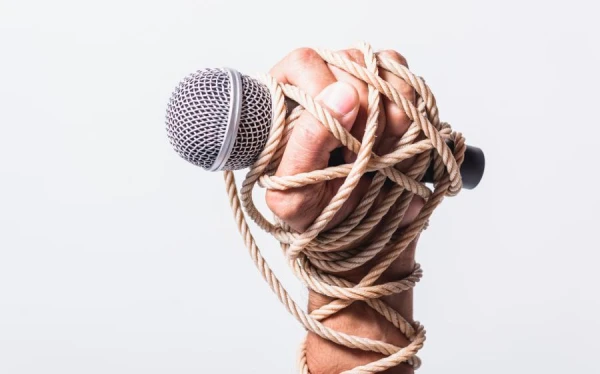
On December 31, Latvian Radio 4 (LR4), one of the country's main public radio channels, said goodbye to its listeners after nearly 25 years of operation. It went silent not due to a lack of demand or complaints about content: the channel had a stable audience, and its editorial line was consistently anti-Kremlin and pro-Latvian. The problem was that the broadcasting was conducted in Russian, writes an influential British media outlet.
Starting January 1, in accordance with Latvia's National Security Concept adopted in 2023, content produced by public media must be broadcast in Latvian or in "languages belonging to the European cultural space." The Russian language does not fall under this definition, although it is the native language for a third of the population. Russian-language media can only be funded from private sources. The government claims this will strengthen the country's security, unify the information space, and make it more Western.
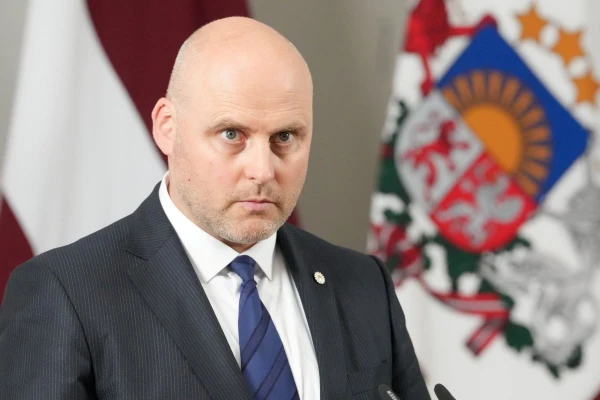
"In the Constitution of Latvia, all citizens are equal. We do not divide citizens by language, religion, gender, or ethnic origin," says Latvia's Foreign Minister Baiba Braže. She points out that ethnic Russians hold high government positions, and the Russian-language theater in the capital, Riga, continues to operate successfully. Moreover, she objects to the very expression "Russian speakers in Latvia," calling it "a political term invented by people close to the Kremlin to impose a Russian worldview."
The share of the ethnic Russian minority in Latvia is greater than in any other EU country. Ilona Madesova, director of LR4, finds the closure of Russian-language public radio under the pretext of security offensive: its task was to offer an alternative to Russian propaganda and give Russian-speaking residents of Latvia a sense of belonging. A quarter of the channel's audience were Latvian speakers. According to her, the government's actions do not contribute to integration but impose assimilation. Russian speakers are not a homogeneous group; critics argue that the authorities' attempts to suppress Russian identity alienate many of them and play into the hands of the Kremlin.
Latvia is not the only Baltic country struggling with the integration of its Russian-speaking population. Estonian President Alar Karis recently criticized his own government for alienating Russian speakers, who make up nearly 30% of the country's population. However, concerns related to the renewed Russian threat are particularly acute in Latvia. Estonia has linguistic and cultural ties with Finland; Lithuania was part of one state with Poland for two centuries.
Latvia, on the other hand, has not had a comparable political anchor and has been more Russified and then Sovietized than its neighbors. From 1710 to 1990, it was part of the Russian Empire, except for 21 years of independence from 1918 to 1939. The country's population, which does not exceed 2 million people, was ravaged by both Hitler and Stalin, who deported about 60,000 Latvians to Siberia. The Soviet Union used Latvia as a military and industrial base in the Baltic region. From 1945 to 1989, the share of ethnic Latvians in the population fell from 80% to just 52%.
After regaining independence, Russians who settled in Latvia during the Soviet occupation were granted full access to social benefits but were officially classified as "non-citizens." This limited their voting rights and deprived them of the opportunity to hold government positions. And although most Russian speakers are citizens of Latvia, segregation was entrenched in the education system, which inherited the Soviet model of separate Russian- and Latvian-language schools. (Currently, all schooling is conducted in Latvian.) The State Audit Office of Latvia, an independent oversight body, acknowledges that the integration of Russian speakers has been ineffective and inconsistent.
Russia's full-scale invasion of Ukraine in 2022 dealt a severe blow to Latvia's economy, which had previously served as a bridge between Russia and the EU. Moreover, Russia waged war under the banner of protecting Russian speakers, which heightened concerns in Latvia. Initially, Latvian politicians assured their ethnic Russians that they were not to blame. Edgars Rinkēvičs, then Foreign Minister and now President, welcomed Russian journalists fleeing the country, including the independent online outlet Dozhd. However, by the end of 2022, Dozhd's license was revoked, and its journalists left the country. In July of last year, the Latvian Supreme Court overturned this decision, but the channel had already moved to Amsterdam.
Many independent Russian journalists, including staff from Meduza, a major online publication, still feel safe in Latvia but try to stay away from national politics. While Estonia increased state funding for Russian-language media after 2022, Latvia shut them down.
A Self-Inflicted Wound
Since 2010, Latvia has attracted investment by providing residency permits to foreigners purchasing real estate in the country. Russians who took advantage of this program are now banned from renewing their residency permits. Last year, Russian citizens were prohibited from working in critical infrastructure sectors, including public media and hospitals. Alexander Polupan, one of Russia's leading resuscitation doctors who participated in the rescue of Alexei Navalny in 2020, treated Ukrainian refugees. After fleeing to Latvia, he studied the language for three years and obtained a medical license, but now he cannot practice there. For Sabine Sile, head of Media Hub Riga - a refuge for exiled journalists, punishing people based on their passport or language is an affront to her values as a Latvian.
A recent report by the Friedrich Ebert Stiftung, a German think tank, explains that the previous Latvian policy of "deliberate neglect" of Russian speakers has been replaced by punitive measures. The government checks the loyalty and basic Latvian language skills of Russian citizens residing in the country. The Russian language is being removed from ATMs; VAT on Russian-language books and newspapers is set at 21%, compared to 5% for other European languages.
According to research from Latvian and European think tanks, the result has been growing political apathy and self-censorship among Russian speakers.
About 60% fear expressing their opinions publicly. These restrictions play into the hands of Latvian ultra-nationalists and pro-Russian populists, believes Joren Dobkevich, head of New East - a cultural NGO in Daugavpils, Latvia's second-largest city with a predominantly Russian-speaking population. "I do not associate myself with the Russian state or the 'Russian world,' but I feel like the ground has been pulled out from under my feet," says Sergey Kuznetsov, a Latvian citizen born in the country and who worked on air at LR4 in Daugavpils. "It is better to be a real emigrant in another EU country than to feel like a stranger in my own."