The transition from local currencies to the euro invariably leads to price increases. This was the case in Latvia in the past, and it is happening now in Bulgaria, where food prices have risen by at least a third.
As of January 1, 2026, Bulgaria switched to the euro — becoming the twenty-first country in Europe to join the eurozone. For this, the country abandoned the Bulgarian lev, which had been in circulation since the 18th century.
It is worth noting that the transition to the euro has divided Bulgarian society into two camps. In the summer, after the European Commission recommended that Bulgaria make this move, protests took place in Sofia and other major cities, where people demanded the preservation of the national currency. They were led by supporters of the 'Revival' party, who warned that the transition to the euro could lead to rising inflation and a decrease in purchasing power. The President of Bulgaria, Rumen Radev, is also an opponent of the euro, supporting the idea of resolving the issue through a referendum. However, this proposal was rejected in parliament, which Radev called 'one of the most vivid symptoms of a deep divide between the political class and the people.'
As a result, it has been a week since the lev in Bulgaria has ceased to exist, and grim predictions have begun to materialize with alarming speed. Many merchants rushed to take advantage of the moment to inflate prices. The most striking example of this was the increase in the price of bread. If on December 31 a loaf cost 0.89 Bulgarian leva (approximately 0.46 euros), by January 2 it was already 1.19 leva (0.61 euros). Thus, the price of bread increased by a third.
Estonian entrepreneur Janek Balynski, who works in Bulgaria (he is a board member of Stroyrent OÜ, a company that rents construction equipment), stated that the introduction of the euro has caused strong emotions in society. People expected price increases, but what happened turned out to be too painful. The thing is that some cunning merchants simply crossed out the word 'lev' on price tags and replaced it with the word 'euro,' while keeping the numbers the same. But this essentially means a doubling of prices!
A similar example is provided by the portal Novinite.bg: parking attendants in a shopping center in the city of Pleven started charging the same fee in euros as they previously charged in leva, effectively doubling the parking price.
The National Revenue Agency announced that it is already conducting mass checks for unjustified price increases related to the introduction of the euro. According to agency representative Anna Mitova, 700 retail outlets across the country have been inspected so far. The statistics are as follows: 80% of identified violations related to unjustified price increases pertain to food products, 10% to medicines, and 10% to household goods. 'Most often, the explanation given is an increase in rent or material costs. But a simple check shows that this is not the case. We have drawn up 65 reports of unjustified price increases,' Mitova stated.
To be frank, 65 reports are insignificant. It is not surprising that there are plenty of people eager to take advantage of the confusion during this transitional period, especially since the fines for unjustified price increases are high (up to 100,000 leva or over 50,000 euros).
Chaos is occurring at gas stations. As the owner of a gas station in the city of Ruse, Ventsislav Pengezov, explained, the transition to a single currency has created practical difficulties. The fiscal systems approved by the National Revenue Agency and the Bulgarian Institute of Metrology allow only two decimal places, complicating calculations in euros. Using the same fiscal system for both euros and leva leads to complications even due to minor fractional amounts, creating difficulties for both staff and customers. As a result, queues are forming at gas stations, people are agitated and arguing.
And, of course, fraudsters are happily taking advantage of the atmosphere of confusion. The portal Dnevnik.bg reports on the most common scheme currently: a scammer calls, posing as an employee of a large financial institution, and claims that due to currency conversion, it is necessary to urgently update the bank or online banking account. As soon as the victim provides access, unauthorized transactions are made from the account.
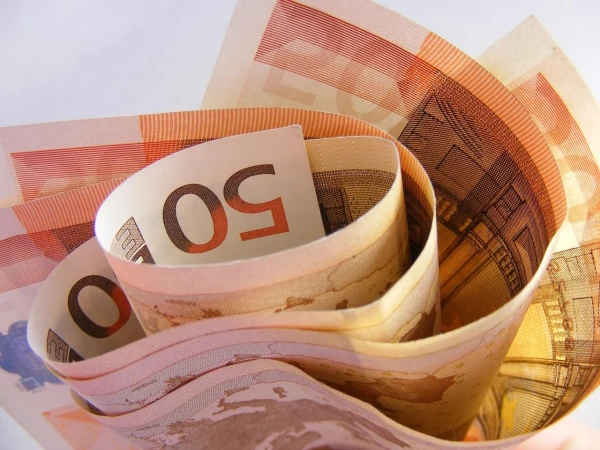
The period of simultaneous circulation of leva and euros increases the risk of counterfeit money spreading. Scammers rely on the fact that many Bulgarians are still unfamiliar with the security features of euro banknotes and try to exploit this, often with considerable success.