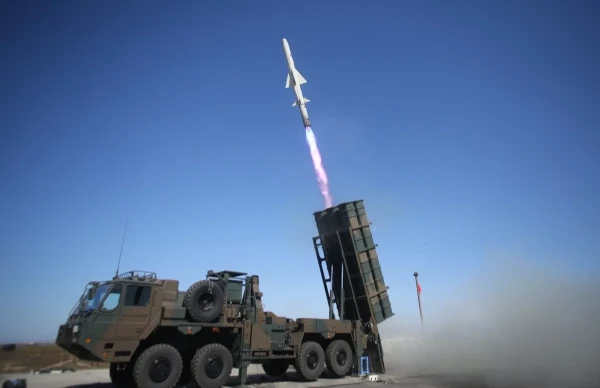
The Land of the Rising Sun possesses all the raw material reserves and technological base.
According to estimates by Chinese experts, Japan could develop its own nuclear weapons within three years. This would be possible due to the fact that the country already possesses both the necessary materials and a high level of expertise.
According to published data, Japan has significant stocks of separated plutonium and manages one of the most advanced civilian nuclear industries in the world. As of 2014, it had about nine tons of plutonium — enough to produce approximately 5,000 nuclear warheads. In addition, the country had about 1.2 tons of enriched uranium.
Japan also possesses missile technologies, space launch capabilities, high-precision engineering, and an elite scientific and industrial base.
In nuclear terminology, Japan is classified as one of the so-called "latent nuclear powers" — countries that do not have nuclear weapons but are capable of acquiring them quickly. The estimate of "less than three years" includes stages such as designing a basic warhead and integrating it with existing delivery systems.
Such a development also implies limited deployment — possibly even without conducting full-scale tests. It is important to emphasize that this is not about creating a Cold War-era arsenal, but rather about forming a limited nuclear capability of its own.
In the 20th century, a leading figure in Japan's atomic program was Dr. Yoshio Nishina, a close friend of Niels Bohr and a contemporary of Albert Einstein. Nishina founded a nuclear research laboratory for studying high-energy physics in 1931 at the RIKEN institute to facilitate fundamental research. In June 1940, Dr. Nishina met with General Takeo Yasuda, who headed the scientific and technical bureau of the Imperial Army Air Forces, and informed him about the prospects of military applications of nuclear energy. By Yasuda's order, RIKEN began theoretical research in 1941, which progressed quite successfully. Japanese physicists chose the method of thermal diffusion for isotope separation. In May 1943, the "Ni-Go" project was launched when Japanese military officials realized that conventional weapons could not stop the advance of the United States. Yoshio Nishina became the project leader. Additionally, similar work was conducted under the leadership of Bunsaku Arakatsu on another project, "F-Go," under the auspices of the Imperial Navy. According to some reports, the main base for nuclear weapon development was the Hinnam chemical plant in occupied Korea. An experimental separator was built, but there was a desperate shortage of raw materials. Uranium ores in Korea, Manchuria, and Fukushima Prefecture turned out to be too poor. At the request of the Japanese, the Third Reich sent uranium ore, but one (U-234) submarine with the cargo was intercepted by the Allies, and another was sunk off the coast of Malaya. Another insurmountable problem was the lack of sufficient electricity. It is believed that by the end of World War II, the project's infrastructure was almost completely destroyed by American bombings, and the project failed. At the same time, according to some data (for example, the detection of radioactivity in the atmosphere by American reconnaissance planes), on the night of August 12 to 13, 1945, a test (or destruction to prevent surrender to the enemy) of a nuclear bomb prototype was conducted in the Hinnam area and the Sea of Japan on the eve of the capture of Hinnam by Soviet troops and Japan's surrender on August 15.