
Europe must fulfill its recent statement to create a reliable deterrent.
In 2026, Russia will intensify its hybrid war with Europe, which it is already conducting on several fronts, warns national security expert William Dixon in a column for RUSI. And it seems Europe is finally beginning to understand that it is at war...
The Kremlin's strategic bet with Trump's election was clear: the new administration would force Kyiv and European capitals to accept a peace agreement, cementing Russia's territorial gains and fracturing Western unity before Moscow's time runs out. If this does not happen, the U.S. will withdraw its support. This strategy has reached a dead end. Instead of softening, Ukraine's and Europe's positions have strengthened and held their "red lines."
This year's proposals did not divide but rather reinforced positions. Even the publication of Trump's "National Security Strategy" with its polarizing rhetoric underscored the U.S. commitment to NATO and Ukraine through the Hague commitment to allocate 5% for military spending, ultimately strengthening investments in collective defense and the resolve of allies that Putin hoped to divide.
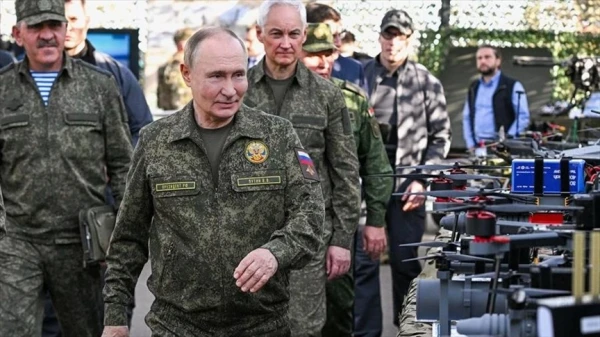
Since retreating from Kyiv in April 2022, Russia has failed to achieve four out of five of its strategic goals: political subjugation, economic sustainability, regime stability, and international authority. Only in the area of territorial control does it have a Pyrrhic victory. But a waning power is often more dangerous than a rising one. Faced with economic decline and the depletion of conventional armed forces, Vladimir Putin is entering a period of maximum danger. We must prepare not for Russia's resurgence, but for its desperation: 2026 will be a year of hybrid escalation. An escalation that, according to the bold statement of the British Foreign Secretary in December 2025, on the 100th anniversary of the Locarno Treaties, is already "clearly visible."
Offensive on Three Fronts
The trap that Putin has now created for himself is psychological: a regime that justified its authoritarian model by promising to restore Russia's greatness cannot acknowledge a strategic defeat without risking political collapse. Shaped by KGB culture and having witnessed the collapse of the Soviet Union, Putin can no longer view any peace agreement that could be perceived as anything other than complete "victory" as a political option. This would delegitimize the entire regime. Therefore, escalation becomes not a choice, but a necessity.
Russia must demonstrate to its domestic audience and the West that it retains the initiative and remains a great power. In the coming year, this will manifest in three specific directions of hybrid warfare.
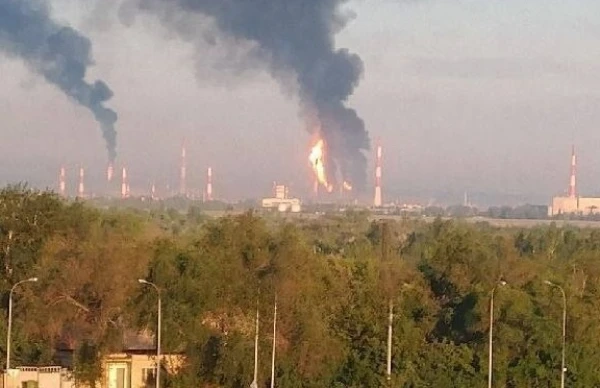
Sabotage will be directed at the expanding defense production infrastructure of Europe and supply chains to Ukraine. As the capabilities of continental ammunition factories increase and the visibility of logistics networks rises, they become prime targets — as seen in the explosion at the arms factory in Cugir, Romania, last year. Attacks are expected to delay arms deliveries, increase security expenditures, and force governments to redirect resources from supporting Ukraine to domestic defense.
Subversive activities, particularly information warfare, as seen in Moldova, will sharply escalate during key European elections, including Hungary's elections in early 2026 and the U.S. midterm elections. Pro-Russian populist parties are already leading in opinion polls in major European capitals. Every percentage point and every political message that strengthens their positions gives Russia hope for the weakening of sanctions and Western political resolve.
Coercion through the demonstration of conventional military forces will escalate from sporadic to systematic. Increasingly aggressive violations of airspace and maritime boundaries are expected, similar to the 12-minute "reckless" incident in the Gulf of Finland that occurred this year. Moreover, rhetoric regarding nuclear weapons will aim to create psychological pressure. The implied message: supporting Ukraine risks direct escalation of conflict with Russia, so restraint is the more prudent course of action. Here are 3 factors driving hybrid escalation in 2026:
1. Unstable Military Economy
Russia's financial mathematics tells a story that Western pessimists overlook. While Russia's true financial situation remains classified, it is undoubtedly grim. Interest rates exceed 16%. The IMF recently lowered its growth forecast to 0.6%, and confidential reports from central banks warn of 1990s-style inflation and an impending 1980s-style oil price collapse. The country has spent half of its liquid sovereign fund. Official military spending in 2025 is estimated at 15.5 trillion rubles — five times more than in 2021. Official military data does not account for additional war-related expenses, including tens of billions for maintaining occupied Ukrainian territories, supporting border regions under attack, and compensating servicemen and their families.
Energy revenues, which account for 50% of state revenues, are equally catastrophic: Russia's oil and gas revenues fell by 34% in November 2025 compared to the previous year, forcing a sharp increase in annual borrowing. Considering hidden costs spread across several budgets, the real military burden likely exceeds 9% of GDP — a level approaching late Soviet-era expenditures. The USSR spent only 2-3% on the conflict in Afghanistan, which also proved unsustainable. As traditional military options become increasingly constrained by these economic limitations, the less costly hybrid war becomes the only available tool for Russia to escalate.
2. Structural Problems: Traditional Military Options Exhausted
The traditional weakness of the Kremlin forces it to rely more on hybrid tactics as a substitute for military capabilities it no longer possesses. Russia is spending billions to "advance" on the battlefield by 50 meters a day in areas like Kharkiv, which is slower than the advance at the Somme. Over two years, they have captured a total of just over 2% additional territory. Estimates suggest Russia has suffered 1.4 million human losses and is exhausting its stockpiles of Soviet-era equipment. Leaks from defense circles indicate that Moscow is having to create a 10-year production line for 2,600 tanks to replace the 4,000 tanks destroyed during the war.
At current rates of wear, recoverable equipment will be depleted by the end of 2026 or early 2027 — the same period when a financial crisis is expected. Military supplies from North Korea and China also cannot replenish the growing deficit of equipment and munitions. Amid rapid reductions in conventional weapons arsenals and increasing production capacities in the West, hybrid warfare becomes not only accessible but also necessary — the only real tool for Moscow to inflict damage and maintain the illusion of offensive capability.
3. Europe Has Not Yet Implemented Hybrid Deterrence
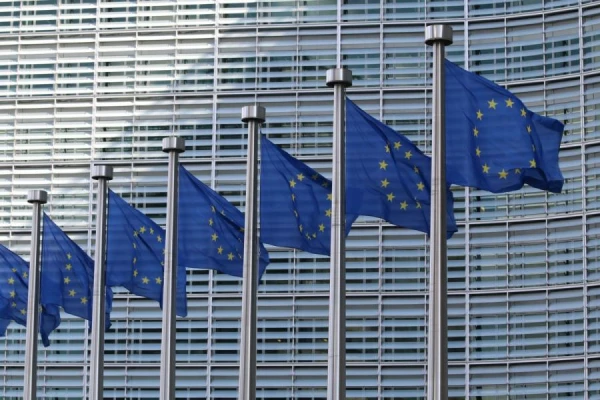
Europe is slowly building reliable hybrid deterrence — a capability it is only now recognizing and wants to implement. Its inability to establish clear thresholds for attacks in the "gray zone" has created a gap: cases of sabotage, cyberattacks, and information operations are still largely viewed as isolated crimes rather than elements of a well-formed Russian hybrid doctrine. NATO is finally beginning to act — its supreme commander and secretary-general have indicated policy changes — and here too the window of opportunity for Putin is closing.
But despite these signals, Europe is still entering 2026 with potentially weakened resolve to deter specific hybrid actions. Far-right political parties — often with pro-Russian sympathies — are leading in opinion polls in a year of important elections on the continent. Economically, EU governments are constrained by slow growth, persistent inflation, and uncertainty in energy supply. Militarily, many of them are just beginning a rearmament cycle. All of this collectively limits their ability to take decisive hybrid response measures, especially in 2026, reinforcing the Kremlin's confidence that these tactics may succeed in the coming year.
Strategic Choice for Europe
The fundamental strategic choice is simple: double down. The facts prove that the current strategy of the West — arming Ukraine, imposing sanctions, strengthening critical infrastructure — is destroying Russia's military, economic, and political cohesion. Even if this is happening agonizingly slowly and with horrific human costs in Ukraine.
Doubling down means not only maintaining current support for Ukraine. Europe must fulfill its recent statement to create a reliable deterrent against hybrid warfare or watch as Putin attempts to fracture Western unity through thousands of small strikes. The current approach — treating each incident as a separate case — creates a vacuum that Moscow can not only exploit but must exploit.
Putin bets that Europe lacks the resolve to impose meaningful sanctions that do not reach the threshold established by Article 5. The facts suggest he is right: no Russian official has been held accountable for the mysterious explosions at arms factories, cable cuttings in the Baltic Sea, or the campaign to send bomb-laden packages. But to prove him wrong, it is not necessary to match Russia in conventional military strength — it is necessary to clearly signal that the West will not tolerate it. 2026 will show whether Europe has learned this lesson or whether Putin will succeed in undermining what his military invasion could not destroy.









Leave a comment