
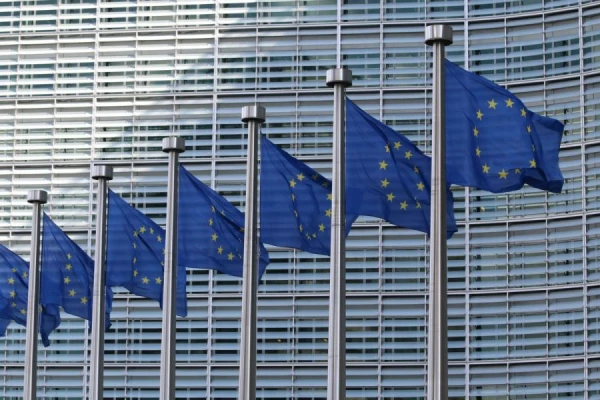
EU leaders were unable to agree on the transfer of frozen Russian assets to Ukraine. Nevertheless, Kyiv will not be left without financial assistance. How the EU summit unfolded – in DW's report.
One of the longest and most tense European Union summits, which sought ways to provide financial assistance to Ukraine for the next two years, concluded in Brussels around 3 a.m. on Friday, December 19.
On the negotiating table were two proposals from the European Commission (EC): a "reparations loan" funded by frozen Russian assets and financing through EU joint borrowing. And despite working until the last moment on the mechanism for the "reparations loan," this idea had to be postponed. EU leaders managed to agree on providing a loan to Ukraine of €90 billion using the EU budget's capabilities. At the same time, they promised to continue working together on the "reparations loan" funded by frozen Russian assets.
"We have an agreement. The decision to provide Ukraine with support of €90 billion for 2026-2027 has been approved. We made commitments, and we fulfilled them," wrote European Council President António Costa on X immediately after the negotiations concluded.
Belgium Demanded Unlimited Financial Guarantees
At the beginning of the war unleashed by Russia against Ukraine, €210 billion was frozen in the EU, more than €180 billion of which is held in Belgium at the Euroclear depository. According to IMF estimates, to finance Ukraine's needs in 2026 and 2027, Kyiv requires €137 billion.
The European Commission proposed that the EU allocate €90 billion from this amount, using frozen Russian assets for this purpose. And although, according to the EC's legal team, the proposal for a "reparations loan" was developed in accordance with all norms of international law, Belgium categorically opposed it.
Belgian Prime Minister Bart De Wever stated that it is Belgium, under whose jurisdiction Euroclear operates, that would bear all legal, reputational, and financial risks in the event that Russia challenges the transfer of its assets in court. He suggested that if the EU wants to use Russian assets, then all countries where the Central Bank of Russia's money is frozen "must act in concert."
The essence of Belgium's position was to provide it with indefinite and unlimited financial guarantees, known as blank check protection, to insure itself against potential lawsuits from Russia.
Despite Belgium's firm stance on the "reparations loan," supported by Italy, Malta, and Bulgaria, negotiators worked on it until the last moment. Several sources from DW in the European Council reported that leaders intended to convince Bart De Wever and offer him "almost everything he wants."
Zelensky's Presence Was Meant to Influence Skeptics
Even before the summit began, the leadership of the European Union, particularly António Costa, promised journalists that the leaders "would not leave this council without a final decision on securing the financial needs of Ukraine for 2026 and 2027."
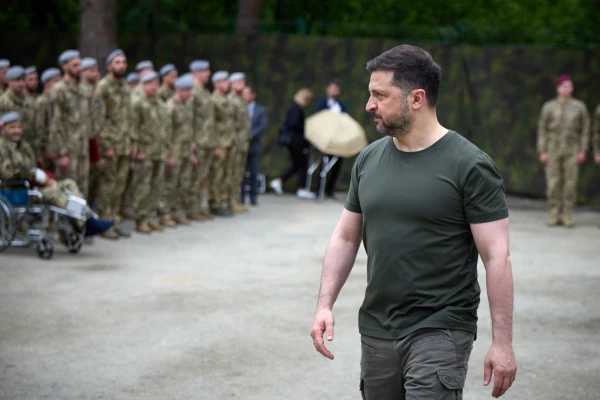
By the way, as a senior European official told DW, it was Costa who convinced Ukrainian President Volodymyr Zelensky to fly to Brussels, although it was initially planned for him to communicate with leaders via video link. According to DW sources, Costa hoped that Zelensky's personal communication with European Council members before the summit and, importantly, his one-on-one meeting with Bart De Wever would change the positions of countries that did not support the transfer of frozen Russian assets to Ukraine.
Speaking to journalists during a press conference, Zelensky did not disclose details of his conversation with the Belgian Prime Minister; however, in response to a question about whether he understood the fairness of Bart De Wever's arguments, who is concerned about the potential consequences of Russian lawsuits, the Ukrainian president replied, "I understand the risks he is talking about. But we are at war, and in my opinion, we are at greater risks."
Additionally, in Brussels, Zelensky explained to European leaders how urgent the decision on financing is: after all, money for the army and budget expenditures is needed by Kyiv as early as April. Otherwise, cuts to these expenses will lead to severe and irreversible consequences. This was eloquently described by Polish Prime Minister Donald Tusk while speaking to journalists before the European Council meeting: "Right now, we have a simple choice: either money today or blood tomorrow."
The Idea of a "Reparations Loan" Has Been Postponed for Now
European leaders discussed the Ukrainian issue last. As a diplomat who participated in the summit told DW, while the meeting participants debated other agenda items: EU enlargement, the seven-year budget of the bloc, and the Mercosur trade agreement, teams from the European Commission, the Belgian government, and other member states were simultaneously working in a room adjacent to the summit hall, refining all the details of the "reparations loan" so that the "compromise found would satisfy everyone." Several DW interlocutors emphasized that they do not remember a more complicated discussion than that of transferring Russian assets to Ukraine.
However, after four hours of negotiations, the idea of the "reparations loan" was postponed allegedly because several countries disagreed with Bart De Wever's demands for unlimited financial guarantees, considering them excessive.
It was then decided to provide Ukraine with a loan of €90 billion through joint borrowing under the guarantees of the EU budget while continuing to work on a decision regarding the "reparations loan." Importantly, this option was agreed upon by the Czech Republic, Slovakia, and Hungary, which had previously stated that they would block the decision on budget borrowings, which must be made unanimously.
At a press conference in Brussels, Zelensky indicated that for Ukraine, it does not matter in what form financial assistance will be provided. "But a more correct form is the 'reparations loan' so that Russia understands that it is guilty and that reparations will need to be paid," said the president. However, it seems that Brussels has not yet decided to send such a message to the Kremlin.





Leave a comment