A country with a trillion-dollar trade surplus can afford a lot.
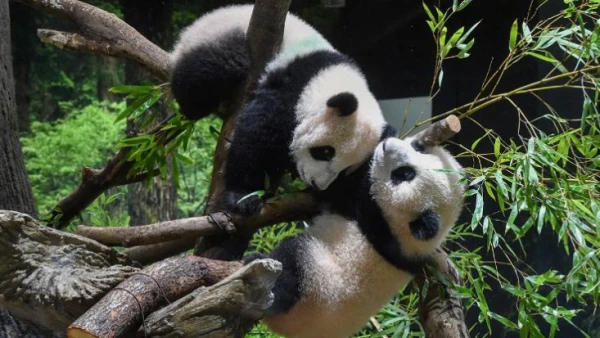
Japanese zoos will be without pandas from China due to the worsening relations between the countries amid sharp remarks by the country's Prime Minister Sanae Takachi about the Republic of China Taiwan. According to the local publication Kyodo, Beijing is extremely outraged by Tokyo's rhetoric, which could lead to the rented animals in Japan's metropolitan zoos returning home as early as 2026.
This concerns two pandas, Xiao-Xiao and Lei-Lei - currently, both are located in Ueno Zoo in Tokyo, but they are likely to be returned to China in January of the upcoming year. The fact is that the lease on the bamboo bears expires in February, and due to the international scandal, the PRC is unlikely to want to extend the contract with the offending country. Thus, Japan risks being without pandas for the first time in 50 years across the entire country.
The conflict between Beijing and Tokyo began with sharp remarks from the recently elected Prime Minister of the Land of the Rising Sun, Sanae Takachi, regarding the partially recognized state of Taiwan, which has been in a state of "cold war" with China for almost its entire existence.
During a recent debate, the Japanese politician stated that a potential military crisis in the Republic of China could pose an "existential threat" that would force Tokyo to exercise its right to "collective self-defense."
In turn, the PRC sharply condemned such statements from the Japanese Prime Minister and warned its citizens against traveling to the country.
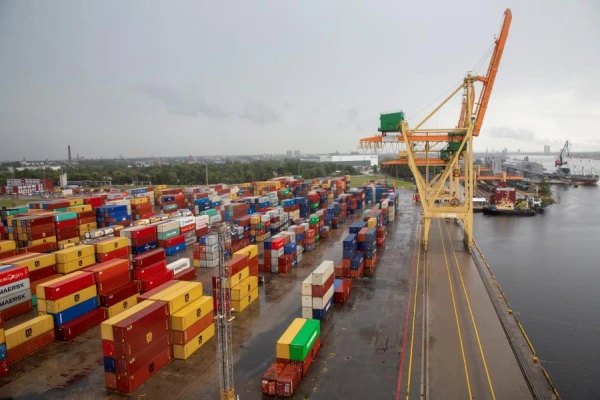
Meanwhile, China's trade surplus has exceeded $1 trillion for the first time in history, a record in global trade, writes The New York Times.
In January of last year, the PRC announced that the positive balance of its trade had nearly reached $1 trillion. No country has ever achieved such an excess of exports over imports.
In 2025, China surpassed this threshold in 11 months. The surplus grew by 21.7% compared to the same period last year.
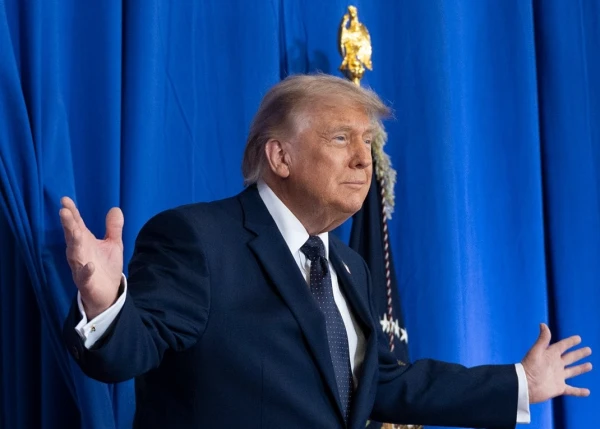
Tariffs imposed by U.S. President Donald Trump led to a nearly 20% drop in Chinese exports to the U.S. But China also significantly reduced its purchases of American soybeans and other goods, while continuing to sell three times more to the U.S. than it buys.
Beijing has also sharply increased sales to other countries. For instance, China sells twice as much to EU countries as it buys. China's trade surplus with the European Union has also noticeably increased this year.