
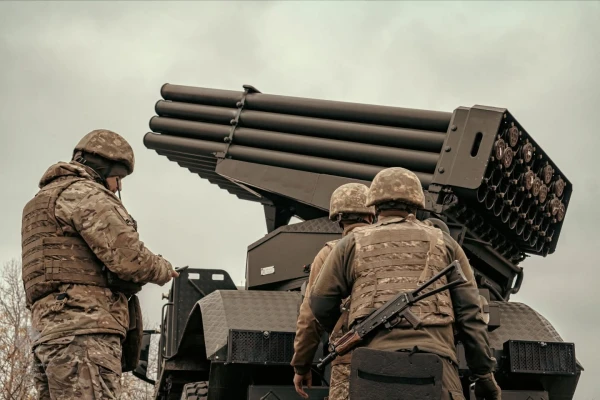
In the absence of additional payments, the volume of aid from allies to Ukraine in 2025 will amount to €32.5 billion. This is the minimum amount since the beginning of the full-scale war in the country, calculated by the Kiel Institute for the World Economy, writes DW.
The volume of aid provided to Ukraine this year by allies may be the lowest since the beginning of Russia's full-scale military invasion of the country in 2022. Meanwhile, military assistance from Europe will not compensate for the deficit caused by reduced support from the United States. These conclusions are published by the Kiel Institute for the World Economy (IfW) as part of the Ukraine Support Tracker project on Wednesday, December 10.
If from 2022 to 2024 Kyiv received about €41.6 billion annually from all assisting countries, including the US, European, and other states, as of October 2025, this figure stands at €32.5 billion. Thus, to reach the level of aid from previous years, Kyiv would need to receive an additional €9.1 billion by the end of the year, experts state. For this, the monthly inflow in November and December must be twice as much as in the previous two months.
"Based on the data available as of October, it can be said that Europe has not been able to maintain the momentum of the first half of 2025," noted Christoph Trebesch, head of the Ukraine Support Tracker project. "Against the backdrop of a slowdown (in the pace of aid), Europe will find it difficult to fully compensate for the lack of US military assistance in 2025. If this slow pace continues, aid to Ukraine in 2025 will be the lowest since the beginning of the Russian invasion in 2022."
Differences in Aid Volume to Ukraine from European States
In Europe, the scale of support for Ukraine from various states has been very uneven, according to the report. Germany, France, and the United Kingdom have significantly increased the volume of aid compared to the period from 2022 to 2024. Germany, in particular, has nearly tripled the average monthly payments to Ukraine, while France and the UK have increased theirs by more than twice.
However, in relation to the GDP of these countries in 2021, they still did not reach the level of aid to Ukraine from the Scandinavian countries and Finland, the IfW press release states. Meanwhile, Spain and Italy did not increase their aid to Ukraine in 2025 at all. Italy even reduced its contribution by 15% compared to the 2022-2024 period.
As reported by the online publication Politico on December 8, Ukraine will face a budget deficit of €71.7 billion in 2026. If new funds do not arrive, Kyiv will have to cut government spending starting in April, the publication states.
EU Plan for Providing Reparative Loans to Ukraine
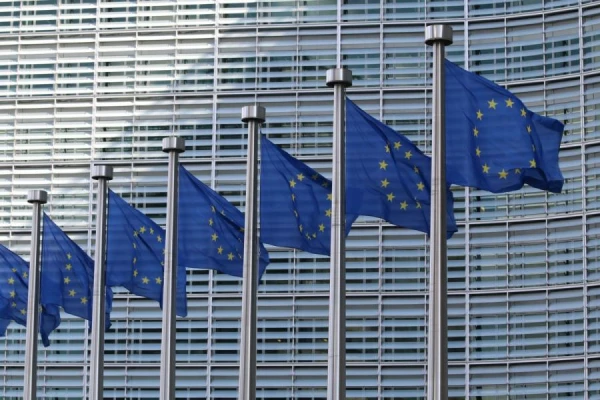
Since the beginning of autumn, the European Union has been discussing the possibility of providing Ukraine with reparative loans of about €140 billion in 2026 and 2027. The frozen reserves of the Russian Central Bank in Europe are planned to be used as collateral for this loan.
At the same time, the funds would not be legally confiscated, but Russia could only return them after paying reparations to Ukraine. Kyiv would then use the reparations paid by Russia to repay the "reparative loan" received from the EU.
This idea is actively supported by European Commission President Ursula von der Leyen and German Chancellor Friedrich Merz. However, Belgium is primarily opposed due to concerns that such a move would undermine trust in the Belgian depository Euroclear, which holds frozen Russian assets totaling €185 billion. Despite the legal wording, investors would perceive this model as a confiscation of assets entrusted to the depository, according to the kingdom.
Corruption Scandal in Ukraine
In mid-November, a major corruption scandal broke out in Ukraine. As the National Anti-Corruption Bureau of Ukraine (NABU) discovered, large-scale embezzlement was occurring at the company "Energoatom." According to NABU, the co-owner of the studio "Kvartal 95," an associate of Ukrainian President Volodymyr Zelensky, Timur Mindich, was at the center of this scheme. Shortly before the searches related to this case, he left Ukraine.
Amid the same corruption scandal, the head of Zelensky's office, Andriy Yermak, resigned.
About the Ukraine Support Tracker Project
The Ukraine Support Tracker project tracks and quantitatively assesses military, financial, and humanitarian aid promised to Ukraine since the beginning of Russian aggression. The project's database includes 41 countries, including EU states, other G7 members, Australia, South Korea, Turkey, Norway, New Zealand, Switzerland, Turkey, China, Taiwan, India, and Iceland.
The data sources are official statements from government bodies and reports from international media. Aid in the form of material goods, such as medical supplies, food, or military equipment, is assessed based on market prices or data from previous aid campaigns. In disputed cases, higher available values are used.








Leave a comment