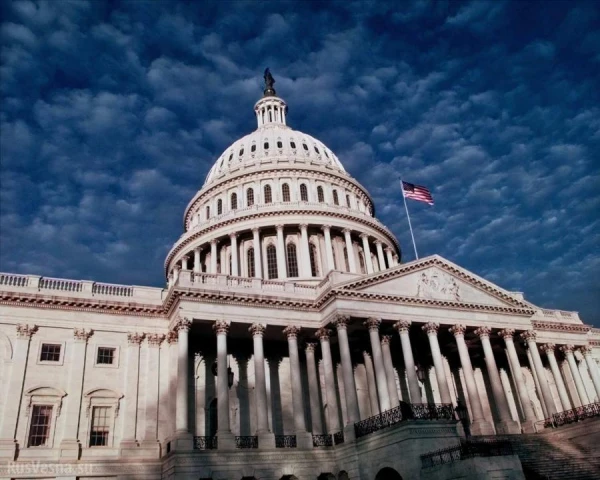
The compromise version of the U.S. defense budget bill for 2026 allocates $901 billion for security, exceeding Trump's request by $8 billion. $800 million will be allocated for assistance to Ukraine.
The U.S. Congress will consider a defense budget proposal for the 2026 fiscal year, which allocates a record amount of $901 billion for national security, exceeding President Donald Trump's request by $8 billion. The document, published by American lawmakers on Sunday, December 7, includes, among other things, the allocation of $400 million in both 2026 and 2027 for military assistance to Ukraine, which is defending itself against a full-scale invasion by the Russian Federation.
Lawmakers Block Plans to Withdraw Troops from Europe
The published version of the document also blocks potential plans by Trump to withdraw troops from European countries, introducing new restrictions on reducing the number of American forces in Europe, Politico notes. According to the publication, this is a "rebuke" from both parties in Congress to the Trump administration, which lawmakers fear may limit U.S. commitments on the European continent.
In addition to the usual provisions for military equipment procurement and measures to enhance defense capabilities in light of activities by Russia and China, the current bill focuses on cutting programs opposed by Trump. Among other things, it addresses the winding down of initiatives on diversity, equity, and inclusion, as well as measures for troop deployment at the southwestern U.S. border to intercept illegal immigrants and curb drug smuggling.
The bill systematizes more than a dozen executive orders from the U.S. president, including orders to accelerate the production of military drones in the U.S., transform the air and missile defense system into the "Iron Dome" missile shield, and authorize the use of active troops for patrolling the southern border. The document also repeals two resolutions that authorized the use of military force in Iraq in 1991 and 2002. The latest version of the bill also enshrines the final repeal of U.S. sanctions against Syria.
The Department of Defense Not Renamed to "Ministry of War"
The bill provides for a 3.8% increase in pay for service members across all branches of the military. At the same time, lawmakers did not rename the Department of Defense to the "Ministry of War," as it is referred to by Trump and Secretary of Defense Pete Hegseth. Established terms "Department of Defense" and "Secretary of Defense" are maintained throughout the text.
The bill changes the Pentagon's arms procurement process and aims to strengthen the network of public and private organizations providing various materials, products, and services to the armed forces. The text includes new restrictions on U.S. investments in certain technologies in China. As noted by The New York Times, this provision represents an attempt to limit the flow of American capital into China's technological development, including artificial intelligence and military technologies.
According to House Armed Services Committee Chairman Mike Rogers, the bill is aimed at "creating critically important combat capabilities."
Compromise Between the Two Chambers of Congress
Voting on the approximately 3,000-page bill will begin this week. Lawmakers intend to send the document to Trump for signature by the end of the year. The increase in defense spending has become a small but rare point of contention between the chambers of Congress, both of which are controlled by Republicans, notes The New York Times.
As Reuters points out, the published document represents a compromise between the versions of the national defense bill previously passed by the Senate and the House of Representatives. The final version of the bill is the result of several weeks of negotiations between the leadership of the House of Representatives and the Senate from both parties, the heads of the Armed Services Committees, and the White House.
In May, Trump requested Congress to approve a defense budget of $892.6 billion for the 2026 fiscal year (from October 2025 to September 2026), which is comparable to spending in 2025. The initial House bill included spending at this level; however, the Senate approved potential spending at the level of $925 billion.