

Europe is now forced to watch as the U.S. and Russia negotiate the future of Ukraine. And it is at this moment, when the Kremlin's goal is to further divide NATO and create a rift between Europeans and Americans, that the additional tension has been caused by the corruption scandal in Ukraine. The show "Nekā personīga" (TV3) has learned that Latvia may be implicated in the investigation of this corruption case.
The difference between the views of the United States and Europe on scenarios for ending the war in Ukraine is becoming increasingly noticeable. For Latvia and the Baltics, this is a critical moment in the struggle to protect their interests.
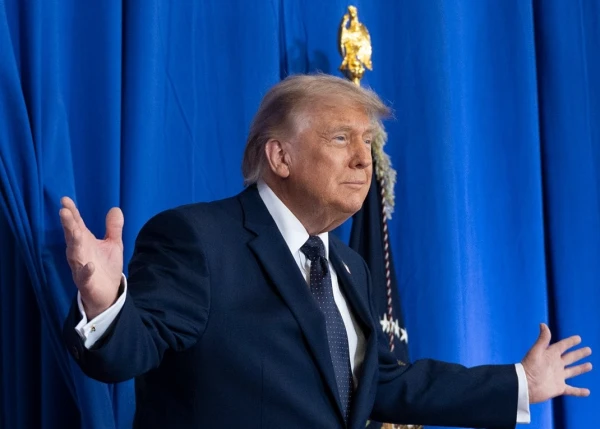
Although we are listed among the exemplary students by the United States because we pay the necessary percentage for defense, which is important for U.S. President Donald Trump, in practice, negotiations and agreements are now being made by major players. The opinions of the Baltic states have been sidelined. While we used to take pride in our experience in relations with Russia, which drew interest, this is no longer the case, says former diplomat Gints Jegermanis.
"At the beginning of the year, we still had hope that we were at some tables. But it seems that those who can still do something in Europe are the large countries: Germany, France, the United Kingdom, and in some formats Italy. And small states are somewhere in the shadows, in the background. We perceive the background and try to steer the conversation so that Ukraine suffers as little as possible in this process, but if Europe is ignored, then, of course, no one in Washington is currently concerned about the Baltics," Jegermanis clarified.
Currently, Latvian high officials are making farewell visits to U.S. Ambassador Christopher Robinson, who will serve for a few more weeks. His successor will be Melissa Argyris — a real estate agent who donated two million dollars to Trump’s inaugural committee. She has no diplomatic experience.
Similarly, Steve Whitcoff, who has transitioned from a realtor to a diplomat, now leads the peace negotiations regarding Ukraine. His approach to negotiations with the aggressor resembles closing a business deal more than a traditional diplomatic process. Many in Europe refer to Whitcoff as a "political amateur with excessive influence," who understands Putin's rhetoric but does not grasp the Kremlin's strategy.
Fragment of negotiations: Whitcoff: "Yuri, Yuri, here’s what I would do. My advice. I would call and just repeat that you congratulate the president on this achievement, that you supported him, that you respect him, that he is a man of peace, and you are just sincerely glad to have seen this event. I would say it that way. I think from that moment the call will become really good." "Let me tell you what I told the president. I told the president that you — that the Russian Federation has always wanted a peaceful agreement. I am sure of this. I told the president that I believe in this." (…) Whitcoff: "And one more thing: Zelensky will arrive at the White House on Friday. I will go to this meeting because they want me to be there, but I think that, if possible, we need to arrange a call with your boss before this Friday meeting."
Researcher at the Latvian National Academy Sandis Schrader notes: "At the moment when Reuters published information about the existence of such a plan, and when Europe and Ukraine became aware of it, the pressure and political proposal from the U.S. to adopt this plan was not propaganda. This is U.S. foreign policy directed against Ukraine and European security. After this meeting, U.S. Secretary of State Marco Rubio had to apologize to European leaders, claiming that the plan did not come from Russia. Despite this, it became clear that there were special phone conversations between U.S. envoy Whitcoff and Russian officials, who provided advice to the Russians on how to talk to Trump and how to influence foreign policy. This resembles the situation of the 1940s–1950s when the U.S. actively sought and assessed the possible influence of the Soviet Union on American foreign policy. Various agents and spies working in the White House, Congress, and other institutions. We find ourselves in a situation where there is indeed evidence of secret cooperation aimed at benefiting Russia rather than the U.S."
Nothing new has happened and we should continue as before. This is stated by the Latvian Ministry of Foreign Affairs. Diplomats and politicians still avoid openly criticizing Trump’s inexplicable tactics. However, retired diplomat Jegermanis says: the sooner Europe understands and accepts that the "business as usual" policy no longer works and that Europe needs to develop a Plan B to be ready to save Ukraine without U.S. assistance, the greater the chances for independence and less dependence on American support.
"In this first season, each episode essentially unfolds according to one scenario. Americans and Russians want to agree on something. Europeans learn about it at some point, protests arise, diplomacy, calls, golf, Europe returns to the negotiating table, but neither Trump nor Russia truly consider it. In such a situation, I see nothing good in the near future," Jegermanis explained.
State Secretary of the Ministry of Foreign Affairs Andžej Vīlumsone points out: "Russia has activated its disinformation machine. It is unknown where the leaks are coming from. And who benefits from these leaks. It is clear that Russia will continue the same tactics it has always used. Its goal is to undermine NATO unity, tarnish the U.S. in the eyes of Europeans, sow distrust towards the U.S., and show that they are ready to act with Russia behind the backs of Europeans. This is Russia's primary goal. The second is to sow doubts in the U.S. about whether Europeans want peace. And the third is to demonstrate theoretical openness to negotiations but to stall for time."
Ukraine's and Zelensky's positions are now seriously undermined by a corruption scandal involving many of his closest associates. Military and political analysts suggest that Trump is trying to use this to force Kyiv to accept any peace plan.
Unofficially, it is known that last week in Kyiv, at one of the meetings of diplomats from European countries, local anti-corruption fighters revealed details of the so-called "ENERGO ATOM" case. There are many traces, and deals involved 12 or more countries, including Latvia. The materials of the case relate to the period before the start of the full-scale war in Ukraine.
"Nekā personīga" has unofficially obtained confirmation that Latvia's involvement is possible, and our institutions may have to respond to requests for legal assistance from official Ukrainian structures. Financial intelligence, the Ministry of Foreign Affairs, and the Prosecutor General's Office were unable to comment on the situation in more detail this week.
As indicated on Friday by the international cooperation department of the Prosecutor General's Office, it is currently, unfortunately, impossible to provide any comments or information. As soon as it becomes possible, the public will be informed.







Leave a comment