
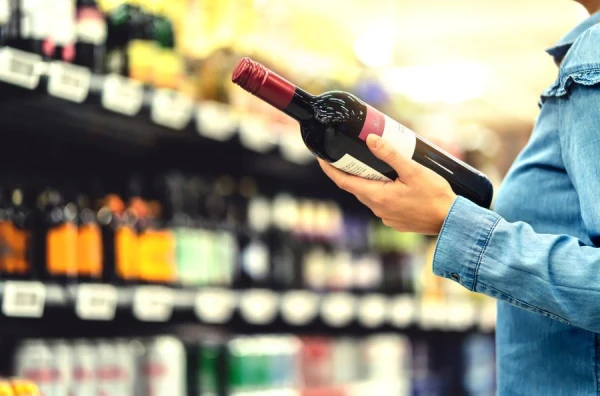
From 2013 to 2023, most EU countries drank less, but Portugal, Spain, and Romania changed the trend: alcohol consumption per capita increased by two liters or more.
Annual alcohol consumption per capita in OECD countries in 2023 averaged 8.5 liters of pure alcohol, according to the Health at a Glance 2025 report.
In six EU countries, consumption was below the average level, with the lowest figure recorded in Greece - 6.6 liters per capita.
In contrast, Romania, Portugal, and Latvia had the highest consumption, exceeding 11.5 liters per year.
Over the past decade, most countries have seen a decline in alcohol consumption.
From 2013 to 2023, the largest decrease in alcohol consumption was recorded in Belgium and Lithuania - by 2.5 liters or more.
On the other hand, the largest increase was noted in Portugal, Spain, and Romania, where annual alcohol consumption per capita rose by two liters or more during the same period.
According to the World Health Organization (WHO), the European Union is the subregion with the highest alcohol consumption in the world, where cancer is also a leading cause of death.
Alcohol consumption is associated with an increased risk of developing certain types of cancer, including cancers of the mouth, throat, liver, colon, and breast.
In 2023, an average of 27% of people aged 15 and older across 27 OECD countries engaged in binge drinking at least once a month over the past year.
The highest rates were observed in Greece, Ireland, and Sweden, where over 40% of people consume alcohol monthly, while the lowest rates (less than 15%) were in Hungary, Slovenia, and Croatia.
Are People Starting to Drink Earlier?
In OECD countries, the share of 11-year-olds consuming alcohol increased slightly from 2018 to 2022 - from an average of 4% to 5%.
On average, 5% of 11-year-olds and 15% of 13-year-olds reported having consumed alcohol in the past month.
In the EU, the highest rates (10% and above) among 11-year-olds were observed in the Czech Republic, France, Hungary, Bulgaria, and Romania.
According to the OECD report, early initiation and repeated alcohol consumption are associated with worsening mental health, such as anxiety, reduced cognitive functions, and higher consumption levels in adulthood.
The number of 15-year-olds who have been drunk multiple times exceeded 35% in Denmark, Hungary, and Bulgaria, while in Portugal, this figure was less than 10%.
Does Gender Play a Role in Alcohol Consumption?
The prevalence of binge drinking among adolescents over their lifetime is generally decreasing in OECD countries.
Among boys, this trend has stabilized: in 2019 and 2022, it was 22%, while among girls it changed in the opposite direction (increasing from 19% in 2018 to 22% in 2022).
However, in 25 EU countries, the proportion of boys reporting having been drunk more than once in their lifetime was higher than that of girls.
To address the issue of underage drinking, many countries have adopted regulatory and preventive strategies aimed at limiting the availability and marketing of alcohol.
Recently, Belgium adopted a new Action Plan to Combat Alcoholism for 2023-2025, aimed at reducing the availability of alcohol.
The new law prohibits the sale of alcohol through vending machines, at service stations along highways from 10 PM to 7 AM, and in hospitals.











Leave a comment