
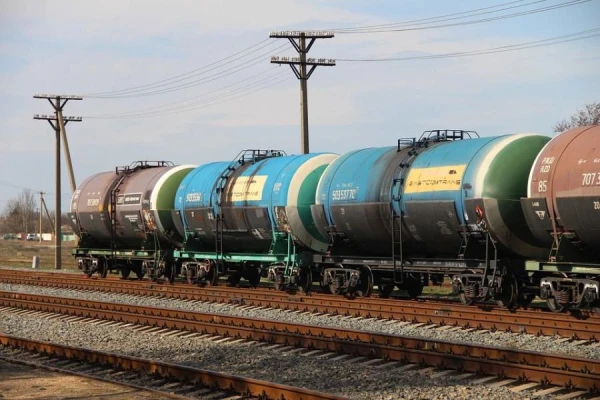
Last week, Sweden's Foreign Minister stated that during the war, Europe imported more from Russia than it spent on supporting Ukraine. An analysis of the figures shows that she is right.
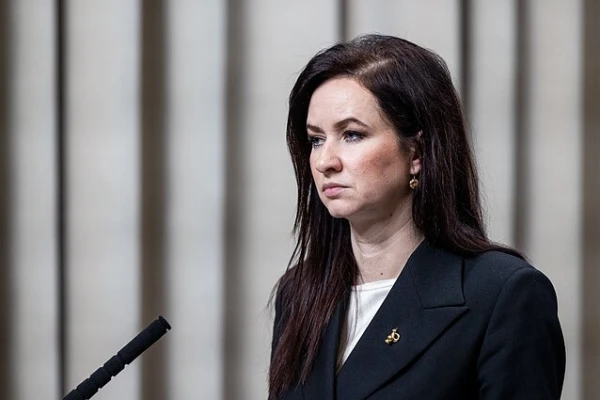
Last Thursday, a post by Sweden's Foreign Minister Maria Malmer Stenergard circulated online. The publication claims that since Moscow began its full-scale invasion of Ukraine in 2022, EU imports from Russia have exceeded the amount of aid sent to Kyiv.
According to Stenergard, "European countries (EU) and Europe" have provided Ukraine with aid totaling 187 billion euros.
"During the same period, we imported Russian oil and gas worth 201 billion euros," Stenergard said. "And if we add other imported goods, the total amount will reach 311 billion euros."
The minister told reporters in Brussels that this represents a "negative support for Ukraine amounting to 124 billion euros."
Her calculations are generally accurate, depending on what data was used and how "aid" was defined.
How much does Europe import from Russia?
After the full-scale invasion of Ukraine by the Russian Federation, the EU imposed sanctions on Russian energy resources, aiming to reduce Europe's strong pre-war dependence on Russian oil and gas.
According to Eurostat, since the beginning of the invasion, Europe's imports from Russia have decreased by about 89%, but remain significant.
According to the independent Centre for Research on Energy and Clean Air (CREA), since February 2022, EU member states have purchased Russian fossil fuels - oil, petroleum products, pipeline gas, and liquefied natural gas (LNG) - worth over 216 billion euros.
According to data published by the European Commission, since February 2022, the EU and its member states have provided Ukraine with over 187 billion euros, of which about 35% consists of concessional loans.
The Cube contacted the European Commission, which referred to this figure.
Based on this, Stenergard's data generally aligns with reality: since the beginning of the war, Europe has indeed imported more from Russia - particularly Russian oil and gas - than it has spent on aid to Ukraine.
A study by the Kiel Institute, which tracks aid allocated to Ukraine, shows that by its definition of allocated aid, the initial amount was lower.
Allocated funds demonstrate what governments have agreed to provide, rather than what has been fully disbursed. Actual payments may be lower or take longer.
According to the Kiel Institute, since the beginning of the invasion, EU institutions and member states have already allocated 150 billion euros to Ukraine.
If we consider geographical Europe as a whole, including non-EU countries such as Norway, Switzerland, Iceland, and the United Kingdom, the total amount of allocated aid reaches 177 billion euros.
In addition to allocated funds, European governments have made additional commitments but have not yet disbursed the promised aid.
For the EU and its member states, the total amount of commitments is 214 billion euros. For all of geographical Europe, the total amount of commitments reaches 273 billion euros.
This narrows the gap between the figures for Russian imports and aid, but does not necessarily eliminate it.
The Kiel Institute's figures also do not include the costs of accommodating Ukrainian refugees, which European countries have taken on.
The Kiel Institute claims that in a hypothetical upper estimate, assuming that all Ukrainian refugees rely on state support, Europe would have spent 160 billion euros on accommodating Ukrainian refugees since 2022. The actual figure is likely lower.
Despite the volume of humanitarian aid remaining relatively stable, estimates from the Kiel Institute show that military aid to Kyiv has sharply decreased since the summer.
Military allocations from European countries to Ukraine have decreased by 57% compared to the first half of the year when Europe intervened and expanded its military support to fill the gap left by the United States.
Last week, European Commission President Ursula von der Leyen urged EU countries to reach an agreement by December to cover Ukraine's military and financial needs over the next two years. This amount is estimated at 135.7 billion euros, according to a letter sent to EU leaders on Monday, which was obtained by Euronews. The document presents three main options that European member states could use to support Kyiv.








Leave a comment