
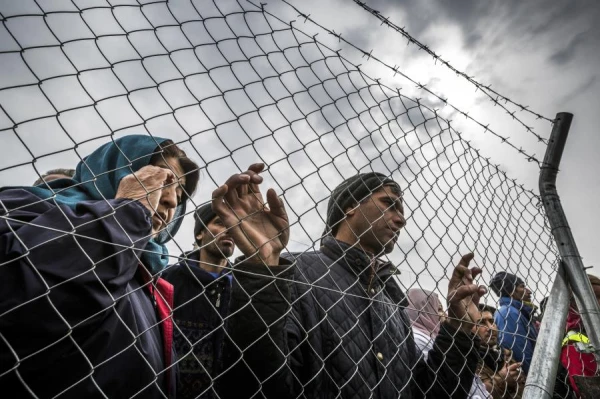
Interior Minister Igor Taro proposed to the European Commission to halve the solidarity contribution provided for Estonia in the European Commission's migration report.
In its recent report on international protection and migration, the European Commission set Estonia's solidarity contribution as the resettlement of 80 refugees from Greece, Cyprus, Italy, and Spain or providing financial or technical assistance to these countries in the amount of 1.6 million euros.
At the same time, according to the same report, Estonia itself is recognized as a country under significant migration pressure, as over the past five years it has accepted a large number of Ukrainian military refugees, which is a substantial burden in relation to GDP and population size.
This status gives Estonia the right to apply for partial or full exemption from the solidarity contribution, and Estonia is exercising this right.
"By accepting Ukrainian military refugees and helping them, we have already done a tremendous job, and it would be fair if this is taken into account. We could ask for a full exemption, but that would be unfair to Greece, Cyprus, Italy, and Spain, which are facing very strong migration pressure. My proposal is to apply for a reduction of Estonia's solidarity contribution by half," said Interior Minister Igor Taro.
The contribution can be made in three ways: by accepting refugees, providing financial assistance, or other support in the form of equipment and experts. These methods can also be combined. Taro noted that last Thursday the government decided that Estonia would make its solidarity contribution in the form of financial assistance and also send experts and equipment to countries experiencing migration pressure. "Refugees from other countries will not be brought to Estonia," Taro stated.
A decision on Estonia's application is expected to be made by the end of the current year.
Every year, the European Commission publishes a report on international protection and migration. It assesses the situation regarding international protection, refugee reception, and migration in the European Union over the past 12 months, as well as possible development trends. The report serves as a strategic overview of the situation in this area.
According to the Commission's decision, during the first cycle of managing international protection and migration, the countries under migration pressure are Greece, Cyprus, Italy, and Spain. They will be able to automatically use the solidarity reserve being created.
Countries at risk of migration pressure include Belgium, Bulgaria, Germany, Estonia, Ireland, France, Croatia, Latvia, Lithuania, the Netherlands, Poland, and Finland. They have preferential rights to receive operational and financial support from European Union agencies. If the situation in these countries worsens, the Commission is ready to reconsider their status.
Countries under significant migration pressure include Bulgaria, the Czech Republic, Estonia, Croatia, Austria, and Poland.








Leave a comment