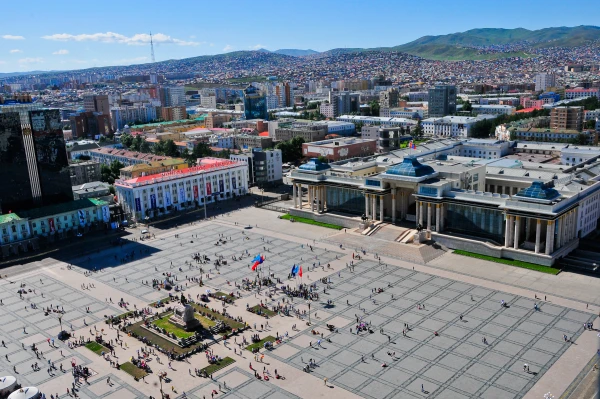
More than a quarter of the population lives below the poverty line, many in ger districts on the outskirts of Ulaanbaatar.
The Prime Minister of Mongolia has resigned four months after taking office. Mr. Zandanshatar held the position of Prime Minister of Mongolia since June of this year. Since 2019, he had been the chairman of the country's parliament. From November 2009 to August 2012, Gombodzhavyn Zandanshatar served as the Minister of Foreign Affairs and Trade of Mongolia.
Mr. Zandanshatar's predecessor, Luvsannamsrain Oyun-Erdene (Prime Minister of Mongolia from January 2021 to June 2025), stepped down after accusations of corruption and mass protests in the country. The protests were sparked by a video of his son's engagement, in which the 23-year-old man gifted his fiancée a diamond ring, a Mercedes car, a designer handbag, and a helicopter ride.
The celebration itself took place on private property at one of the resorts, fully rented for this ceremonial event. The amount spent on this romantic luxury caused outrage in society: the income of the head of government does not allow for financing such events. At the same time, Luvsannamsrain Oyun-Erdene repeatedly emphasized that he comes from a poor family and grew up in rural areas.
The socio-economic situation in Mongolia — a country with a population of 3.5 million people — remains difficult: since the early 1990s, corruption has become an integral part of the political system. Moreover, under the current leader, the country's positions in international transparency rankings have only worsened. In 2023, one of the largest corruption scandals in recent decades erupted — the so-called coal case. It involved multi-billion dollar embezzlement in coal supplies to China (up to 90% of Mongolia's coal exports are directed to China). According to the anti-corruption committee, the damage amounted to about $13 billion — almost a quarter of the country's GDP. As part of the investigation, 22 criminal cases were initiated, and 15 people were detained, including the leadership of the state-owned company 'Erdenes Tavan Tolgoi'. Among the individuals involved was also former President Khaltmaagiin Battulga and seven members of parliament.
Another challenge is high inflation. At the beginning of 2025, it approached the 10% mark, and the price increase for imported goods exceeded 30%. Utility tariffs increased by more than 20%.
More than a quarter of the population lives below the poverty line, many in ger districts on the outskirts of Ulaanbaatar, where there is no sewage system and access to basic infrastructure.
Medical care and education in such areas are often inaccessible. The environmental situation is also deteriorating: Mongolia is rapidly losing land suitable for livestock, exacerbating the situation in rural areas.
Whoever comes to power in the country will have to work under conditions of growing social tension. The key tasks for the new prime minister will be combating corruption, stabilizing the economy, and restoring trust in government institutions. The new corruption scandal has undoubtedly left its mark — distrust in the system and high expectations will directly affect the legitimacy of any actions taken by the new government.