
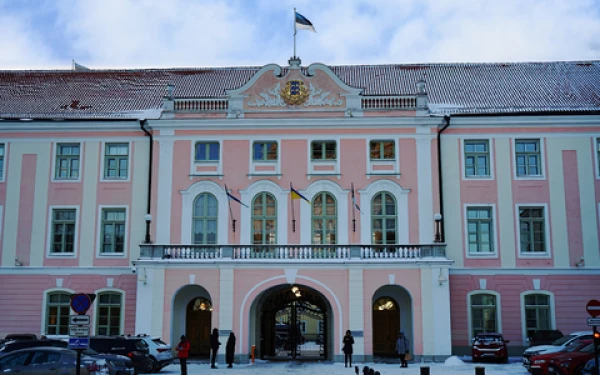
The rights of residents will be expanded in the Population Register to additionally indicate a dialect when specifying Estonian as their native language.
Minister of the Interior Igor Taro, presenting the new opportunity, said that as a speaker of one of the dialects, he is very pleased with the amendment approved by the government. As a result of this change, those for whom Estonian is their native language will be able to indicate in the Population Register, alongside the Estonian language, the most common dialects they speak.
"In the 'native language' field, it will soon be possible to select dialects of the Estonian language such as Seto, Võru, Mulgi, Tartu, Saaremaa, Hiiumaa, Muhu, Kihnu, Kodavere, Kuusalu, Luganuse, and Jõhvi. This is an important part of a person's identity, and now there will be an opportunity to record it," said the minister.
"The Institute of the Estonian Language, in collaboration with the Ministry of Education and Research, has compiled a list of the most common dialects, which the Statistics Department will add to the language classifier. Since the Population Register uses these classifiers, we will implement this opportunity in the register as well," he added.
The assessment of dialect proficiency will not be done by an official, but by the individual themselves, entering information about their native language in the Population Register.
This change does not concern the issue of entering information about another nationality or another native language in the Population Register.
It will be possible to enter a dialect in the Population Register after the amendment comes into force – presumably, as early as next week. The easiest way to check and change information about one's native language can be done in the electronic Population Register at www.rahvastikuregister.ee. There, one can also view and, if necessary, update their address of residence and other information entered in the register.










Leave a comment