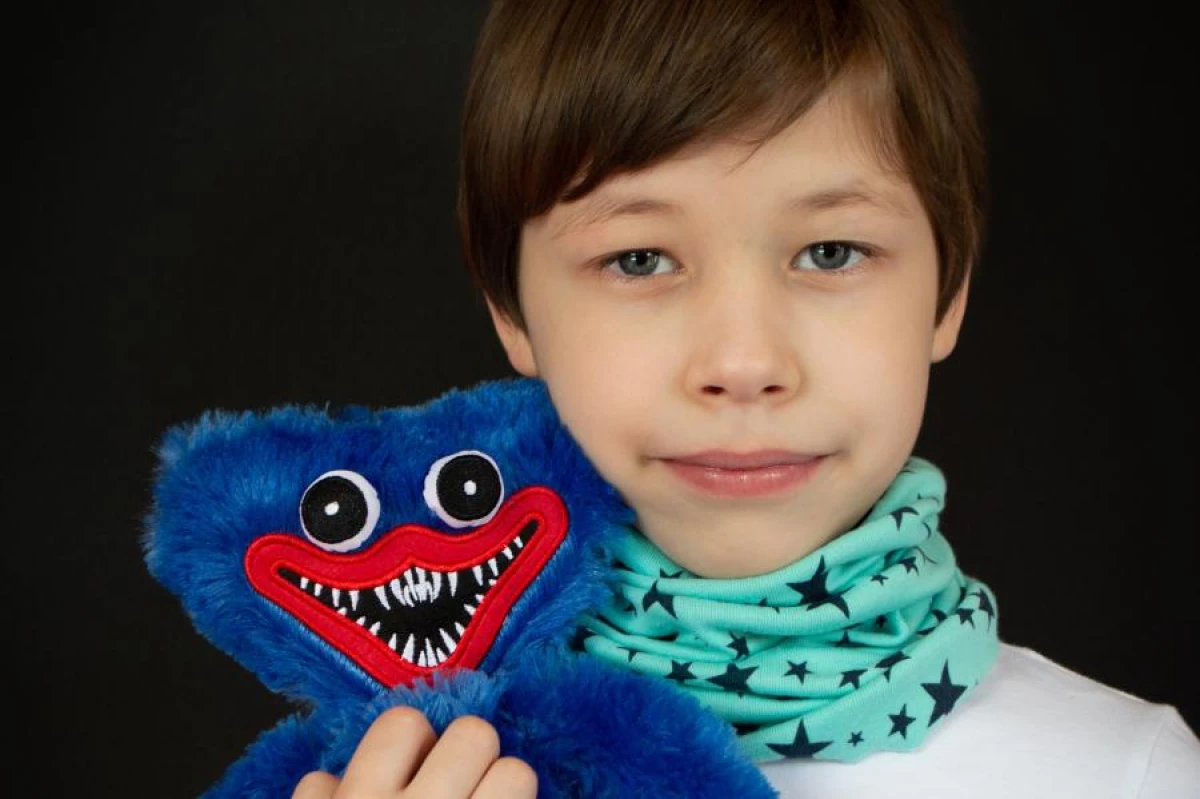
Scary toys like Huggy Wuggy and Kissy Missy are appearing in marketplaces and stores. Many parents are worried and do not know whether to buy such toys.
What role can such toys play in children's development, and can they be dangerous? Many parents refuse to buy monsters for their children, and I receive many inquiries from concerned mothers. Let's figure out what impact these toys have on children and discuss this topic in more detail.
Why Children Love Monsters and Scary Stories
From the age of 4-5, a child begins to engage with the adult world and becomes aware of various feelings, such as fear. Fear is one of the strongest emotions, helping survival in a world full of anxieties and dangers. At this age, children are already capable of distinguishing reality from fiction.
Think back to your childhood: you were also interested in scary stories. A coffin on wheels, the Queen of Spades, a dark room — this list can go on. Time does not stand still, and modern children have new frightening idols, such as Huggy Wuggy and Kissy Missy.
Huggy Wuggy was originally a kind character, but as a result of experiments at the factory, he turned into a monster with big teeth and long limbs. Along with his appearance, his character changed: he became aggressive and attacks players, hugging them very tightly.
He looks both funny and scary at the same time — perhaps this is the secret of his popularity. Kissy Missy is Huggy's friend. She is a bit cuter, but also dangerous and scary, just like her friend.
When Scary Toys Can Be Beneficial
Experiencing fears is a necessary tool for gaining control over one's emotions. Children gradually understand that fear can be overcome and find a way out of difficult situations. To conquer evil, one must analyze the situation, calm down, show courage, and ask friends for support.
When a child experiences fear, they learn not to be afraid. Scary toys help develop empathy; talk to your child, discuss that appearance is not the main thing in a character, and it can be deceptive. Remember that Huggy was kind but became evil due to experiments and grievances. These toys can provide an opportunity to demonstrate that everyone is different, and one should not judge by appearance. Also, tell them that heroes can change for better or worse.
When Parents Should Sound the Alarm
Observe your child: if they exclusively choose scary toys, imagine themselves as evil characters, and enjoy games with elements of aggression — this may be a signal to think and pay special attention to the choice of toys.
Pay attention to the games and cartoons they choose. Switch them to calm, friendly content. If the child is only drawn to horror stories and such toys, and you see increased interest, it may be worth seeking help from a child psychologist.
The Transformation of Evil into Good
Parents' task is to closely monitor their child. It is easiest to prohibit and not buy scary toys, but they will still be in sight: in stores, at friends' houses, on screens. Instead of a harsh “no,” try to engage creativity and love: explain how to interact with these toys better, come up with games where good triumphs over evil.
Do not limit imagination, play together with your child — this will bring you closer. Watching content together will help guide the child towards goodness and love, as it is difficult for them to navigate in a vast unfamiliar world. Help them not to confuse black and white.