
Most people encounter warts at least once in their lives. Some discover them by chance, while others try to hide or remove them on their own for months. Despite their prevalence, there are still many myths surrounding these small skin formations: some consider them a harmless cosmetic feature, while others fear catching them through a simple handshake.
The truth, as usual, lies somewhere in the middle. Where warts come from, why some disappear on their own while others grow, and which treatment methods actually work is explained by cosmetologist and dermatologist Galina Glukhova.
What is a Wart
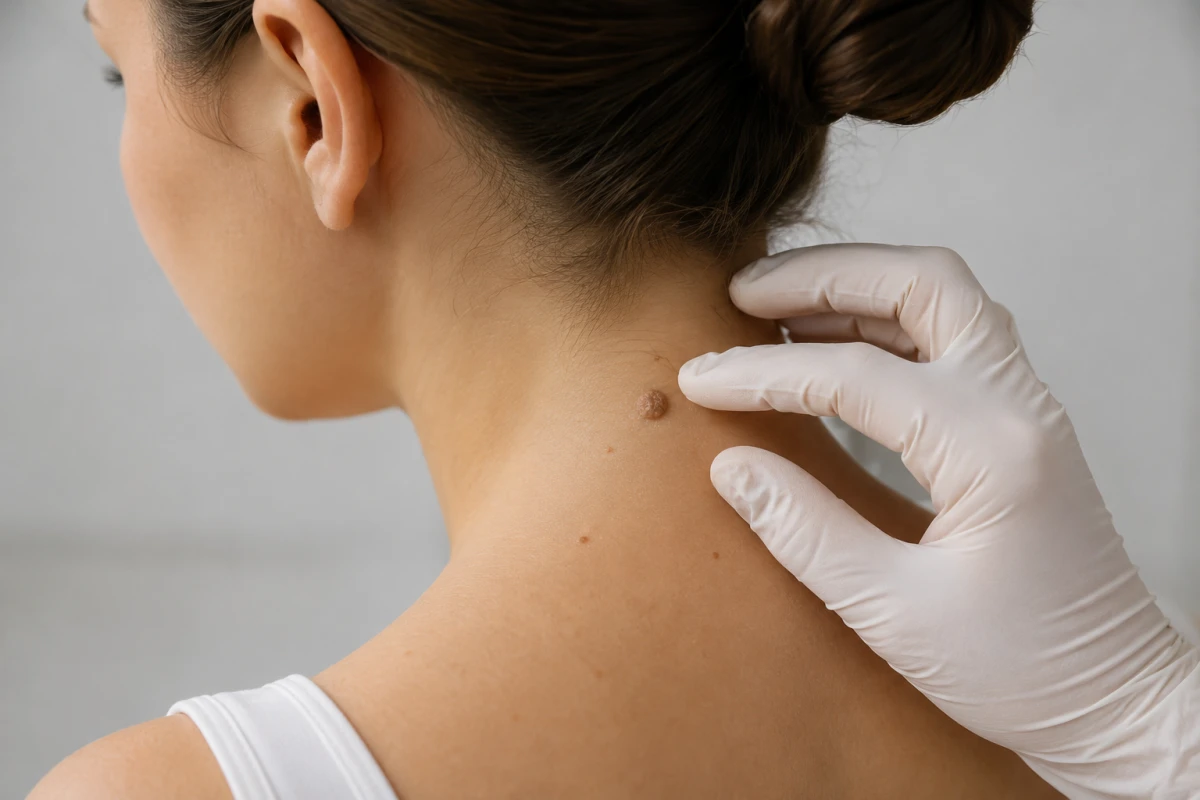
"A wart is a benign growth on the skin that occurs as a result of infection with the human papillomavirus (HPV). Externally, it can appear as a small nodule, a firm plaque, or a rough growth.
Usually, the color of the wart does not differ much from the surrounding skin, although it can sometimes be lighter or darker," explains Galina Glukhova.
The appearance of a wart is associated with the virus causing the cells of the upper layer of the skin to divide faster than usual. As a result, a noticeable protrusion forms on the surface of the skin. The sizes of such formations can vary — from barely noticeable dots to several centimeters in diameter.
Sometimes a wart is solitary, but often new elements appear nearby. In some cases, they disappear on their own, but this process can take months or even years.
Why Warts Appear
The reason is always the same — the human papillomavirus. It enters the body through microscopic skin damage: small scratches, cracks, hangnails, and other unnoticed injuries.
However, infection does not mean that a wart will necessarily appear.
"Much depends on the state of the immune system and the protective properties of the skin. Some people's bodies successfully suppress the virus even before symptoms appear, while others develop characteristic growths," says the specialist.
The risk of developing warts is increased by frequent skin injuries, excessive sweating of the palms and feet, as well as visiting swimming pools, saunas, gyms, and public showers.
In a humid environment, the virus spreads particularly easily, which is why walking barefoot in public places is considered one of the most common ways to get infected.
Stress, past illnesses, and any conditions that weaken the immune system can also contribute to the development of warts.
Why a Wart Can Be Easily Confused with Other Growths
Not every lump on the skin is a wart. Externally, it can resemble calluses, papillomas, keratoses, and some other formations.
"For example, a plantar wart is often mistaken for a regular callus. But a callus arises from constant pressure or friction, while a wart has a viral nature. Papillomas are usually softer and often located on a thin stalk. Genital warts are also associated with the human papillomavirus, but they are caused by different types and require a separate treatment approach," explains the doctor.
That is why, when any new formation appears on the skin, it is better not to self-diagnose but to consult a specialist.
Is It Necessary to Treat Warts
Sometimes warts do disappear on their own. This happens especially often in children and young people with a well-functioning immune system.
If the growth does not increase in size, does not cause pain, and does not interfere with daily life, the doctor may recommend observation.
However, many patients prefer removal.
"It's not just about cosmetic discomfort. Warts are quite contagious and can spread to other parts of the body as well as to other people. Additionally, some types are often injured by clothing or cause pain during movement," warns Galina Glukhova.
How Warts Are Removed
Self-attempts to get rid of a wart often end in complications.
"Cutting, burning with aggressive substances, or tying with thread can lead to burns, inflammation, and scarring. Moreover, without a specialist's examination, it is easy to mistake another condition for a wart," notes the expert.
The choice of treatment method depends on the size, location, and number of formations.
For small superficial warts, preparations based on acids are sometimes used. They gradually soften and remove the affected areas of skin but require prolonged and careful application.
One of the most common methods remains cryodestruction — removal with liquid nitrogen.
"After freezing, the cells are destroyed, and the wart gradually falls off. Achieving results often requires several procedures with an interval of two to three weeks," says the dermatologist.
Electrocoagulation, laser, and radio wave removal are also used. These methods allow for maximum precision in affecting the tissues and are suitable for most types of warts.
Surgical excision is rarely used today — mainly for large formations or in cases where a diagnosis needs to be clarified.
After removal, the skin needs time to recover.
"At the site of the procedure, a crust usually forms, which should not be peeled off or injured until it is completely healed," warns the specialist.
How to Reduce the Risk of Developing Warts
It is impossible to completely eliminate contact with the human papillomavirus, but it is quite feasible to significantly reduce the likelihood of infection.
In swimming pools, saunas, gyms, and public showers, it is recommended to wear personal footwear and avoid walking barefoot.
It is important to monitor the condition of the skin, promptly treat cuts and cracks, and not to use other people's towels, shoes, and manicure tools.
The overall state of the body is also of great importance. Adequate sleep, a balanced diet, and regular physical activity help the immune system control the virus more effectively.
"There is a vaccine against HPV, but it primarily protects against oncogenic types of the virus associated with the development of cervical cancer and genital warts. This vaccine does not protect against common household warts," clarifies the doctor.
Warts rarely pose a serious threat to health, but they should not be ignored. Behind a small skin growth lies a viral infection that can spread, cause discomfort, and sometimes mask other diseases.
Therefore, when any suspicious formations appear on the skin, it is better to refrain from home experiments and consult a specialist. This will help to quickly make an accurate diagnosis and choose the most effective treatment method.
















Leave a comment