And also those from which we, apparently, will never get rid of.
We are not only who we are here and now, but also the memory of generations, leaving their marks in each of us. However, everyday life has changed so much over the past 30 years that some details from the Soviet era are perceived as something ridiculous and strange.
Frying everything
What kind of soup is there without fried onions and carrots! Now it seems strange to even talk about such recipes: with the current trend towards healthy eating, the most we allow ourselves is to stew vegetables with minimal oil or even in water. And if we do fry, it’s over an open fire or on a grill. Baking in the oven has also become popular. But frying in oil, which often wasn’t very refined, seems not very tasty. Nevertheless, it adds nutrition to the dish.
Boiling laundry
This habit has not completely disappeared everywhere. About ten years ago, advertisements persistently asked: “Are you still boiling?..” It was hard to give up boiling, as this method allowed for achieving perfect whiteness. However, laundry would spoil faster after such a procedure, and the atmosphere in the house was unforgettable: steam and the pungent smell of soap. Fortunately, this is no longer necessary — it’s enough to just wash with a good detergent or bleach.
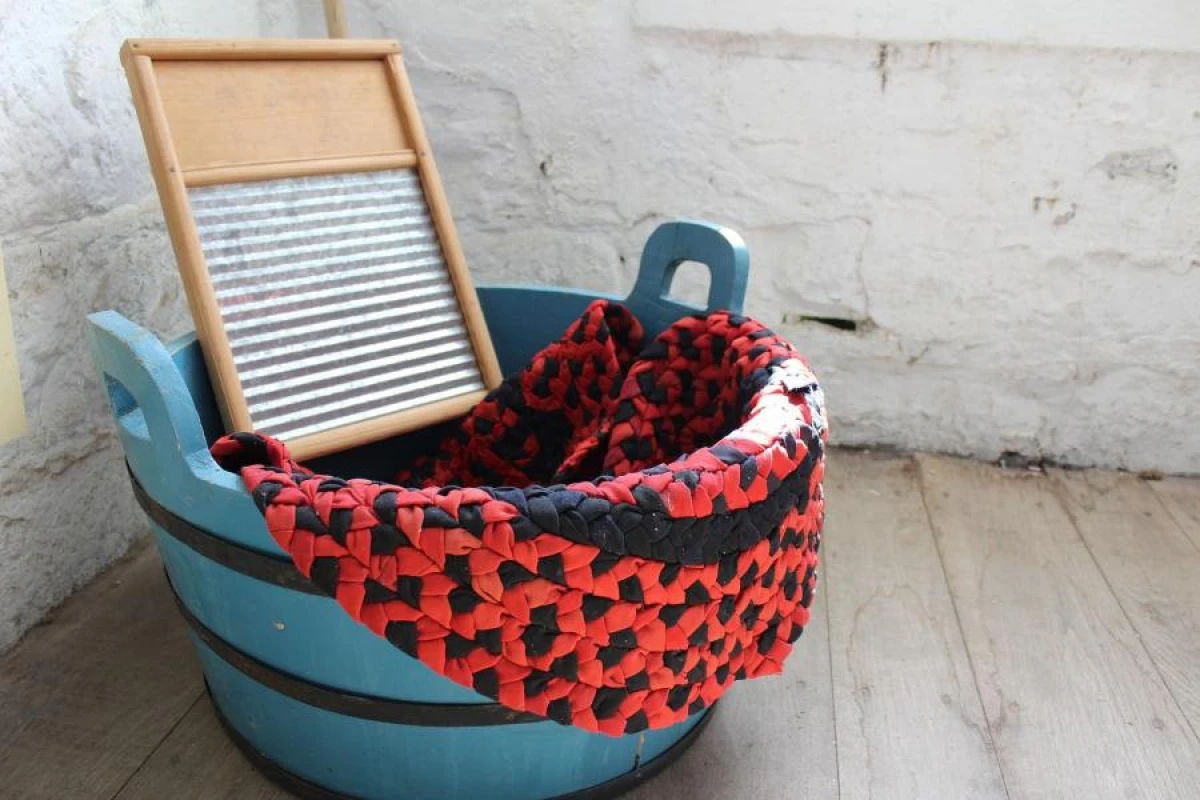
Washing on a board
Another labor-intensive way of washing is the painful experience of standing bent over for a long time. Many saved hot water, as not all homes had it, and not everyone had washing machines. Perhaps only children enjoyed such washing when they found it interesting to play and splash in the water.
Washing bags
“I hate wet bags,” says Ira, recalling this. Washing bags was indeed not the most pleasant task. It required carefully hand-washing them and then hanging them up to dry. Bags were a rarity, and they were kept like the apple of one’s eye, as they were a convenient item. Now, however, we cannot do without bags; they have become a part of our everyday life.
Standing in two lines at the store
Or even three. Do you remember how it was? First, you would stand in line at the counter, where the seller would weigh or set aside the goods, writing the total on a scrap of paper. With this paper, you had to stand in another line at the cash register, pay, take the receipt, and then stand in line again to exchange the receipt for your purchase.
Oilcloth everywhere
It was laid under a tablecloth or instead of a tablecloth, used to cover the walls in the kitchen, creating a semblance of an apron. Sometimes the walls were completely covered with it. The material was convenient, durable, and easy to clean — just wipe it with a wet cloth. However, the colors were often bright and garish, but there was no choice.
Repairing tights
And it was fine if they were warm, but nylon! To catch a snag with the thinnest needle, secure a slipped stitch, patch a run. Nylon tights back then were thicker than modern ones. In conditions of scarcity, there was no choice but to mend them. Even old tights were reused: they could be used to store onions, sewn into a washcloth for dishes, or made into a sieve for straining jam.
Storing small items in tin cans
Buttons in cookie boxes, nails in coffee cans. Surely, such tin treasures can still be found in pantries, as cookies in tins were not bought often and were expensive.
Eating to the last crumb
“We have a society of clean plates,” — under this phrase many people with eating disorders grew up. You had to eat everything that was put on your plate — it was the law. It was also preferable to wipe the plate with bread. Food was a basic value, and the older generation still prefers to eat through force, just to avoid throwing anything away. However, now we have fallen into another extreme — humanity throws away too much food. We still need to find a golden mean.