
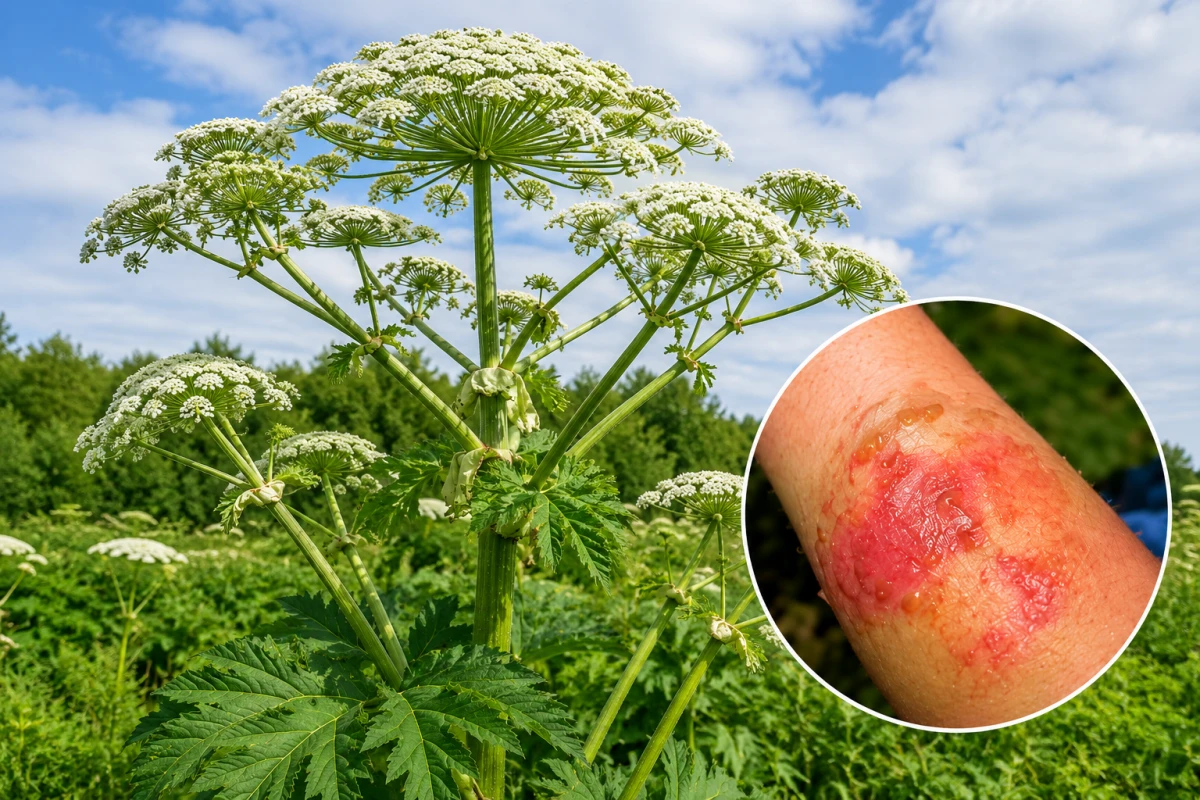
Working in the garden can lead to unpleasant consequences even for experienced gardeners. Some plants contain substances that make the skin particularly sensitive to sunlight. As a result, ordinary contact with leaves or sap can lead to redness, blisters, and serious burns.
Many believe that the main source of danger in the garden is giant hogweed. However, specialists warn that other, much more common plants can also cause painful burns.
According to dermatologist and cosmetologist Elizaveta Shukhman, the cause of such reactions are photosensitizing substances — primarily furanocoumarins and psoralens. After contact with the skin, they significantly enhance the effects of ultraviolet light.
Which Plants Are Dangerous
The most well-known plant capable of causing severe burns remains Sosnowski's hogweed. Its sap is especially dangerous: even brief contact with the skin combined with sunlight can lead to serious damage.
However, the list of potentially dangerous plants includes other crops:
-
wild parsnip;
-
cow parsnip;
-
celery;
-
parsley;
-
dill;
-
St. John's wort.
Particular caution should be exercised in hot sunny weather when working in the garden in open clothing and without protective gloves.
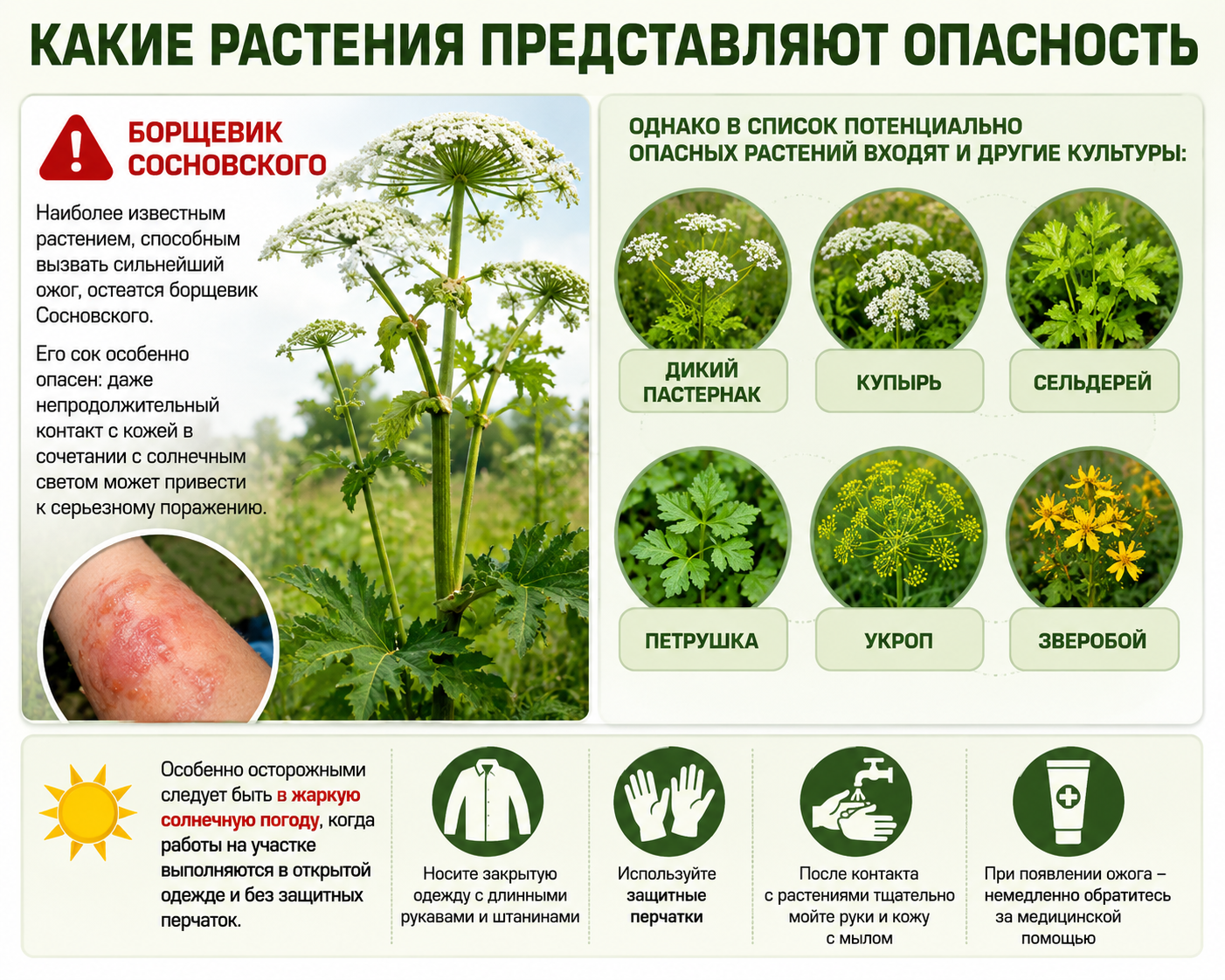
"The greatest danger arises in hot sunny weather when people work in the garden in open clothing and without gloves. Special caution is needed after trimming hogweed and when cleaning areas where wild umbrella plants grow," warns the doctor.
Unexpected Danger of Citrus Fruits
Few know that phytophotodermatitis can be caused not only by garden plants but also by ordinary citrus fruits.
The juice of lime, lemon, and some other citrus fruits can cause a similar reaction when it comes into contact with the skin after sun exposure. That is why specialists recommend thoroughly washing hands after preparing drinks and dishes using these fruits, especially in summer.
Why Burns Occur
The mechanism of such damage is quite simple. First, active substances from the plant come into contact with the skin, and then a chemical reaction is triggered under the influence of sunlight.
As a result, skin cells are damaged, leading to redness, itching, and burning. Painful blisters and areas of damage resembling a severe sunburn can form within a few hours.
The difficulty lies in the fact that the reaction does not always develop immediately.
"A person does not always immediately associate the problem with the plant. Sometimes the reaction develops after several hours or even the next day, making the source of irritation seem unclear," explains the specialist.
How to Protect Yourself in the Garden
The most reliable way to avoid burns is to use protective measures when working in the garden.
Specialists recommend:
-
wearing gloves;
-
using long-sleeved clothing;
-
protecting legs with closed shoes;
-
using protective goggles when possible;
-
thoroughly washing hands and exposed skin areas after working with plants.
If the sap of a plant does come into contact with the skin, the affected area should be washed with soap and water as soon as possible and protected from sunlight. In the following days, it is important to avoid ultraviolet exposure to that area.
Particular care should be taken after weeding, mowing grass, and trimming plants.
Danger in the garden can come not only from exotic or poisonous plants. Even familiar parsley, celery, or dill can cause serious phototoxic reactions under certain conditions, writes bb.lv. Therefore, during gardening activities, it is important to remember simple protective measures — they will help maintain skin health and avoid unpleasant consequences.














Leave a comment