
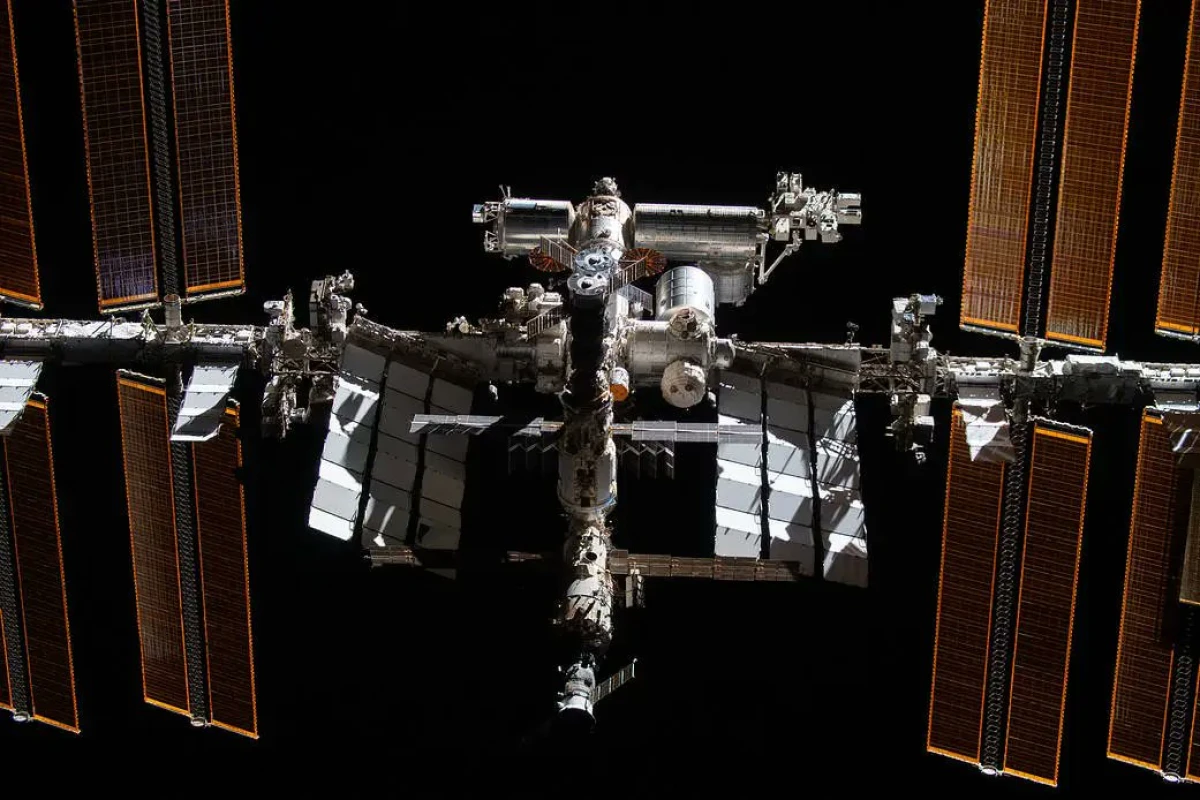
An emergency situation occurred on the International Space Station: due to an increase in the air leak, NASA moved part of the crew to a readiness mode for possible evacuation. Two hours later, the order was lifted, but disagreements between NASA and Roscosmos regarding the station's repairs persist.
NASA temporarily moved part of the crew of the International Space Station to shelter mode on Friday after the air leak rate in the Russian module of the station unexpectedly increased.
Five astronauts were instructed to move to the Crew Dragon spacecraft docked to the station and prepare for a possible evacuation. This order was given after specialists recorded a worsening situation with the air leak in the Russian service module "Zvezda."
About two hours later, the alert mode was lifted. NASA allowed the astronauts to return to normal operations while American and Russian specialists continued to analyze data and discuss further actions.
According to a source at NASA, the volume of the air leak increased approximately twofold on Friday compared to normal levels. Although the absolute values remain relatively small, the increase itself raised concerns among mission leaders.
A particular aspect of the situation was that the cause for alarm was not only the leak itself but also the proposed method for its elimination. Russian cosmonauts planned to use tools to access the suspected damage site, but NASA deemed this approach risky.
Roscosmos reported that two air leaks were detected. One of them was managed to be eliminated fairly quickly, while work on the second continued. The Russian side emphasizes that there is no threat to the crew and the station's main systems.
Issues with the tightness of the "Zvezda" module have been discussed between NASA and Roscosmos for several months. Specialists from the two agencies have different assessments of the causes of the cracks and methods for their elimination.
Such situations on the ISS are extremely rare. Usually, a readiness for evacuation is implemented in the event of a risk of collision with space debris or changes in tightness parameters. Throughout the entire history of the station's operation, a full evacuation of the crew has never been required.
The incident occurred against the backdrop of discussions about the future of the ISS. A bill is being considered in the U.S. Congress to extend the station's operation until 2032. Its supporters believe that additional time is necessary to prepare new commercial orbital stations and maintain the U.S. position in space amid growing Chinese activity.
The air leak situation once again reminded that even after decades of operation, the ISS remains a complex technical object requiring constant monitoring and maintenance.














Leave a comment