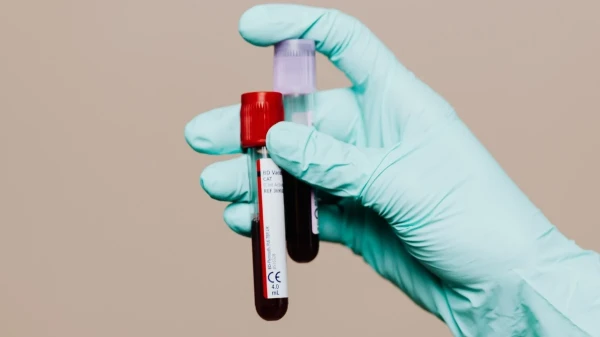
Researchers have presented a promising method for the early detection of Alzheimer’s disease risk. The new blood test can detect minute changes in the brain that herald the illness.
Scientists have presented an innovative approach to the early assessment of the risk of developing Alzheimer’s disease. This involves a special blood test capable of detecting minute changes in the brain even before the first symptoms appear. This groundbreaking study was conducted by a team from Mass General Brigham in the United States, focusing on the biomarker pTau217.
According to the researchers, this biomarker can signal in advance the accumulation in the brain of two key proteins: amyloid-beta and tau. These protein deposits are traditionally associated with the development of Alzheimer’s disease. Currently, PET scans of the brain are typically used to detect such changes.
Previously, PET scans were considered one of the earliest methods for detecting the disease, capable of identifying amyloid accumulations 10–20 years before symptoms manifest. However, the new study demonstrates that the pTau217 biomarker can appear in the blood significantly earlier than pathological changes become visible on PET images. The experiment involved 317 volunteers aged 50 to 90. At the start of the study, all participants had healthy cognitive functions. Their condition was monitored for eight years.
Participants underwent PET scans to detect amyloid-beta and tau, as well as cognitive tests and measurements of pTau217 levels in the blood. The results convincingly showed that the blood test data correlate well with information obtained from scanning protein clusters in the brain.
Moreover, in some cases, elevated levels of pTau217 predicted upcoming changes even before they were visualized in the images. High levels of pTau217 were clearly associated with future manifestations of Alzheimer’s pathology. Conversely, low levels of this biomarker indicated a minimal risk of developing such changes in the near future.
Researchers also identified a correlation between elevated pTau217 and an increased likelihood of cognitive impairment. However, this pattern was predominantly observed in those who already showed signs of toxic amyloid-beta accumulation at the start of the study.
The project authors emphasize that it will take time before widespread implementation in clinical practice. Additional data, improved predictive algorithms, and more extensive, diverse participant groups are needed to confirm the results. There is also an important limitation: even an accurate prediction of amyloid-beta or tau accumulation through a blood test does not guarantee the inevitable development of dementia in an individual. Currently, the diagnosis of Alzheimer’s disease is carried out through various tests and comprehensive examinations. There is no single simple test that can reliably predict the risk for years or decades ahead. Nevertheless, the pTau217 biomarker could represent a significant step towards earlier detection for those whose brain changes will begin sooner.