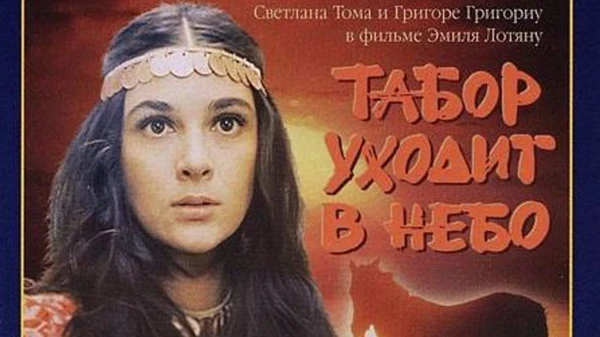
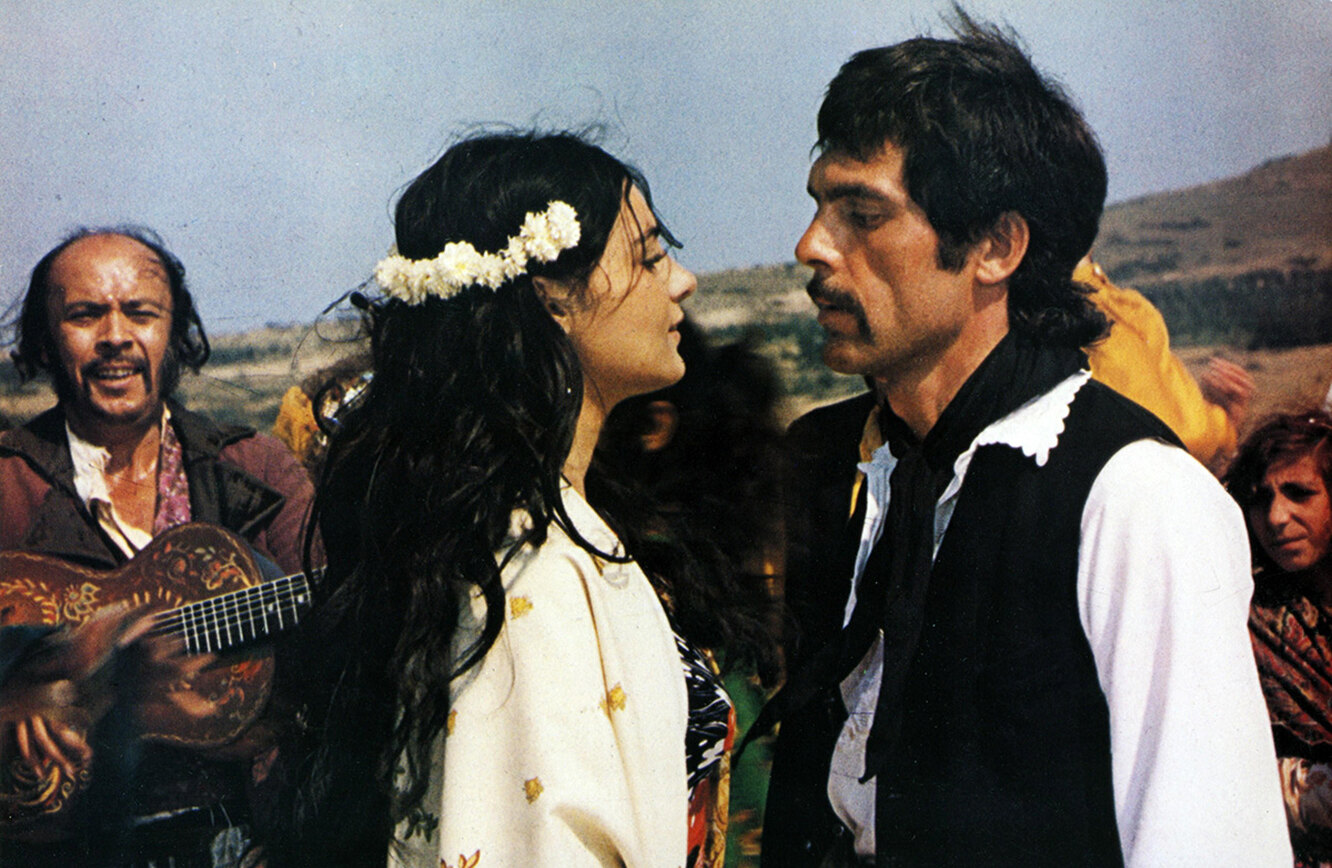
Exactly 50 years ago, on April 5, 1976, the film "The Caravan Goes to the Sky" by Moldovan director Emil Lotianu, based on works by Maxim Gorky ("Makar Chudra" and others), was released. The film turned out to be incredibly bright, romantic, and beautiful, captivating the audience. Only the actors knew what this beauty on screen cost them.
Fateful Stop
Young Svetlana (at that time she bore the surname Fomicheva, and later took the pseudonym Toma from her French grandmother) arrived from a village to Chisinau to enroll in university. Here, at the bus stop, she was noticed by an actor who was preparing to shoot in Emil Lotianu's film "Red Glades": he was looking for a suitable girl who could play his daughter.
Svetlana was hesitant for a long time — after all, she came to the city to become a lawyer! But Lotianu managed to persuade the young beauty. And she could not remain indifferent to the charm of the adult man — intelligent and talented. A serious romance ignited between the director and the aspiring actress, filled with everything — stormy quarrels and reconciliations, breakups and reunions...
When, ten years later, Lotianu decided to make a film about gypsies, he had no doubts about who to cast for the leading female role — the beautiful gypsy Rada, brave and proud, who drives all men crazy, was to be played, of course, by Svetlana. Despite this confidence, the director insisted that Toma go through the casting and screen tests alongside other candidates. The result was all the more evident — it was clear that no one else could handle the role of Rada as brilliantly as she could.
Dancing on Hot Metal
Later, Svetlana Toma told journalists that Lotianu's directorial methods were true cruelty: he was never satisfied with the actors' performances, constantly yelled at them, repeating: "This is bad, very bad! Terrible, talentless! Idiots!"
Of course, the actors were very nervous — the atmosphere on set was unbearable, they had to work literally "to the breaking point." But this is exactly what the extraordinary director aimed for: he was convinced that the actor's "nerve" under such working conditions is visible on screen, the role becomes authentic, "three-dimensional," strong, and the audience, seeing the genuine tension, gets infected by it, believing every word.
Lotianu relentlessly pushed his subordinates: he made everyone get up at five in the morning and work until seven in the evening, all in unbearable heat, in the Carpathians, where the steppe is soaked with dry dust, and real gypsies roam around...
When they filmed the scene where Rada and her beloved Loiko Zobar dance in the steppe, Emil Lotianu did not hide his irritation: due to the heeled boots, Svetlana constantly stumbled and tripped on the dry ground covered with sunburned grass. The director ordered the actors to take off their shoes and dance barefoot on a flat sheet of tin laid over the ground. Still not right...
Enraged, Lotianu took off his shoes and socks, jumped onto the tin "platform" — and immediately jumped off, rubbing his burned feet. Let the actors dance in socks, he decided. But it was still bad — the socks were slippery... In the end, Svetlana Toma and her partner, Grigore Grigoriu, had to dance barefoot on the hot tin sheet. However, the scene turned out to be incredibly passionate and sensual.
At one point, Svetlana Toma, who was bearing the brunt of it all, couldn't take it anymore — she snapped and flew to Moscow, simply running away in hopes that she would be replaced by another actress. But that did not happen: when she returned to the set ten days later, it turned out that the entire crew had patiently waited for her. Only Emil Lotianu was very offended and did not speak to her for a long time, communicating everything through third parties.
The Magic of Melody
The incomparable music of Evgeny Doga is an undeniable component of the success of "The Caravan..." Together with the director, Doga studied ancient gypsy melodies and tunes for months, carefully listening to old singers in the camps, wandering with them to immerse himself in the color of authentic folk songs, selecting only what reflects the rebellious and passionate gypsy soul.
Hundreds of meetings, hundreds of auditions... Inspired by the camp songs, Evgeny Doga created truly immortal musical pieces — Lotianu called them the "musical fresco" of the composer.
The Main Gypsy of the USSR
Released in 1976, the film instantly became a box office leader: it was watched by 65 million viewers. The magazine "Soviet Screen" named Svetlana Toma the best actress of the year. Copies of the film were sold in 120 countries — a record that has not been broken to this day. "The Caravan..." received numerous prestigious awards.
Once, Svetlana Toma was invited to perform in front of an audience at the central cinema in Kharkov. Stepping onto the stage, the actress was stunned: the seats had been removed from the hall, and a huge crowd of real camp gypsies had settled right on the floor, with children and food, with all their belongings... Some were sitting, some were lying down, eating right there, and when songs played during the film screening — many would stand up and start dancing.
It turned out that the gypsies had simply rented the cinema for a while — to admire the beautiful Rada without interference. Seeing the small, fragile Svetlana on stage with her hair tied in a thin ponytail and wearing glasses, they were outraged: who were they being presented with? They wanted to see the beautiful Rada! Not believing that this "girl in glasses" played the lead role in the film, they felt deceived and wrote a complaint to the cinema director.
After the filming was completed, Svetlana bought the clothes she wore as Rada: a gypsy dress, a brightly embroidered shawl, and a necklace. These items are now kept in the actress's family as a reminder of the difficult but brightest episode in her life, of the film that made Svetlana a star.