
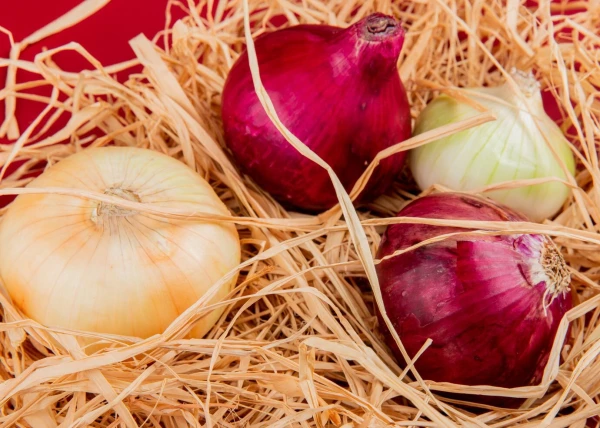
We explore the real difference between white and red onions, beyond color, and how to properly use each type to maximize the flavor of your culinary masterpieces.
Did you know that the right choice of onion can completely change the flavor of your dish? It’s not just a matter of color! White and red onions are two completely different actors on the culinary stage, each with its own character and best role. Let’s figure out when each onion will become your secret star in the kitchen, as this determines whether your dish will be merely good or truly unforgettable.
What’s the Secret of Different Onions?
Both white and red onions are essentially water champions, consisting of almost 89% H₂O. But it’s the natural sugars and unique aromatic compounds they release when cut that make them so different.
White onion is a real troublemaker! It has a sharper, more pungent taste and a bright aroma, especially when eaten raw. When cooked, it quickly loses its crunchiness, becoming soft and tender. That’s why it’s perfect for hot dishes, where its sharpness is softened, as well as for sauces and classic, juicy burgers. It’s simply made for frying!
Red onion, on the other hand, is the epitome of delicacy. Its aroma is much milder, and the taste is pleasantly sweet. Its structure is firm and retains its crunch even after light cooking. Thanks to these qualities, red onion is an undeniable favorite for fresh salads, appetizing sandwiches, and any dishes that need a fresh, crunchy note. Want to make it even milder and remove the slight bitterness? Just soak the sliced red onion in ice-cold water for ten minutes — the flavor will soften, while the texture remains perfect!
Ideal Storage for Freshness
To ensure your onion always delights you with its flavor and health benefits, it’s important to store it properly. Whole onions — both white and red — feel great in a cool, dry, and well-ventilated place, away from direct sunlight. However, cut onions require special care: they should be tightly wrapped (for example, in plastic wrap or an airtight container) and placed in the refrigerator. This will not only prevent its aroma from spreading throughout the fridge but also help maintain its fresh texture.














Leave a comment