The story of Maria Roslikova, a gestalt practitioner, about how to start a new chapter at 33 — without shame, without a race, and with the right to pause.
A New Chapter
Sometimes change comes not as a beautiful "update," but as an internal freeze-frame: you seem to have "done everything right," you have a family, children, status, a familiar role — yet inside, there is anxiety and a feeling of nowhere to go. Maria simply calls it: "I could no longer live by the old patterns" — and it is with this phrase that her personal journey begins, the boldest of all: not to "become better," but to become herself.
By the Script of 'Should' or 'Want'?
— I grew up in a strict religious family, where a system of quite strict rules was accepted: to live by the rules, to be a conscious woman, to meet the expectations of wise people. Being "correct" meant not breaking the rules, not arguing, not standing out. I finished school, got a higher education, built a career in sports, got married, had a son, then divorced — I broke free from an abusive relationship... My second marriage turned out to be ideal — a loving, understanding, caring husband, two sons born close together. But for a long time, I couldn’t understand what was wrong… There was happiness, but it felt like it came through internal resistance. Not loud, not demonstrative — internally.
Maria admits: "I felt like I was trying to write my life script, but I didn’t know how. And at some point, I found myself in a suspended state: 'How am I living, what do I want, how do I move forward? I couldn’t find my place.' This wasn’t just one crisis day, but a kind of background: constant doubts, anxiety, a feeling that 'something is wrong with me,' a sense of being lost... And then what happened next scared many, but for Maria, it became a point of truth: she was diagnosed with depression:
— It hit me like a bolt from the blue! It turned out I had been living in this state for several years, but I didn’t even realize that it wasn’t 'just a phase,' 'just my character,' 'just life,' and 'I need to pull myself together.' And only when therapy was initiated, including medication, did it become clear: the problem wasn’t my 'weakness,' but that I had kept my feelings 'under lock and key' for too long. And I went to figure out: who am I, where am I, and where do I live.
Psychotherapy as the First Honest Step
Maria came to therapy not 'to become more convenient — for her husband, for her family,' but to find answers to difficult questions: 'What do I bring to the world?', 'What is my value?'. And then came the second step, even bolder: she went to study at the Riga Gestalt Institute. And she immediately immersed herself in several processes: education, personal therapy, gestalt therapy, group therapy.
— Looking at myself under a microscope, I would even say 'dissecting' — quite painfully. But necessary. It was then that feelings and emotions began to rise in my soul that had previously been hidden 'under a concrete slab' of psychological defenses.
Maria spoke in therapy for the first time about what she had previously kept silent about in her parental family, in her first marriage...
— Essentially, for the first time in my life, I allowed myself to say: 'Yes, I am not what you expected, and there is nothing shameful about that,' 'I am not becoming a bad person because I am not what you expected,' 'I have the right not to conform to your expectations.' And most importantly: 'I allow myself to be different.'
Maria describes her new emotions as a physical sensation of freedom:
— It was like a second birth. I am now breathing deeply, having finally allowed myself to feel anything in the moment and not to be ashamed.
An interesting effect: while I was learning to ask for support, my loved ones began to turn to me... for advice. I was so surprised: it turns out that even during a difficult time for myself, I had the ability to help others. It just hadn’t been obvious before.
My Love
In Maria Roslikova's story, there is a person who remains in the shadows, but in reality, he is the main support, the pillar, the shoulder, and the strength:
— My husband is not only my love. He is my support. Always and in everything. Always on my side. For my studies. For trips. For new steps. He doesn’t ask 'why do you need this,' he asks 'how can I help?'. Whatever I plan — whether it’s a ski trip, stress-relief shopping, or a hike, he always says 'let’s go together.'

Female Strength
Maria found a place where she regained her resources: women’s retreats with yoga, meditation, and communication. With a special female energy.
— And for me, this is not a 'vacation on beautiful islands,' not an 'Instagram bachelorette party,' but — a new reality. She recalls a period when she didn’t want to see anyone, had no energy for socialization, wanted to hide at home — a typical depressive state that 'is not talked about in our society, where 'successful success' is valued above all. But I gathered my last strength and went to a retreat. And something important happened there: in group therapy, I finally spoke up. Before that, I had been silent, by the way, for many months.
Maria honestly says that she recommends women sometimes 'break free' — leave the children with their husbands, relatives, anyone, but go away, because it gives a chance to feel alive again. A logical continuation, by the way, became the next step 'out of the comfort zone' — Latin American dances.
— There is a different energy: body, movement, liberation, pleasure. Not 'to fix myself,' but to return to myself with ease. I allowed myself to be alive, even during a difficult period inside.
Children and 'Preventive Psychology'
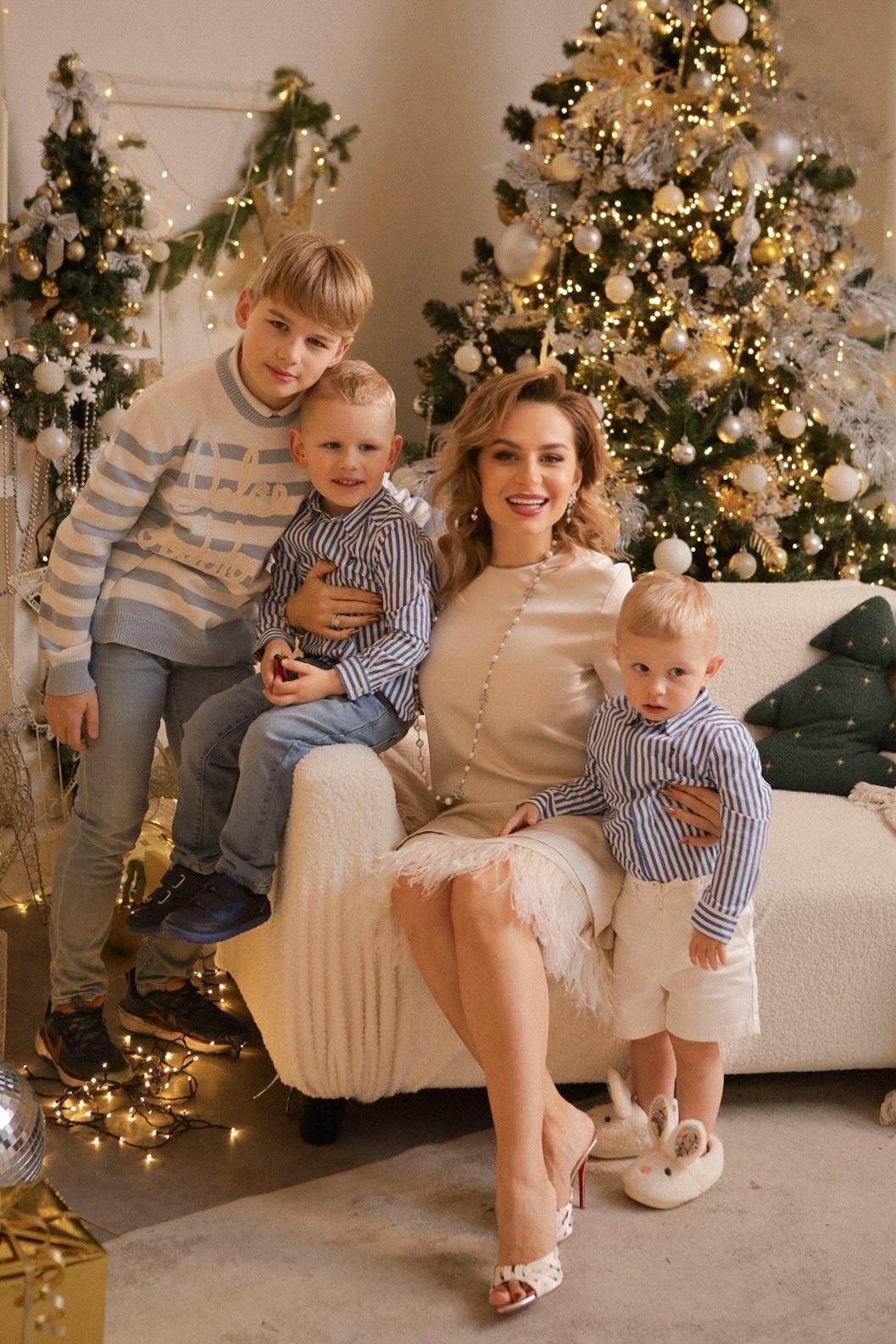
— My eldest son is soon to be 12. After delving into psychology, I suddenly realized: my own background could influence him, and I decided not to wait until the 'tsunami of puberty' hits, but to provide preventive support.
She explained to her son simply: there may be things he cannot tell his mom, but he can tell a specialist. And her son agreed. And he went to the school psychologist. With whom he had an excellent connection. Maria is happy not because she 'controls,' but because her son now knows: help exists, and he can reach out for it.
'Nothing Should Be Postponed'
In our conversation, there is an adult, very modern anxiety: news, crises, wars, the feeling that everything could change tomorrow. Against this background, Maria voices her new principle: 'What we’ve thought of — we do right now. We don’t postpone anything — neither meetings, nor trips, nor, especially, communication with people.' I know firsthand about the effect of 'postponed life.' I don’t want that anymore.
The Right to Pause
— And you know what the most important thing I realized literally at the end of last year was? Right at 33? That sometimes you need to allow yourself to 'do nothing.' A pause. Coffee. Silence. Non-doing. Not because 'there’s nothing to do,' but because the rest of the time a woman is busy with everything — for everyone. Except for herself.
So I am learning again and again to choose myself — without guilt. I am learning to stop, breathe, hear myself, return to myself not as a function (mother/wife/employee), but as a woman.
Yes, I live a complicated life. But I am learning to see what I want and I know exactly what I don’t want. I never want to live 'well, it is what it is' again, but I want to leave a mark behind. To do something good.
...Maria is piecing herself together, assimilating experiences, learning to be in resource — so that later, from fullness, she can give goodness and light to the world. And this is the adult success story of a woman: not about how everything turned out perfectly, but about how to return to oneself.