
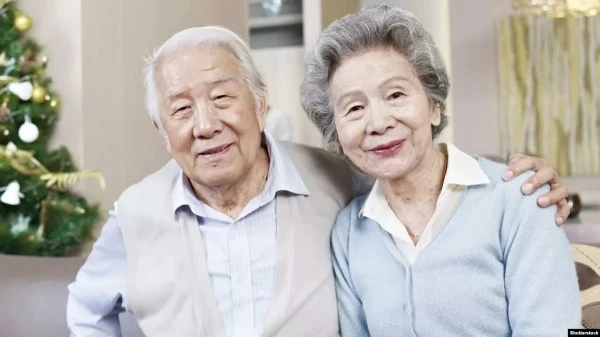
Scientists compared life expectancy in Japan and Sweden, where healthcare quality is considered among the best. Surprisingly, in this competition, Sweden lost.
In Japan, as of 2024, women live an average of 87 years, while men live 81 years. This is 10-12 years longer than the global average life expectancy. However, scientists have found that these figures do not necessarily mean that the Japanese are healthier.
An international group of researchers compared Japan and Sweden — a country considered one of the world leaders in treating cancer and cardiovascular diseases and that generally boasts a high quality of healthcare.
The authors conclude that elderly Japanese and Swedes have approximately the same number of years of healthy life, meaning the years during which people can take care of themselves without needing assistance. But the situation changes when elderly people can no longer manage without help. During this period, the overall life expectancy in Japan was found to be two years longer than in Sweden.
"It is important to identify which aspects of elderly care influence life expectancy, especially considering that more and more people are living to very old age," says Shunsuke Murata, a researcher from the Karolinska Institute in Sweden and Kobe University in Japan.
The study involved more than 850,000 Swedes and over 330,000 Japanese. Participants were divided into three groups: some received home care, others lived in nursing homes, and no one cared for the third group. Ultimately, the researchers found three explanations for why Japanese people live longer.
First, Japan has more intensive medical care for the elderly. The country leads in the number of hospitalizations per capita, the number of doctor consultations, and the length of hospital stays.
Second, Japan has developed as many as seven levels of need for long-term care. The specific level required for each individual is assessed according to a unified national system. In Sweden, the need for care is determined at the municipal level, which does not always meet the needs of the elderly.
Third, in Japan, elderly people often continue to live with their children and grandchildren, meaning they receive care from family members. In contrast, in Sweden, older people are much more likely to live alone. It is assumed that children and grandchildren will not have the opportunity to care for their grandparents — this is the basis of the Swedish social welfare model. In Japan, however, this is not the case, and perhaps because of family support, elderly people live longer.











Leave a comment