
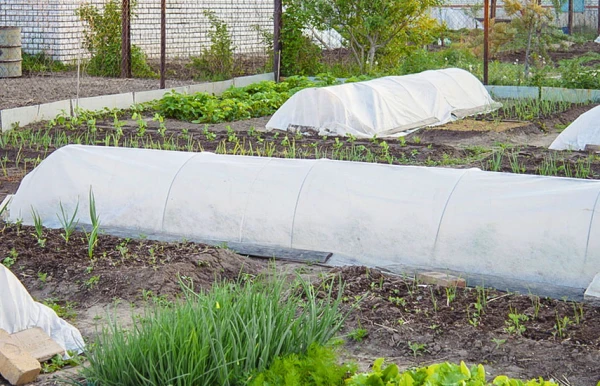
Treacherous spring frosts can become a real disaster for your garden and vegetable patch, destroying delicate flowers and young sprouts. But don’t rush to despair! There are effective and time-tested ways to help preserve your harvest and the beauty of plants even on the coldest spring nights.
Spring is a time of awakening and hope in every garden. In April, nature comes to life, buds swell, and trees are about to bloom in all their glory. However, it is during this seemingly idyllic period that gardeners face a treacherous enemy — spring frosts. They can destroy all your hard work in just a few hours, ruining delicate blossoms, young seedlings, berry bushes, and heat-loving crops. But don’t panic! There is a whole arsenal of effective methods to combat the cold and save your harvest. Among them are reliable coverings, proper watering, misting, creating a smoke screen, and using special protective agents.
Who is at Risk: The Most Vulnerable Plants
Unfortunately, not all plants withstand spring temperature fluctuations equally well. Some are particularly sensitive to sudden cold snaps and require your special care:
-
Fruit trees in bloom: especially vulnerable are apricots, cherries, sweet cherries, peaches, and plums. Their delicate flowers can be destroyed overnight.
-
Young tree seedlings: their root systems are not yet strong, making them extremely defenseless against the cold.
-
Fruit and berry bushes: currants, blueberries, gooseberries, strawberries, raspberries, blackberries, and grapes — all can suffer significantly.
-
Delicate flowers: marigolds, roses, dahlias, nasturtiums — their beauty can wither under the influence of frost.
-
Heat-loving vegetables: zucchini, pumpkin, cucumbers, beans — these crops cannot tolerate even the slightest chill.
-
Vegetable seedlings: especially those that have not been hardened off or poorly rooted. Eggplants, tomatoes, peppers — their sprouts are very sensitive.
Life-Saving Coverings
Creating protective coverings is one of the most reliable ways to shield your green pets from the treacherous spring cold.
For Small Plants
Perennial flowers, strawberry beds, or seedlings can be easily protected by covering them with improvised materials:
-
Cardboard boxes
-
Glass jars
-
Cut plastic bottles
Remember: under such airtight coverings, plants lack air, so do not leave them for too long. Remove the protection in the morning as soon as the threat of frost has passed.
For Trees
Larger plants require more substantial protection:
-
Fabric materials: old blankets, burlap, sheets are excellent for emergency protection of individual trees from sudden night frosts. Important: remove the covering immediately after sunrise to avoid overheating the buds.
-
Agrotextiles: this is a true champion among covering materials! It is lightweight, allows air to pass through well, and effectively retains heat. Small trees can be completely covered, while for larger ones, focus at least on the central part of the crown.
Folk Tricks to Strengthen Immunity
In addition to physical protection, you can help plants strengthen their internal forces. Treatment with natural infusions is an excellent preventive measure:
- Infusions of nettle, yeast, or ash: these natural elixirs will help your plants become more resilient. Treat them one or two days before the expected cold snap.
It is important to understand that such means do not replace full coverings, but they significantly increase the chances of plants coping with frost stress more easily.
Additional Rescue Methods
When it comes to combating frosts, a variety of techniques can be employed. Here are a few more effective methods:
Misting: An Icy Shield
This method is ideal for saving vegetable crops, shrubs, and even trees. Spray the crowns of plants with slightly salted water. When it freezes, the water forms a thin ice crust, which, strangely enough, helps retain heat inside the plant. This "icy shield" is effective when temperatures drop to -2…-3 °C. An important nuance: misting will only work in calm weather; otherwise, the effect may be the opposite and only exacerbate the damage from the cold.
Abundant Watering and Mulching: Heat from Below
Before the onset of frost, in the evening, during calm weather, generously water the area. Water, freezing in the soil, releases heat, creating a sort of "safety cushion" for the roots. Such watering can protect plants at temperatures down to -2 °C. Don’t forget the norms:
-
Under an adult tree: 5–10 buckets of water
-
Under bushes and grapes: 4–6 buckets
To enhance the effect, additionally protect the roots:
-
Mound with soil
-
Mulch with sawdust
-
Cover with straw or bark
Smoke Screen: A Life-Saving Fog
This old but proven method is indispensable in large gardens and vineyards. When the thermometer approaches zero, spread piles of damp leaves, sawdust, or straw around the area. Ignite them so they do not burn with an open flame but smolder slowly, creating thick, enveloping smoke. This smoke forms a thermal barrier that can protect plants from cold down to -5 °C.
Fertilizers and Modern Preparations: A Scientific Approach
For those who prefer more technological solutions, there are special preparations and fertilizers that can significantly increase the frost resistance of your plants.
Potassium-Phosphorus Fertilizers
Fertilizers like monoammonium phosphate strengthen the cell walls of plants, making them more resistant to stress. Dissolve them in water and spray the trees 2-3 days before the expected frost.
Growth Stimulators
Preparations like "Vertex" and "Zircon" not only stimulate growth but also significantly enhance the plants' immunity, helping them cope more easily with sharp temperature fluctuations. Treatment should be done at least a day before the onset of frost.
Cryoprotectors
These are true "antifreezes" for plants! Cryoprotectors, such as "Vympel" and "Epin," contain substances that either form a protective film on the surface of the plants or penetrate their tissues, preventing the formation of destructive ice crystals. Treatment must be carried out no later than six hours before the expected cold snap. The protective effect of these preparations can last up to seven days, giving your plants valuable time.















Leave a comment