
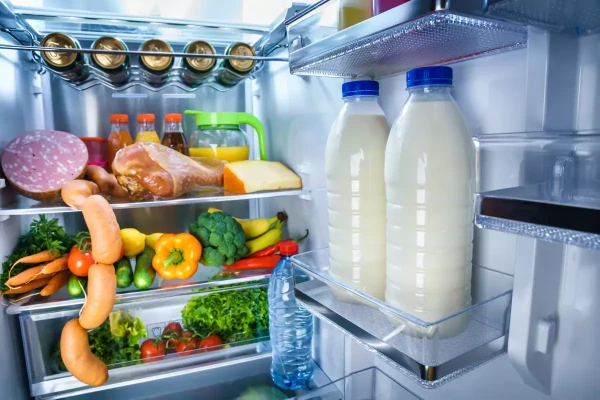
Proper organization of the refrigerator can significantly extend the shelf life of food and reduce food waste. Experts explain how to properly distribute food by zones and which habits really work.
Why It Is Important to Properly Distribute Food
The refrigerator is not a single space, but a system with varying temperatures and humidity. The freshness of food depends on the correct placement of products. On average, the temperature is distributed as follows: the door is the warmest zone, the upper shelves are moderately cool, and the lower shelves are the coldest.
Improper storage can accelerate food spoilage and lead to bacterial growth, so it is important to consider the characteristics of each zone.
How to Distribute Food on Shelves
It is recommended to store ready-made dishes, dairy desserts, and frequently used products on the upper shelves. The middle level is suitable for milk, cottage cheese, cheeses, and opened packages.
The lower shelves—the coldest place—are intended for raw meat, fish, and poultry. This is also important from a safety perspective: such products are better kept at the bottom to prevent juices from contaminating other foods.
Vegetables and fruits should be stored in special drawers with increased humidity, as this helps them stay fresh longer.
At the same time, the refrigerator door is suitable only for sauces, drinks, and long-lasting products, as the temperature there is unstable.
Which Foods Should Not Be Stored in the Refrigerator
Not all food needs refrigeration. Some products, on the contrary, spoil faster in the cold. These include tomatoes, bananas, potatoes, onions, garlic, and a number of tropical fruits.
It is also not recommended to store honey, olive oil, and coffee in the refrigerator, as they lose their properties at low temperatures.
Life Hacks for Extending Freshness
There are several simple tricks that help keep food fresh longer. For example, herbs can be stored like a bouquet—in a glass of water with a light cover on top. Berries are better not washed in advance and kept in a container with a paper towel.
Salads and leafy greens should be thoroughly dried before storage—excess moisture accelerates spoilage. Cheese is recommended to be wrapped in parchment, not plastic wrap, to allow it to "breathe."
Organizing Space: Order and Control
Experts recommend using transparent containers and baskets—this helps quickly find products and not forget about them.
Another rule is rotation: fresh products should be placed at the back, while those that need to be eaten sooner should be at the front. Regularly checking the refrigerator helps avoid the accumulation of spoiled food.
It is also important not to overload the refrigerator—air circulation directly affects even cooling.
...Proper organization of the refrigerator is not only a matter of order but also a way to preserve food, reduce expenses, and improve the quality of nutrition. Simple habits—from sorting to regular audits—can significantly enhance storage efficiency and avoid unnecessary waste.













Leave a comment