
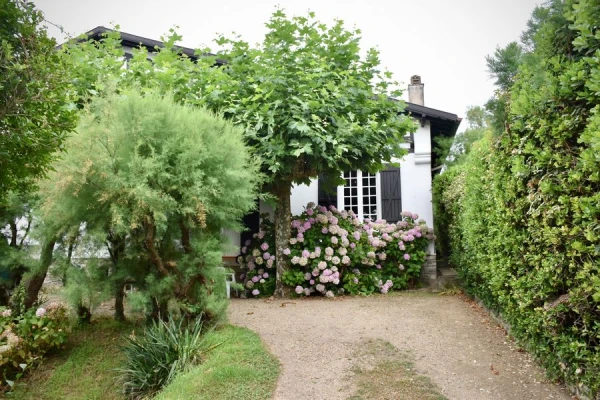
Fast-growing tree varieties are preferred precisely because of their rapid growth, but not all of them enhance the landscape in the yard. The fact is that some of these trees can dominate, displacing other plants and interfering with power lines and structures, especially in small plots, writes Marthastewart.
In this regard, experts have discussed fast-growing trees that should be avoided to prevent unnecessary problems.
1. Maple
This is a fast-growing large deciduous tree. In spring, before the leaves appear, tiny red flowers bloom, creating a beautiful sight. Although this tree grows quickly, gardener Kristi Baldini noted that it has very weak wood that breaks under strong winds.
Additionally, Baldini pointed out that its shallow roots can penetrate lawns, water supply systems, and sidewalks, creating problems.
2. Willow
This elegant tree thrives in low areas where water tends to accumulate. However, gardener Melissa Higgins warned that the large size of the tree and its dense foliage may lead to reconsideration of planting it in small plots or yards.
3. Aspen
It is not recommended to plant it in a typical backyard. "These trees grow incredibly fast and can reach heights of up to 24 m, with most of the crown located on a tall, narrow trunk," Higgins said. She also noted that in strong winds, the tree tends to break in half, causing the upper part of the crown to fall to the ground. "This can lead to significant damage and costly cleanup," she warned.
4. Pine
This is a great choice for fields needing reliable wind protection; however, it is not recommended to plant it in the yard.
Experts explained that due to climate change and the increasing occurrences of heavy wet snow or ice, these trees can grow to significant sizes, making them prone to substantial branch breakage. This can lead to property damage and complicate cleanup when branches fall to the ground.
5. Acacia
"Although it is frost-resistant and establishes quickly, acacia aggressively spreads through underground shoots," Baldini explained.
She also noted that this tree can quickly take over the entire yard and is very difficult to remove once it has rooted.
6. Poplar
Some species of poplars can grow up to 2.4 m per year. However, as Baldini noted, poplars have a short lifespan, usually only 15 to 25 years. Additionally, they are susceptible to diseases and damage, and their aggressive roots can cause problems with foundations and drainage.














Leave a comment