
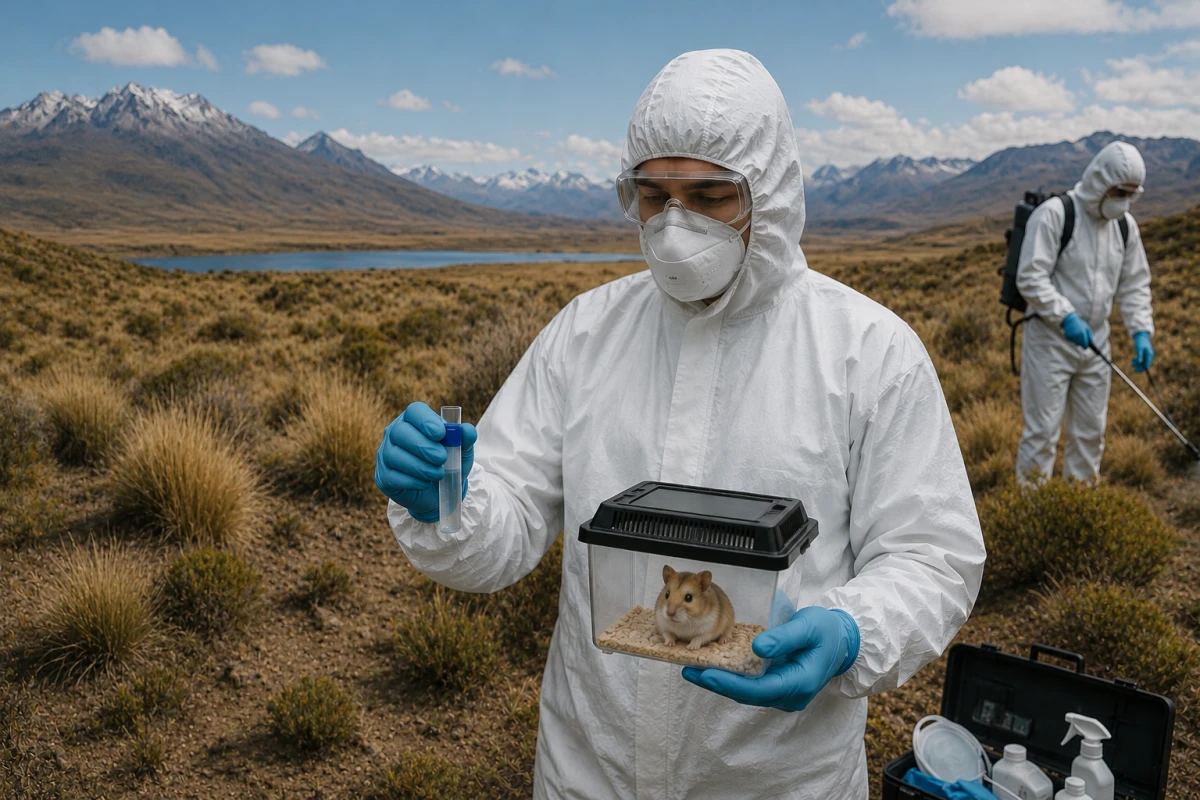
Hantavirus, the outbreak of which recently occurred on the cruise ship MV Hondius, can leave severe consequences even months after the illness. Studies have shown that most surviving patients were unable to fully recover six months after infection.
Hair loss, nightmares, and 12 other consequences of hantavirus that persist even months later
It turns out that hantavirus, like COVID-19, leaves its mark on the body. Studies show that more than half of survivors were unable to recover even six months after the illness.
The fatality rate is between 20% and 50%, and there is no specific treatment. Barely recovering from COVID-19, the world faced a new threat — hantavirus. The outbreak occurred aboard the Dutch cruise ship MV Hondius, which was traveling from South America to Africa.
According to the latest data from WHO, nine cases of infection have been confirmed, with two more individuals under investigation. Three passengers of the ship have died. It was later revealed that the index patient was 70-year-old ornithologist Leo Schilperoord. Four days before the cruise, he was observing rare birds at a landfill in Argentina. There is a theory that the ornithologist inhaled particles of feces from dwarf rice field rats, which carry the only strain of hantavirus that is transmitted from person to person — the “Andes” strain.
Symptoms of infection appeared already aboard the ship. Five days later, the man died, and a couple of weeks later, the ornithologist's wife also succumbed to the virus.
Unfortunately, even those who survived hantavirus are likely to face the viral aftermath that the infection leaves, similar to the coronavirus. Scientists from Chile monitored 21 surviving patients for 3-6 months after their discharge from the hospital.
The study showed that all those who had contracted hantavirus continued to experience symptoms for several months after being discharged from the hospital.
Three months later, the most common complaints affecting more than half of the survivors were:
- fatigue (81%);
- motor disorders (71%);
- hair loss (67%);
- insomnia (62%);
- anxiety (57%);
- shortness of breath (57%);
- memory problems (52%);
- sensory disturbances (52%);
- nightmares (52%).
Moreover, patients with severe virus cases who received ECMO (temporary life support using artificial heart and lungs) more frequently reported motor disorders (91% vs. 50%) and palpitations (55% vs. 10%) compared to patients who did not receive ECMO.
However, patients who did not receive ECMO more often reported shortness of breath, anxiety, cough, low mood, and sleep problems. Additionally, patients complained of vision and hearing issues.
"Among the 21 survivors, 61.9% reported that they had not fully recovered six months after contracting hantavirus," the authors of the study published in the journal Viruses summarize.
As mentioned earlier, the “Andes” strain is the only known hantavirus that is transmitted from person to person. According to WHO, such cases of infection remain rare. Virus transmission has only been documented in North and South America. All officials and health service representatives assess the risk of a new epidemic or even a pandemic as low and very low.
"Hantavirus transmission occurs in close contact: in domestic settings, during intimate contacts, or after prolonged stays in crowded or poorly ventilated spaces," explains virologist Rhys Parry to The Conversation.
According to the scientist, hantavirus is not as contagious as coronavirus. For comparison, estimates suggest that each person infected with COVID-19 transmitted the virus to an average of two or more people.
"For the ‘Andes’ strain to be transmitted from person to person, ideal circumstances must occur: symptomatic individuals in crowded, poorly ventilated spaces, in close and prolonged contact with each other. That’s what happened on the cruise ship," says the virologist.
Experts explained that the natural reservoir of the “Andes” strain — the dwarf rice field rat — is found in Argentina and Chile.
In the opinion of the editorial team, the story of hantavirus serves as a reminder of how dangerous even rare infections can be. Although specialists are not yet talking about the risk of a new pandemic, the consequences of the disease for the body have turned out to be significantly more serious than previously thought. Studies show that even after recovery, many patients face memory, sleep, breathing, and overall health issues for months, meaning that viruses of this type require no less attention than the already familiar COVID-19.













Leave a comment