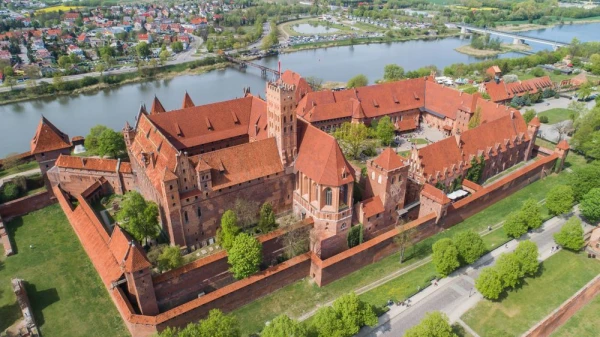
In northern Poland, right on the banks of the Nogat River, stands Malbork – a structure that is officially considered the largest castle in the world by area. This giant of red brick occupies about 21 hectares, and since 1997 it has been recognized as a UNESCO World Heritage Site. Today, the castle is not just an architectural monument, but a true marvel of medieval engineering, according to a report by Nordkurier.
The history of Malbork began in the 13th century when the Knights of the Teutonic Order decided to build a fortified monastery here. However, the modest plans quickly changed: the castle became the residence of the Grand Masters and the center of governance for an entire state. In 1309, Master Siegfried von Feuchtwangen even moved his headquarters here from distant Venice to be at the very center of events.
From Monastery to Center of European Power
Throughout the 14th and 15th centuries, Malbork was a true symbol of power. In its majestic halls, leaders of the order were elected and important ambassadors of contemporary Europe were received. The scale of the Great Hall – Großer Remter, where up to 400 guests could feast at the same time, is impressive.
After the order's defeat at the Battle of Tannenberg in 1410, a period of decline began, and in 1457 the castle came under the control of Polish kings, serving as their residence.
Resurrection from the Ruins
The path of the fortress was not easy. After the order's defeat, the influence of the knights began to wane. By 1457, mercenaries simply sold the castle to the Polish king. Since then, it has served as both a royal residence and even barracks during Prussian rule.
The most severe trials befell Malbork during World War II – the castle was 60% destroyed. However, the Poles did not leave it in ruins. Restoration began in 1946, and today an interesting detail can be seen on the walls: the combination of dark and light bricks clearly shows the boundary between the original parts and those that were rebuilt.
Legends and Architectural Mysteries
The castle literally "breathes" legends. One of them states that during construction, a stone from the Last Supper was laid in the foundation, brought from Jerusalem. It is believed that this holy talisman protects the castle from complete destruction.
Visitors are usually struck by two things:
The Grand Master's Palace: its elegant palm-vaulted ceiling is supported by a single granite column.
The Madonna Statue: an eight-meter figure in St. Mary's Church, associated with numerous mystical stories of divine punishment for those who attempted to damage it.
Today, Malbork welcomes around 500,000 tourists annually. People come here not only for beautiful photographs but also to feel the spirit of the past in the museum halls, where medieval sculptures, rare documents, and incredible amber artifacts are stored, writes the author.