
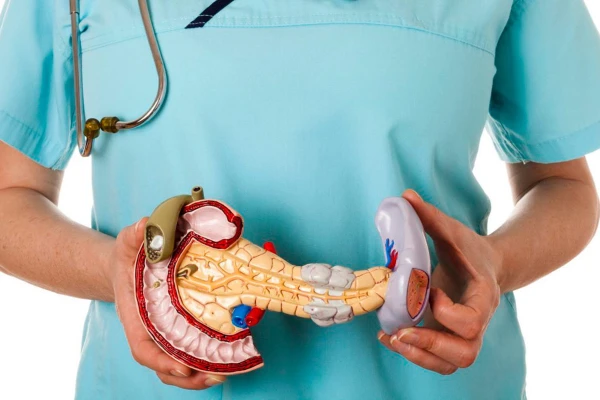
Cold, hunger, and rest—the golden rule for first aid in pancreatic diseases. On one hand, it plays a huge role in the processes of food digestion; on the other hand, the peculiarities of nutrition can literally kill it.
The pancreas is one of the most important organs in our body. It synthesizes digestive enzymes and insulin. However, certain dietary mistakes can undermine its health. Tatiana Perekhodtseva, a gastroenterologist, explained what can disrupt the function of the pancreas and how to support its functions.
Small but Mighty
The pancreas is a small but extremely important organ located behind the peritoneum at the level of the 10th thoracic vertebra. Its weight is only 70–80 grams, but the functions it performs cannot be overstated. The pancreas plays a key role in digestion and metabolism.
The exocrine function involves the production and secretion of pancreatic juice. It contains enzymes necessary for the breakdown of proteins (such as trypsinogen), fats (lipase), and carbohydrates (amylase).
These enzymes are critically important for nutrient absorption in the intestine. If this process is disrupted, maldigestion (improper digestion of food) and malabsorption (impaired nutrient absorption) can occur.
The endocrine function of the pancreas is related to the synthesis of hormones such as insulin, glucagon, and somatostatin. Insulin regulates blood sugar levels, while glucagon promotes its increase by stimulating liver function. Somatostatin, in turn, regulates the production of insulin and glucagon. All these functions depend on various factors, including bile flow, stomach acidity, and food composition.
What Destroys the Pancreas
The pancreas is an organ that is easily affected by improper nutrition, and this applies not only to food products but also to eating patterns.
Chaotic Eating
Remember how Ponchik from the animated series "Neznaika on the Moon" said: "You must not violate the eating schedule." He was right. One of the main enemies of pancreatic function is irregular meals, where there are no intervals between food or, conversely, there are too long periods of hunger. Such experiments overload the small organ, creating increased risks.
Chaotic eating harms the pancreas by creating sharp fluctuations in load. Prolonged fasting is followed by overeating, which causes excessive enzyme production. This can predispose to impaired pancreatic juice outflow and self-digestion of the gland's tissues (acute pancreatitis). Additionally, it creates a predisposition to the depletion of the islet apparatus, increasing the risk of diabetes.
According to recommendations, there should be 3–4.5 hours between meals, but no more than five. Remember that long periods of hunger are dangerous, as there is a real risk of overeating, which adds extra stress on the pancreas. A large volume of food consumed at once can be a real trauma for the pancreas.
And an important recommendation: it is not recommended to eat or drink beverages with so-called empty calories—such as juices, coffee with milk, cream, and, of course, sodas—2–3 hours before sleep. These recommendations are part of dietary hygiene.
Fatty Foods and Fats: But Not All
There are many recommendations online. Some of them are simply unfounded, while others require clarification. One of the most frequently discussed topics is fatty foods and fats. Here, clarification is needed. Firstly, there are harmful fats, such as trans fats, which include fast food, margarine, spreads, industrial pastries (cakes, cookies, waffles), snacks (chips, popcorn), mayonnaise, and frozen semi-finished products. These should indeed be limited.
Secondly, there are healthy fats, such as those found in meat, fish, vegetable and butter oils, and some vegetables. They are essential for humans. These should not be reduced or completely excluded. They are necessary for cellular metabolism, hormone production, and more. Healthy fats do not negatively affect the function of the pancreas. However, trans fats can have a negative impact.
Alcohol
Ethanol is metabolized not only by the pancreas but also by the liver. Therefore, to prevent unwanted consequences, harmful fats and alcohol should be consumed in moderation and limited. When it comes to the impact on pancreatic function, the risks from consuming alcohol and cakes are approximately the same.
Dietary Rules for Pancreatic Diseases
For those who already have pancreatic diseases that threaten the development of pancreatitis, it is important to closely monitor their diet. There are several basic recommendations.
Exclusion of Fried and Baked Foods
Fried and baked foods, whether meat or pastries, are difficult to digest. Healthy individuals can afford such food once a week, but those suffering from pancreatic diseases should better exclude it from their diet during treatment. It is important to remember that dietary recommendations should be given by the attending physician.
Variety of Proteins
The assortment of proteins in the diet should be diverse. Their sources should include both plant and animal foods. Preference should be given to boiled and stewed foods. This can include not only chicken but also beef, veal, turkey, quail, and other protein sources, such as grains and vegetables.
Problems with the Pancreas: Five Signs
Signs of pancreatic dysfunction can first appear at any time and at any age. The following symptoms are a reason to seek medical help:
- nausea and vomiting (often with bile), which does not bring relief;
- frequent bloating;
- diarrhea, often with greasy stools that do not flush away easily, with an unpleasant odor;
- sudden weight loss while maintaining appetite;
- weakness, appetite disturbances.
But there are also alarming signs indicating the development of acute pancreatitis—this is a serious pathology that threatens a person's health and life. You should urgently seek medical help if the following occur:
- sudden, unbearable belt-like pain in the upper abdomen radiating to the back, shoulder blade, or sternum;
- nausea and vomiting;
- changes in stool—it may become greasy and light-colored;
- pronounced fatigue and weakness.
Maintaining the health of the pancreas is an important task for anyone striving to lead a healthy lifestyle. Understanding which foods can negatively affect this organ will help you avoid many problems. Pay attention to your diet, choose quality products, and do not forget about regular medical check-ups.















Leave a comment