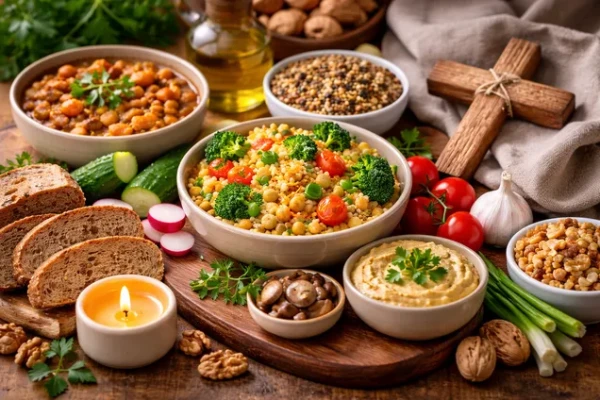
With the arrival of Great Lent, many on social media and among acquaintances begin to discuss it as a way to lose weight or "cleanse the body." In fact, Great Lent in the Orthodox tradition originally has nothing to do with diets for weight loss. It is a spiritual practice that includes dietary restrictions, attention to oneself, and rethinking one's relationship with bodily desires. Nutrition experts and priests emphasize that fasting should be viewed holistically — with care for health and without the desire for instant weight loss.
The Deep Meaning of Great Lent
For Orthodox Christians, Great Lent is one of the most significant periods of the liturgical year. It lasts for 40 days and serves as preparation for Easter — the main Christian holiday of the Resurrection of Christ. Fasting is viewed not as a way to lose weight, but as a time for spiritual purification, intensified prayer, and self-improvement.
The priest notes that the goal of fasting is not to achieve a personal objective, such as weight loss or "detoxing," but rather to focus inwardly, participate in services, and refrain from habits that distract from spiritual life.
Why Fasting ≠ Diet: Myths and Reality
Many mistakenly perceive dietary restrictions solely as a means to lose weight. However, the reasons for this misunderstanding are several:
Fasting rules are primarily related to abstaining from animal products, rather than consciously limiting calories.
Weight loss may not occur at all if the diet remains monotonous or is high in carbohydrates — bread, cereals, and baked goods.
Restrictions concern the quality of food, not its quantity — overeating on fasting food does not bring one closer to spiritual goals.
That is, if a person simply replaces meat with bread and pasta but eats just as much, their weight may remain the same or even increase. Fasting does not imply mechanical weight loss.
How to Eat Properly During Great Lent
To ensure that fasting is beneficial and does not harm health, it is important to follow the principle of balanced nutrition. Nutrition experts recommend:
-
Adding a variety of plant-based protein sources to the diet: legumes, lentils, beans, chickpeas, tofu, and tempeh.
-
Including plant-based fats: cold-pressed olive oil, nuts, avocados — this helps maintain hormonal balance and absorb vitamins.
-
Paying attention to vitamins and minerals that may be lacking when limiting animal products.
Medical practice also emphasizes that strict adherence to fasting may not be recommended for people with chronic illnesses, the elderly, and those who are physically heavily loaded — they should approach fasting with dietary adaptations or consult a doctor.
Not Only the Body, but Also the Spirit
The meaning of Great Lent goes deeper than physiological changes. In traditional Christian practice, it includes not only abstaining from certain foods but also intensifying prayer, participating in worship services, and working on internal habits. This is a time of discipline, awareness of bodily needs, and freeing attention from constant bodily desires.
Priests emphasize that fasting is not a competitive marathon or a dietary challenge. It is aimed at a deeper understanding of oneself, strengthening faith, and reorienting life priorities.
...Great Lent is not a way to lose weight, but a multifaceted tradition that combines spirituality and health care. To go through it beneficially, it is important to view dietary restrictions not as a diet, but as an opportunity to reassess habits, strengthen discipline, and structure nutrition in a way that supports the body. A diet rich in plant-based foods and product variety, combined with a mindful approach to fasting, will help one feel better both physically and spiritually.