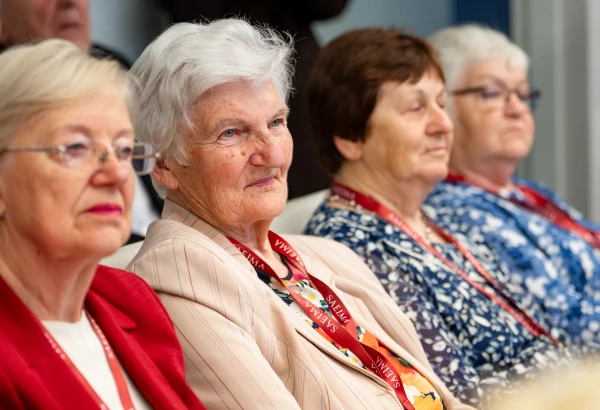
People who live to 90-100 years old made certain choices in their lives that granted them additional decades of life. As researchers found, these nine habits, rather than luck and medical procedures, extend years.
The decisions we make at 40-45 years old can determine our future life. This is stated in a study of more than 700,000 people. It showed that those who developed certain habits by the age of 40 lived 24 years longer than those who did not adhere to any of them. In numbers, this is like the difference between dying at 66 and living until 90.
Here are the habits that people who live to 90 began to form at 40, but many postpone them until it is too late.
1. Maintain social connections
Many find that by the age of 40-50, friends become few, family matters take up more time, and there is little time for meeting friends. Visits become rarer, joint trips are forgotten, at most — occasional phone calls. This pattern is more dangerous than it seems.
The study showed that social isolation increases the risk of premature death by 30%, similar to smoking 15 cigarettes a day. People who live to a ripe old age always talk about maintaining strong ties with loved ones and friends. If you are over forty and cannot name five people who would help you in trouble, it is worth considering. It is never too late to start socializing and making new friends — it adds years to life.
2. Know why you get up in the morning
The study showed that people with a clear understanding of the meaning of life and what drives them forward (work, public affairs, hobbies, family, faith) live significantly longer than those who do not, who simply live on autopilot with the principle of "the day has passed — and that's fine." In Okinawa, a region with many centenarians, there is a philosophy called "ikigai," which means pleasure and meaning in life — what makes you get out of bed in the morning.
3. Protect your sleep
At 20, you can get by with five hours of sleep and perk up with a cup of coffee. By 40-50, this scheme no longer works, even though it seems that there is nothing wrong with lack of sleep. But health problems accumulate gradually and imperceptibly.
Studies from Stanford Medical School show that lack of sleep in middle age is associated with accelerated cognitive decline, increased risk of cardiovascular diseases, obesity, and diabetes. If you neglect recovery, your body will gradually start to fall apart.
4. Don’t eat as if you are still 25
Scientists have proven that metabolism remains relatively stable until the age of 60. But by 40-50, it is no longer advisable to indulge in pastries, sweets, and forget about adequate protein intake. It’s all about the decrease in muscle mass and increase in fat deposits. Foods that you could afford in your 20s create problems in your 40s.
Harvard research showed that people who ate more plant-based foods, fiber, and less sugar and processed foods significantly more often lived to 70 without serious chronic diseases.
5. Manage stress before it becomes chronic
A life without stress does not exist; sometimes it is even beneficial for the body. But the difference lies in how you cope with it. The "blue zones" study showed that one of the nine characteristic habits of centenarians is reducing stress levels. Moreover, various methods are practiced. The main thing is that they exist at all: walking, meditation, sleep, prayer, socializing with friends, pillow punching — anything!
Chronic stress causes inflammation — the cause of almost all major diseases related to aging, from diabetes to dementia and cancer.
6. Keep moving
People who live to a ripe old age do not lie on the couch without moving. They are always active and spend the day on their feet: going to the store, gardening, trimming bushes, climbing stairs, doing household chores. Studies confirm that the total number of steps taken in a day or week brings significant health benefits, regardless of how those steps were taken.
Strength training is also important. After 30, people lose up to 8% of muscle mass every 10 years, and after 60, this decline accelerates dramatically. Sarcopenia — age-related muscle atrophy — increases the risks of fractures and metabolic disorders. Therefore, it is crucial to train the body, providing not only aerobic (walking, swimming, cycling) but also strength training.
7. Be moderate with alcohol
This is an eternal debate. Some insist that only complete abstinence from alcohol is the road to healthy aging, while others cite Spaniards and Italians, who do not count glasses of wine.
But many scientists and doctors agree on "moderate consumption" as one of the most important factors influencing longevity. People who lived to 90 were not necessarily teetotalers. But they certainly drank much less than their peers and did not use alcohol to relieve stress, fall asleep, or loosen up in company. They consumed it occasionally and in very small amounts — this formula works.
8. Maintain curiosity
Cognitive decline does not begin at 60 but at the age when a person stops learning. Centenarians keep their minds active into old age not because they solve crosswords but due to genuine curiosity, continuous learning, and constant engagement in various activities — work, home, and so on.
Studies show that goal-oriented people who are passionate about something are 24% less likely to become physically frail and demonstrate significantly better cognitive functions with age.
9. Don’t treat health as something that can be fixed later
Most people think there is still time to think about health, but the earlier healthy habits are formed, the longer the period of healthy life — years lived without chronic diseases. People who lived to 90 did not wait for a "kick" or a signal like "until the rooster crows." They knew that health does not appear at 70; the main task is to maintain it. And the sooner you think about it, the better.