At the end of winter and the beginning of spring, Russians buy vitamin D to replenish its reserves in the body after a long period without sunlight. But this tactic does not work: fatigue and apathy do not go away. Why?
Pharmacy vitamin D does not always fulfill its purpose, and there are several reasons for this, explained Anastasia Samoilova — a family doctor, endocrinologist, preventive integrative medicine physician, dietitian, and nutritionist. Why might pharmacy capsules not work, and how can one replenish the missing amount of vitamin D through diet?
Top in Sales
Vitamin D indeed holds a leading position among dietary supplements, especially in demand during winter and spring. The main reason for its popularity is related to the ability of vitamin D to be synthesized by the body only under the influence of sunlight. However, in conditions of prolonged winter, lack of sunlight, and predominantly cloudy weather, the body often experiences a deficiency of this important substance.
This leads to increased interest in an additional source of vitamin D, as its deficiency manifests in unpleasant symptoms such as weakness, reduced immunity, worsening mood, and even the development of seasonal depression.
Moreover, vitamin D plays a significant role in maintaining bone health, improving skin condition, strengthening the immune system, and reducing the risk of chronic diseases. Many doctors recommend taking vitamin D in the autumn-winter period precisely because most residents of our country live in regions with low levels of insolation, and the diet rarely compensates for the lack of this element on its own.
Why Vitamin D Does Not Work
The main reason for the failures in the use of pharmacy forms of vitamin D lies in a number of circumstances.
The first — insufficient dosage of standard preparations, which contain only 400-800 IU of vitamin D, which is too little to cover the deficiency, especially in elderly people or residents of northern regions.
The second — deficiency of auxiliary vitamins and minerals. Vitamin D is better absorbed in combination with magnesium, zinc, vitamins K and A. If the body is deficient in these elements, the effectiveness of vitamin D intake is significantly reduced.
The third reason — loss of quality of supplements during storage and transportation. Some preparations lose their activity, while others do not correspond to the declared amount of active substance.
The fourth reason — individual intolerance and body characteristics. Each person absorbs vitamin D differently, and factors such as genetics, age, body weight, and chronic diseases can reduce the effectiveness of pharmacy preparations.
There is one more important aspect that is often overlooked: if a person has impaired bile flow, vitamin D, being fat-soluble, is almost not absorbed. In cases of bile flow problems, pharmacy supplements will be useless, so this factor must be taken into account.
Start with an Analysis
Increasing the effectiveness of vitamin D intake can begin with individually determining its level in the blood. The most accurate way to check vitamin D levels remains a blood test to determine the level of 25(OH)D. The optimal level for an adult is 30–60 ng/ml. If the level is below 20 ng/ml, this is a signal of a serious deficiency, and urgent replenishment is necessary.
Obtain from Foods
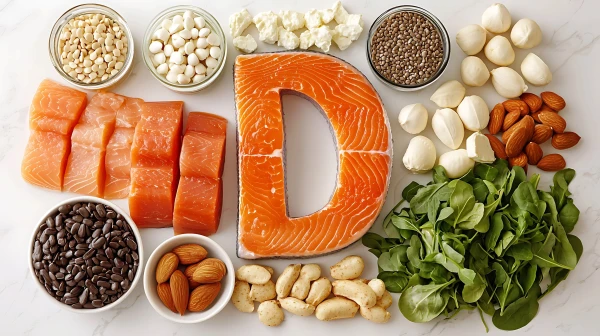
An alternative to pharmacy products can be natural sources of vitamin D. Include foods rich in vitamin D in your diet: fatty fish (salmon, herring, mackerel, eel, trout, halibut), caviar (black and red), mushrooms (oyster, champignon, shiitake, preferably dried), eggs (yolks), dairy products (butter, cheese, whole milk).
Remember that vitamin D is better absorbed with fatty foods, so it is recommended to consume it with such products as fatty fish, butter, or nuts.
If There Is a Deficiency
If a vitamin D deficiency is established, a doctor may suggest specialized premium complexes or intramuscular injections of vitamin D, which quickly raise its level in the body. But remember, such methods are used only by a doctor's prescription.
It is important to maintain vitamin D levels at any time of the year: walk in the fresh air, eat a balanced diet, and avoid harmful habits.
Vitamin D is essential for health, especially in winter and spring when there is not enough sunlight. Approach its replenishment responsibly: check your vitamin D levels in the blood, diversify your diet, and use quality supplements if necessary. And remember, vitamin D will not fix all problems, but its proper use will significantly improve well-being and strengthen health.