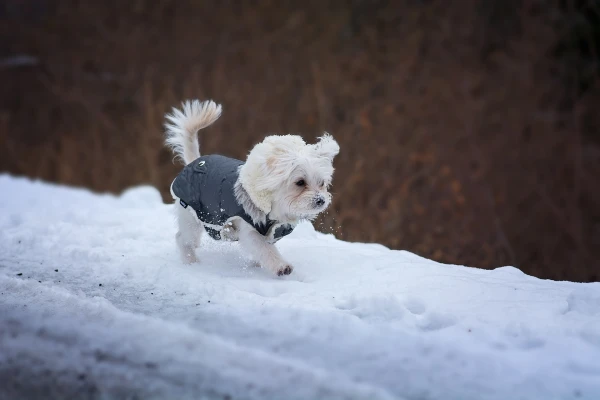
Special attention should be paid to the age, breed, and health condition of the pet.
Expert: Andrey Rudenko, Doctor of Veterinary Sciences
Risks of Low Temperatures
Low temperatures increase the likelihood of hypothermia and frostbite, especially in:
- puppies and elderly dogs
- short-haired and small breeds
- animals with chronic diseases
At temperatures below −15 °C, walks with small short-haired dogs should be limited. For large and furry dogs, the critical mark is −25 °C.
Recommendations for Owners
- Protecting Paws: apply protective cream and use specialized footwear to prevent frostbite and damage from de-icing agents.
- Monitor Your Pet's Behavior: shivering, restlessness, or refusal to move are signals that the dog is cold and needs to be taken to a warm place.
- After the Walk: thoroughly wash and dry the paws to avoid frostbite and irritation.
- Duration of the Walk should correspond to the physical capabilities of the specific pet.
Following these rules will help ensure safe walks even on frosty days and maintain your pet's health.