
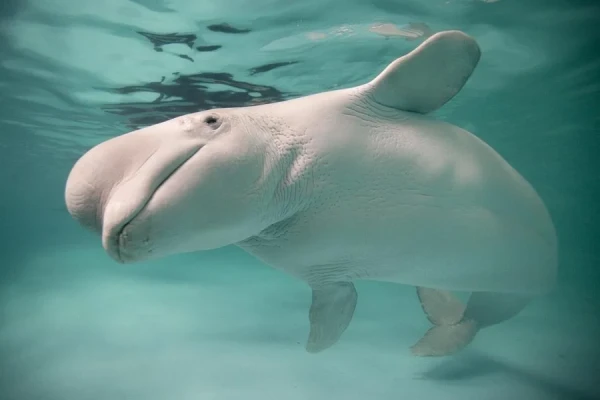
Females also change partners in different years.
DNA research has shown that frequent partner changes help belugas maintain genetic diversity and survive in a small population.
Scientists studying the beluga population in Bristol Bay, Alaska, found that these Arctic whales have many different partners throughout their lives. This unexpected discovery may explain why even a small population maintains genetic diversity and resilience to threats.
As reported in Frontiers in Marine Science, researchers analyzed the DNA of 623 belugas, collected with the help of local hunters who lead a traditional lifestyle. The genetic data showed that both males and females do not follow the pattern that scientists previously considered typical for cetaceans.
Not Polygamy, as Previously Thought
Due to significant sexual dimorphism – male belugas are considerably larger than females – scientists had assumed that this species has a polygynous mating system, where several dominant males fertilize most females. Such a model is often observed in terrestrial animals and many marine mammals.
"We expected to see a scenario where the largest or most aggressive males would have the most offspring," explained lead author Dr. Greg O’Corry-Crowe from Florida Atlantic University.
However, the DNA analysis results showed a different picture: no single male dominated reproduction, and successful matings were distributed among many individuals.
Belugas' 'Long Game'
Scientists suggest that this strategy is related to the difficulty of finding partners in the ocean and the extremely long lifespan of belugas – they can live up to 90 years. Males, according to researchers, "play the long game," reproducing over decades rather than just one or two seasons.
Females also change partners in different years. This may be a kind of "insurance strategy" that reduces the risk of mating with a genetically weak male.
The beluga population in Bristol Bay numbers only about 2,000 individuals, yet the level of inbreeding has proven surprisingly low. According to O’Corry-Crowe, regular partner changes help maintain genetic diversity, which is especially important for small groups of animals.
"When offspring come from many different parents, the population becomes more resilient to diseases and environmental changes," the scientist notes.
The team plans to continue their work and use drones for direct observation of beluga mating behavior in the wild. The goal is to better understand how these whales have adapted their reproductive strategies to life among the ice and in a changing climate.













Leave a comment