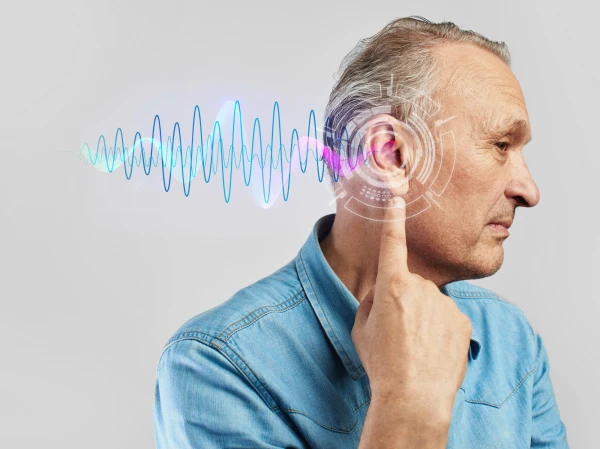
Many people over the age of 60 notice that they increasingly ask their conversation partners to repeat themselves or do not hear the phone ringing. Age-related hearing deterioration is a common phenomenon, but it is not always inevitable and certainly should not go unnoticed.
ENT doctor Irina Kits explained what age-related hearing loss is, how to recognize its signs, and how to slow down hearing loss.
Key Points:
-
Age-related hearing loss develops gradually and often goes unnoticed for years.
-
Noise, chronic illnesses, and certain medications can significantly accelerate hearing loss.
-
Although it is impossible to restore hearing, modern medicine can significantly slow its deterioration.
What is Hearing Loss?
The medical term for age-related hearing loss is presbycusis. It is a gradual and irreversible decline in auditory function, usually affecting both ears simultaneously. Initially, a person has difficulty perceiving high frequencies—such as ringing, signals, and female and children's voices.
According to Dr. Irina Kits, hearing damage can also occur at a younger age due to prolonged exposure to loud noise, particularly at work or during listening sessions. In such cases, the problem can arise as early as 30–40 years old. However, age-related hearing loss more commonly progresses after the age of 60.
Statistics show:
-
At ages 65–70, one in three people has hearing problems;
-
After 75, it's one in two.
Why Do Hearing Deficiencies Occur?
The rate and degree of hearing loss depend on many factors. Among the main ones are:
-
hereditary predisposition;
-
head or ear injuries;
-
natural aging;
-
acute and chronic ear infections;
-
diabetes and cardiovascular diseases;
-
use of certain medications (including those with toxic effects on the inner ear);
-
deficiencies in vitamins A, C, E, and magnesium.
Smoking and frequent earwax buildup also have a negative impact.
Signs That You Should See a Doctor
Age-related hearing loss develops slowly, and a person often becomes accustomed to it. However, the following symptoms should raise concern:
-
difficulty understanding fast or unclear speech;
-
the need to constantly ask for clarification or read lips;
-
difficulty understanding a conversation in a noisy environment;
-
high sounds are heard worse than low sounds;
-
talking on the phone is uncomfortable even at maximum volume;
-
ringing, noise in the ears, or dizziness occurs.
Examinations are conducted by an ENT specialist or an audiologist.
What Examinations Are Recommended?
If hearing has deteriorated only on one side, the doctor must rule out otitis, injury, or a tumor. For this, the following are used:
-
ear examination with an otoscope;
-
tuning fork tests;
-
audiometry.
If necessary, CT or MRI may be ordered.
How to Support Hearing and Slow Its Loss?
It is impossible to completely stop age-related hearing loss, but, according to Dr. Irina Kits, its progression can be significantly slowed. To do this, it is recommended to:
-
undergo physiotherapy;
-
take vitamins and medications to improve cerebral circulation;
-
avoid loud sounds, especially through headphones;
-
quit smoking and other harmful habits;
-
maintain regular but careful ear hygiene;
-
seek timely treatment for ear infections.
In cases of significant hearing loss, a hearing aid is fitted. In severe cases, where it is ineffective, cochlear implantation may be performed.