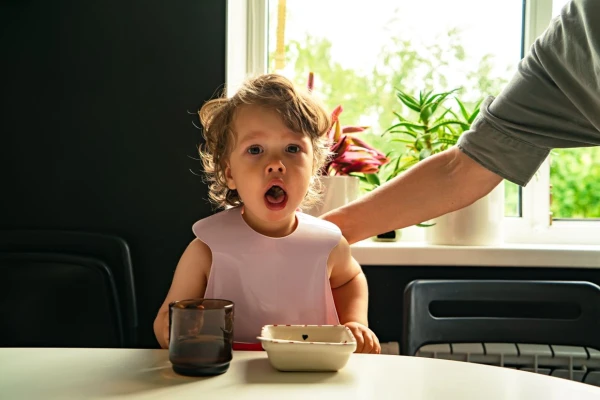
In a situation where a child suddenly stops breathing due to an object lodged in the airway, the first few seconds are crucial. Many adults act instinctively and start hitting on the back; however, this can be dangerous for small children and worsen the condition.
It is important not to panic and to act correctly — this can save a life.
Signs That a Child Has Choked
You can recognize a dangerous situation by several characteristic signs:
- the child grabs their chest;
- may suddenly stand up, start flailing, or running;
- cannot speak or cough, looks with wide-open eyes — this is a sign of severe airway obstruction.
How to Provide First Aid Properly
If the child cannot breathe, you need to act calmly and methodically:
- remain composed and ensure that the child can hear you;
- lean them forward so that their head is lower than their pelvis;
- perform several quick and firm back blows between the shoulder blades;
- if breathing is restored, ensure that the airways are completely clear.
Why You Shouldn't Just Hit on the Back
Back blows in a vertical position can cause the foreign object to descend deeper under the influence of gravity — into the trachea or bronchi. Additionally, the vibration may turn the object so that it completely blocks the airway, turning partial choking into complete choking.
When to Call for Emergency Help
If, after providing first aid, the child has not started breathing normally, it is necessary to call for emergency medical help immediately. In such situations, delay can be life-threatening.
Knowing the basic rules of first aid helps avoid fatal mistakes and react correctly in a critical moment.