

You’ve probably heard more than once that gold and silver should not be worn together — likely long before you acquired your first pieces of precious metal jewelry. But are these rules still so strict today? We decided to ask gemologist and jewelry expert Eva Germanova.
The jewelry industry has long developed within a strict set of unspoken rules: white gold was worn separately, yellow gold — separately, pink was perceived as a stylistic accent, and silver was hardly considered in the premium segment. These norms were part of a more conservative aesthetic, where individuality gave way to tradition. Today, this structure has essentially lost its relevance.
The modern market is moving in the opposite direction. Buyers are forming their own style, and individuality has become a key factor in the choice of jewelry.
Metal, stone, and their combination are viewed not as a rigid set of rules but as a system of solutions based on optics, light distribution, color, and the character of each specific stone.
How Metal Color Changes the Perception of Stone
The choice of metal can significantly alter the perception of a stone's color, much more than is commonly believed. Diamonds in white metal appear cooler and cleaner, in pink — softer and more delicate, while yellow metal enhances the warm hue even in stones of medium color. Yellow diamonds require a warm environment to maintain their saturation — white metal takes away the depth of color.
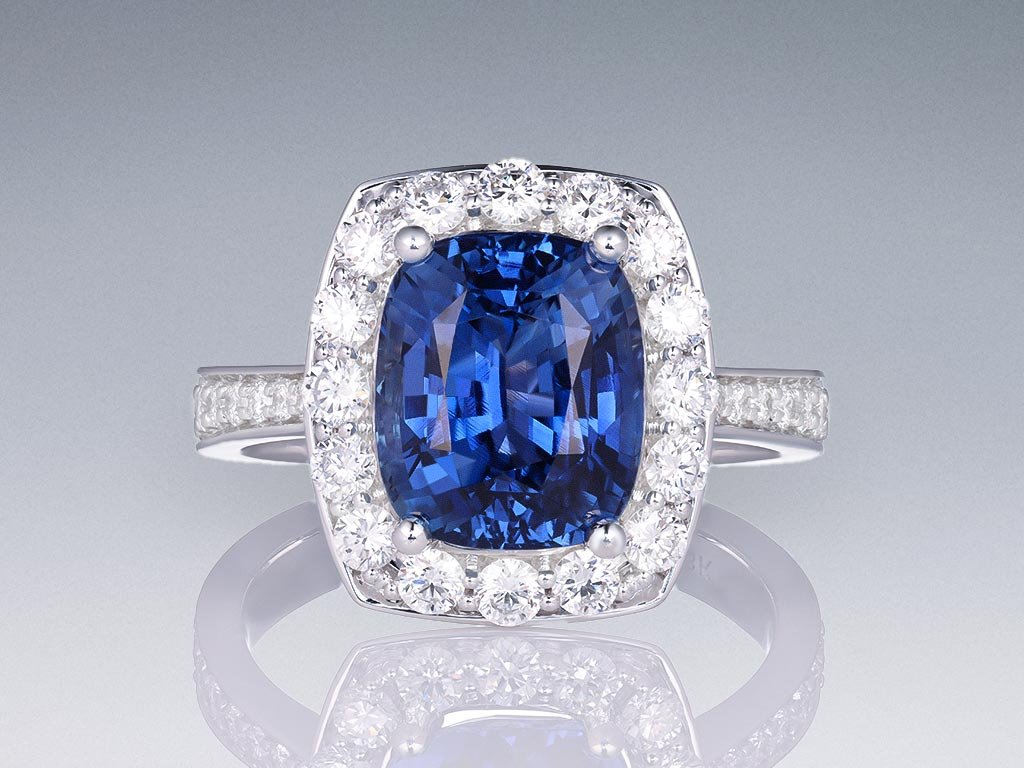
Sapphires, especially those of Kashmir and Burmese tones, visually appear deeper and cleaner when set in white metal. Pink sapphires and padparadscha are more harmonious in pink gold. Emeralds are a radically individual category: the same stone can behave differently in various alloys, so the choice of metal for them is always determined solely by visual assessment.
Paraiba tourmalines are the only type of stone where the rule is absolutely strict: only white metal. Warm alloys noticeably dampen their characteristic neon effect.
How Precious Metals Combine with Stones
White Gold and Platinum
White gold and platinum create the most neutral optical environment. These metals emphasize the cut, enhance the purity of the sparkle, and do not alter the natural hue of the stone.
This is particularly evident with diamonds: white metal makes the play of light cleaner, the outline sharper, and the proportions visually more structured. With sapphires, white metal enhances the depth of blue, while with emeralds, it creates a more austere, restrained tone.
That is why pieces where architecture, symmetry, and precision are important — solitaires, tennis bracelets, earrings with large inserts — are traditionally made of white gold or platinum.
Yellow Gold
Yellow gold acts differently. It adds warmth to the jewelry and creates a more saturated and dense perception of color. In this metal, stones of the warm spectrum are particularly striking: yellow diamonds, rich rubies, deep green emeralds. Their tone gains expressiveness, which white metal often cools.
For high-quality colorless diamonds (D–F colors), yellow gold, on the contrary, is not considered an optically optimal option: it visually adds a warm hue, whereas the task of such stones is to demonstrate purity and transparency. Therefore, they are traditionally set in white metal, while yellow gold is used only for design consistency, not to enhance the stone's characteristics.
Rose Gold
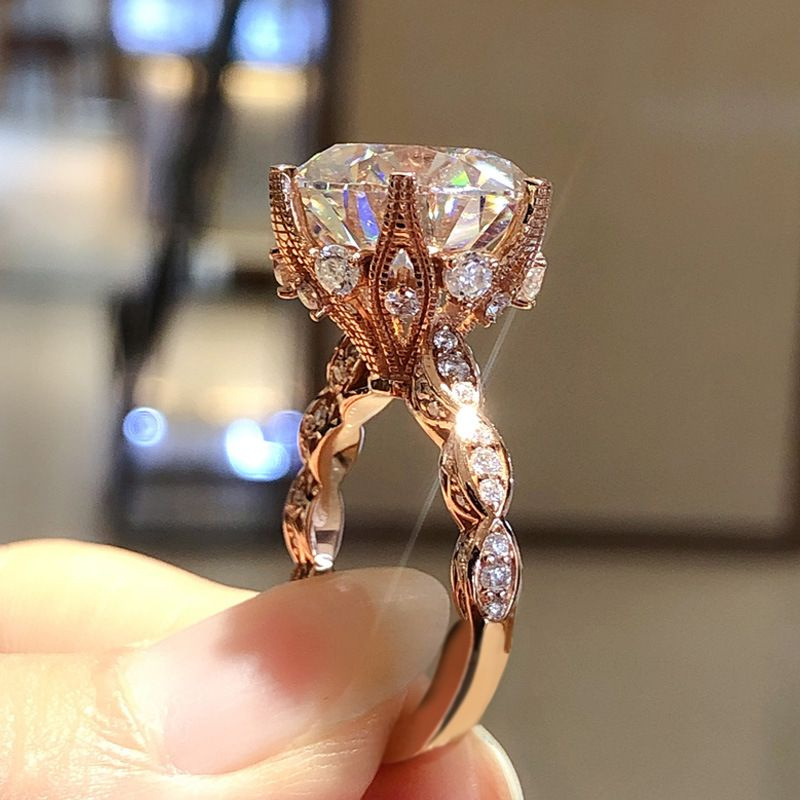
Rose gold has become one of the most versatile materials in recent years. It softens the transition between the stone and the setting, provides a smoother glow, and creates a balanced modern aesthetic.
With pastel stones — morganites, pink sapphires, tourmalines — rose gold creates a clean, natural color harmony. When combined with high-quality emeralds, it provides a neat, contemporary contrast that is often used in premium personal pieces.
Can Precious Metals Be Combined?
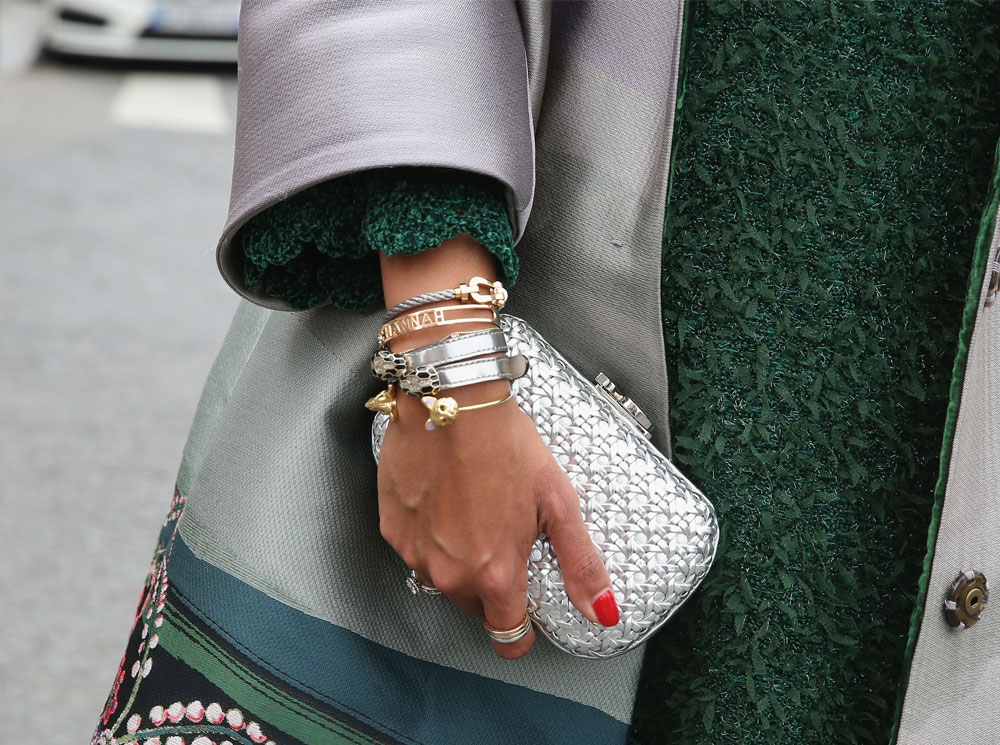
A separate direction is the mixing of metals. What was once considered a violation of rules has now become the professional language of jewelry design. White metal can serve as a constructive base, yellow gold — a warm accent, and rose — a connecting link.
Such combinations represent a conscious approach, where proportions, texture, and a unified level of execution are important. The contrast of metals works aesthetically only if the quality of craftsmanship of all elements is equally high. A difference in skill visually destroys the composition much faster than a variety of gold shades.
What Combinations of Precious Stones and Metal Are Trending Now
In aesthetics today, the key guideline is not adherence to old norms but the precise expression of individual style. Metal has ceased to be a technical framework and has become a meaningful component of the jewelry. The stone is not a decorative detail but the center of the composition. The combination of metals is not a question of "can or cannot," but a tool that allows for the creation of pieces that reflect the taste and character of the owner.
If the jewelry looks cohesive, works in favor of the stone, and emphasizes individuality — then the decision has been made correctly. Everything else — including once strict rules — ceases to matter.















Leave a comment