
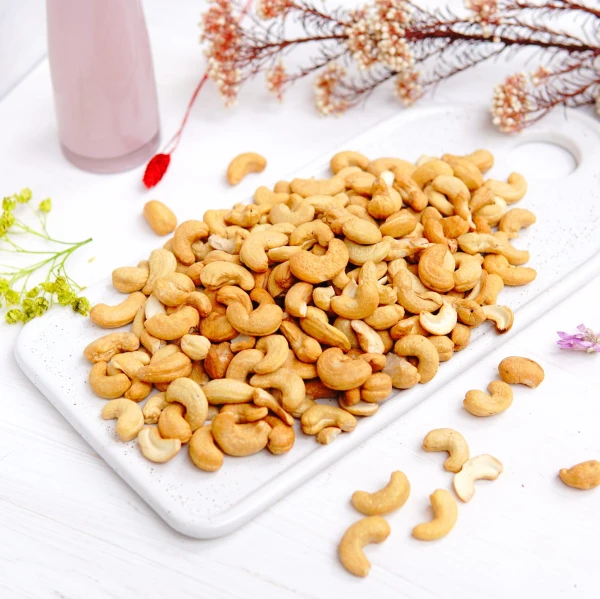
It is noted that raw cashews contain more nutrients, but they also contain one antinutrient.
Cashews are a good source of iron and selenium, and including them in the diet in raw or roasted form can help increase the intake of these nutrients. However, raw cashews contain slightly more of both elements, writes Verywellhealth.
Iron in Cashews
The iron content in roasted and raw cashews varies: roasted contains 1.7 milligrams (mg) of iron per 28 grams, while raw contains about 1.9 mg of iron per 28 grams. This amounts to 21% to 24% of the recommended daily intake for adults, which is 8-18 mg of iron per day.
Selenium in Cashews
When comparing raw and roasted cashews, the selenium content differs:
-
raw: 5.6 mcg, or about 10% of the daily selenium requirement;
-
roasted: 3.3 micrograms, or about 6% of the daily selenium requirement.
Most adults need only 55 micrograms per day.
Important nuance
Although consuming raw cashews provides more iron and selenium, one nuance should be considered: the body cannot absorb these nutrients as well from raw cashews as from roasted ones, due to the presence of an antinutrient — phytic acid.
This antinutrient makes it difficult to digest cashews and, consequently, hinders the absorption of iron and selenium by the body. Thus, while both types of cashews contain iron and selenium, raw contains more of these substances, while roasted is better absorbed.
Due to this difference, the choice between raw and roasted cashews usually comes down to your personal taste preferences. The best way to reap the health benefits of cashews is to consume them regularly, in moderation.












Leave a comment