
A cholera epidemic broke out on the ship transporting the treasure.
Every public appearance of members of the British royal family is accompanied by luxurious tiaras, necklaces, brooches, rings, and other jewelry — and often all of them have a long history. However, some treasures of the British crown are not seen or are rarely seen due to their grim past.
One of the most famous examples is the famous crown with the "Koh-i-Noor" diamond. When the Indian stone became part of the British Empire, a cholera epidemic broke out on the ship transporting the treasure. Considering that this was the 19th century, this is not surprising.
There was a legend about the "Koh-i-Noor": supposedly only God or a woman can wear this diamond without punishment, while it brings terrible curses to men.
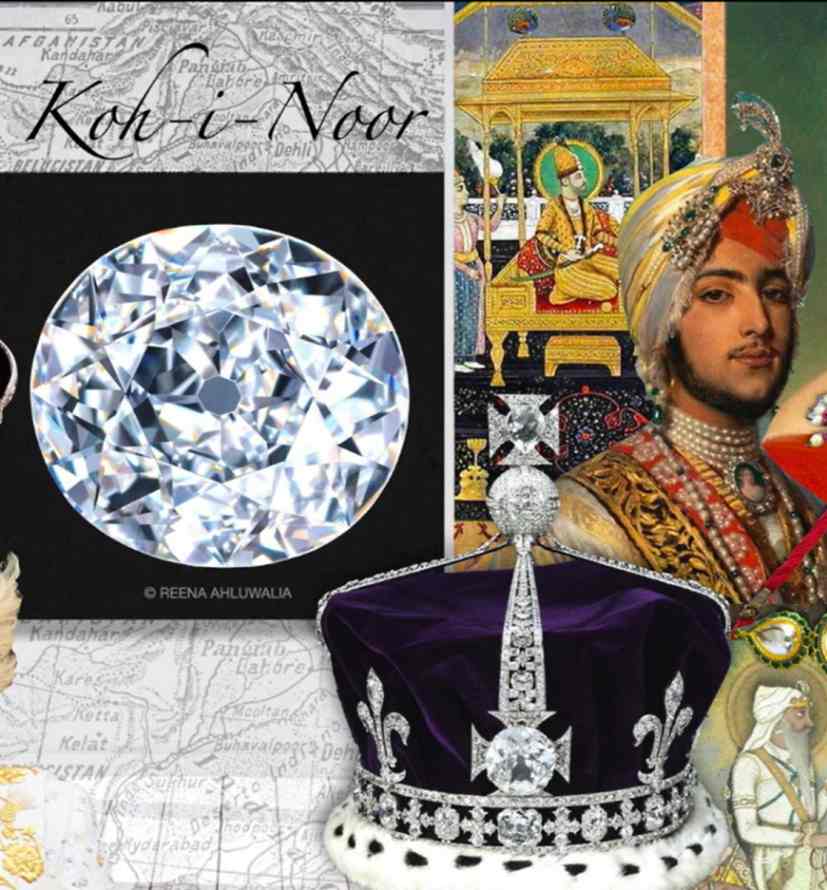
Whether this is true or not, Charles III refused to use the "Koh-i-Noor" during his coronation. It was also absent from Queen Camilla. However, another reason played a role here: the court did not want to display the jewel to avoid reminding people of the kingdom's colonial past.
Another example is the Hessen tiara with a strawberry leaf, nicknamed the "ghostly" tiara. According to beliefs, it brings misfortune to its owners. The history of the ornament began during the reign of Queen Victoria. Her husband, Prince Albert, presented the diadem as a wedding gift to their daughter Alice, who was marrying Ludwig IV of Hesse.
Shortly after this, the princess's father — Prince Albert — passed away. Seventeen years later, Alice herself died (she was only 35 years old). Then three of her children also passed away. One of Alice's surviving daughters became the last Russian Empress Alexandra Feodorovna. As is known, she, along with Nicholas II and their children, was executed in 1918.
Some believe that the Hessen tiara also affected the family of Prince Philip, husband of Elizabeth II. The sister of the Duke of Edinburgh, Cecilia, wore this tiara and died in a plane crash in 1937; her unborn child also perished (he died in the womb during the crash). Currently, the exact location of the "ghostly" tiara is unknown. It is presumed that the diadem has passed to the Hessen House Foundation.
















Leave a comment