
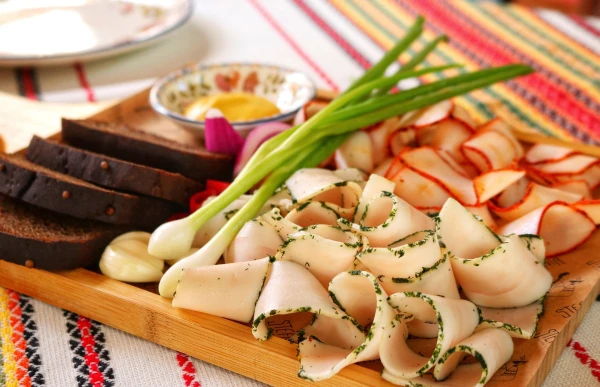
What happens if you eat 30 grams of lard a day, explained gastroenterologist Ali Almasri
If you love lard but limit yourself due to the fear of overeating fatty foods, there is good news for you. In moderate amounts, this product can actually strengthen your health.
“Doctor Peter” spoke with gastroenterologist Ali Almasri, who explained why this calorie-dense delicacy can be an excellent food choice for those who monitor their health and which spices it is best to combine with.
Product Composition
What is lard from a scientific perspective? It is the subcutaneous fat of a pig, practically pure lipid with a small amount of water and protein. In 100 g of the product, there are about 750–770 kcal and up to 90 g of fat. However, it is important to look not only at the number of calories but also at their composition.
About 45% of lard consists of mono- and polyunsaturated fatty acids: oleic, linoleic, and arachidonic. They play a role in the immune system and hormone synthesis, and oleic acid is known for its ability to lower “bad” cholesterol.
Even 15–20 g of lard covers up to 10% of the daily requirement for vitamin D and almost 20% for vitamin E.
Moreover, lard is a treasure trove of selenium and zinc. In “purebred” farm lard, these trace elements are more abundant than in industrial lard. Selenium is an antioxidant, while zinc is essential for immunity and skin health.
The melting point of lard is lower than body temperature (34–39 °C), so pig fat emulsifies more quickly in the intestines and typically does not burden digestion as heavily as beef or lamb fat.
Due to its high calorie content and low glycemic index, lard has traditionally been used as a “long-lasting” fuel; it can be eaten to suppress hunger for a long time.
Unfortunately, lard also has its drawbacks. 55% of the fat in lard consists of saturated fatty acids. Their excess is associated with an increase in LDL cholesterol.
Therefore, the optimal portion of lard for health is about 30 g per day.
Lard and Women
There is an opinion that lard is a very beneficial product for women's health. This is partly true.
Vitamins A, E, and D support the synthesis of estrogens, as well as the health of skin, hair, and bones, which is relevant during PMS and menopause.
Conjugated linoleic acid (CLA) in pig fat may reduce inflammation and contribute to moderate fat loss (data is limited but promising).
Easily digestible energy is important during breastfeeding: 10–15 g of lard in borscht or porridge increases the calorie content of the diet without putting extra strain on the gastrointestinal tract.
However, in cases of dyslipidemia, obesity, gallbladder diseases, and during the II–III trimesters of pregnancy, an excess of saturated fats is undesirable.
How to Choose and What to Season With
-
The most valuable and dietary option is white lard or slightly pink back fat (spik) from young pigs.
-
Thickness of 2–4 cm, without yellow streaks (a sign of oxidation).
-
Dry skin, neutral smell, veterinary control stamp.
-
Without smoked crusts — they contain carcinogens.
Beneficial Combinations of Spices and Additives
-
Garlic + black pepper: essential oils enhance bile secretion, which helps digest fat.
-
Paprika + cumin: paprika provides vitamin C and carotenoids, while cumin reduces bloating.
-
Rosemary + coriander: antioxidants in rosemary protect fats from oxidation, while coriander speeds up glucose metabolism.
-
Sea salt with iodine — a quick way to cover iodine deficiency without pills.
Advice for Hosts
Slice 20–25 g of lard into thin slices, rub with a mixture of salt, garlic, and paprika, and let it mature for a day in the refrigerator — you will get a snack that will enhance a sandwich, porridge, or borscht without turning dinner into a fatty bomb.
Who Should Avoid Eating Lard
-
People with a BMI > 30, high LDL, or a diagnosis of “fatty liver.”
-
Patients after cholecystectomy or with chronic pancreatitis.
-
During exacerbations of gastritis, ulcers, or gout — lard is rich in purines.
Lard is not a harmful poison but a concentrated source of calories, vitamins A, D, E, and unsaturated fatty acids. Its benefits are revealed at a dose of up to 30 g per day, good animal breed, and proper spices.
















Leave a comment