
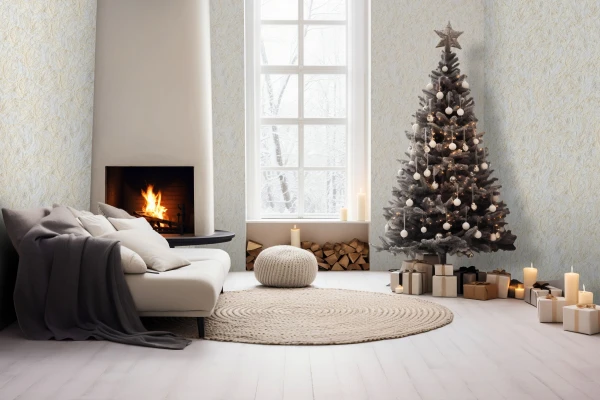
Winter decor has long been associated with a set of recognizable symbols: Christmas trees, reindeer, snowflakes, and a red-green color scheme. However, the trends for 2025–2026 demonstrate a decisive shift towards a more refined interpretation of the winter atmosphere. The modern approach focuses not on festive symbolism but on creating a multifaceted sensory experience that reflects the essence of the season — the contrast between external cold and internal warmth. Architect Marina Pavlova shared how to achieve this.
“Leading interior exhibitions in Milan, Paris, and Moscow have presented the concept of 'seasonal sensuality' — where decor impacts all the senses, creating a holistic feeling of winter without direct references to New Year or Christmas. This trend is particularly relevant for those who want to maintain an atmosphere of seasonal coziness throughout the winter months,” says the specialist.
Light as the Foundation of Winter Atmosphere
In the context of short daylight hours, lighting becomes a key element of winter decor. The trend for multi-level lighting takes on a new meaning: instead of traditional garlands, designers suggest using combinations of candles of varying heights, pendant lights with adjustable brightness, and local light sources.
“Soy wax candles with wooden wicks are particularly relevant, as they provide a softer and more even flame. They are arranged in groups in ceramic or stone candle holders, creating compositions with varying heights. Candles infused with essential oils of pine, cinnamon, and orange are also gaining popularity, adding an aromatic dimension to the winter interior,” says Marina.
As for electric lighting, fixtures that mimic natural light, changing color temperature throughout the day, are in trend. In the evening, they create a warm amber glow reminiscent of sunset, which is especially valuable during the short winter days.
Textiles: Tactile Contrasts
Textile decor is reaching a new level of complexity. While previously it was enough to add a couple of throws and cushions, now there is an emphasis on playing with contrasting textures. Coarse wool coexists with soft cashmere, dense linen with airy mohair. This combination creates a rich tactile experience and visual depth.
Architect: “The color palette of textiles is dominated not by traditional red and green, but by natural shades: deep blue (like the winter sky at dusk), gray-brown (like tree bark), and milky white (like fresh snow). Accents of rust, ochre, and muted burgundy complement the palette.”
Particular attention is paid to the quality of materials — organic fabrics with minimal processing, preserving natural texture and irregularity, are in trend. Hand-knitted throws made from thick yarn, cushions filled with buckwheat husks, and floor cushions made from unprocessed linen all create a sense of authenticity and connection to nature.
Natural Materials: A New Interpretation
Natural materials remain the foundation of winter decor, but their use is becoming more sophisticated. Instead of traditional fir branches in vases, compositions of dried grasses, branches with interesting bark textures, and seed pods appear. Installations made from tree slices of varying diameters arranged in geometric compositions are gaining popularity.
“Stone, especially with a rough surface, is used to create contrast with soft textiles. Small stone candle holders, slate trays, and marble fruit bowls — these elements add tactile variety and visual weight to the interior,” emphasizes the specialist.
Handcrafted ceramics with uneven textures and natural shades become an important accent. Irregularly shaped vases, bowls with a crackle effect, and candle holders with matte glaze — these items bring a sense of warmth from human hands into the interior.
-
Modern winter decor impacts all senses, creating an atmosphere through textures, aromas, and light, rather than through recognizable festive symbols.
-
The trend for conscious consumption manifests in the choice of durable, natural materials that only improve over time.
-
An impressive winter interior is built on a combination of different textures, light sources, and natural elements, creating visual and tactile depth.
-
The new approach to winter decor allows for the creation of an atmosphere that is relevant throughout the entire cold season, not just during the New Year holidays.







Leave a comment