
A high-voltage discharge ionizes a mixture of helium, air, and water vapor.
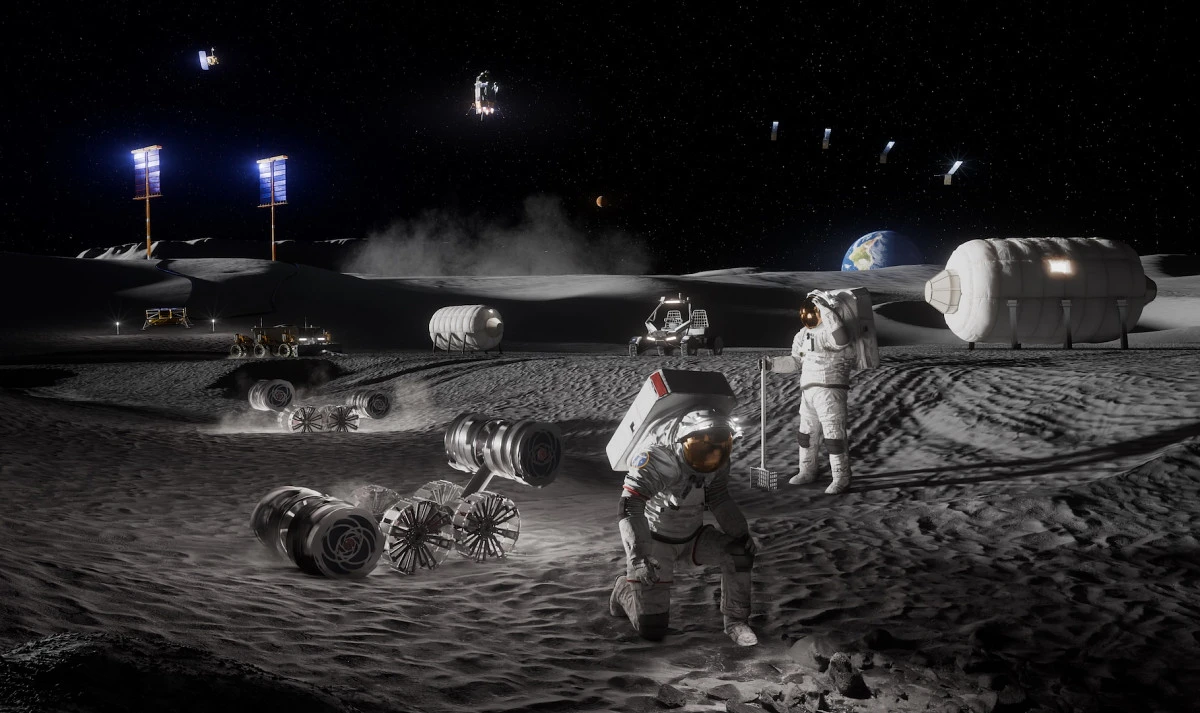
A team led by Gabe Suy from the University of Alabama in Huntsville, together with NASA microbiologist Chelsea Cassilly, has developed a technology for disinfecting fabric materials in space. Currently, the ISS uses conditionally disposable clothing: astronauts throw it away when it becomes completely soiled. This method will not work for future colonies on the Moon, and there will also be no extra water for washing clothes. Therefore, something else is needed.
To maintain cleanliness, two components are necessary. First, the removal of debris and dust, which can be done using a vacuum cleaner. Second, the disinfection of clothing, meaning the destruction of microbes. There is also the issue of stain removal, but in the context of colonizing the Moon, the aesthetics of clothing will not be a priority; the main goal is to minimize health risks for the lunar settlers.
The basis of the new space washing technology is a cold plasma generator — an ionized gas at room temperature that does not damage fabric and is harmless to the skin — which can also be used to treat the astronauts themselves. A high-voltage discharge ionizes a mixture of helium, air, and water vapor, resulting in the formation of active oxygen-containing particles at the point of contact. These particles can penetrate deep into the fabric and are lethal to microbes.
The effectiveness of "plasma washing" still leaves much to be desired. It reduces the concentration of microbes three times better than chemical wipes for cleaning clothes on the ISS, but does not eliminate them completely. Additionally, treatment of large areas is currently unavailable — plasma acts on the fabric in a spotty manner, making practical application difficult. However, this is just the beginning — the inventors now plan to create compact universal sterilizers for space.













Leave a comment