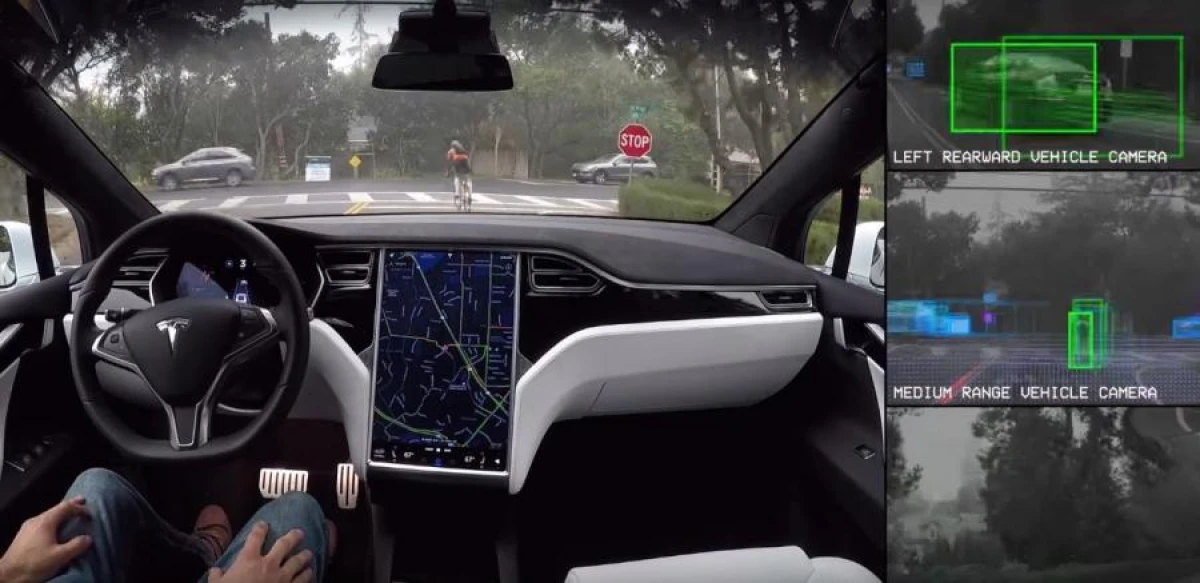
European transport regulators will gather today in Brussels, where the Dutch road authority RDW will present arguments in favor of approving Tesla's supervised autopilot technology at the level of the entire European Union.
Tesla is pushing into Europe
"This meeting is an important milestone for Tesla in its efforts to gain approval for a technology called Full Self-Driving (FSD) in the EU, but there are no guarantees of success, nor timelines for a possible decision," reports Reuters.
Tesla's FSD (Supervised) software, despite its name, is a driver assistance system rather than full autonomous driving. Nevertheless, cars equipped with this technology can steer, turn, and accelerate on their own — but only under the supervision of a human who must monitor the road and be ready to intervene.
Instead of the standard European vehicle certification procedure, Tesla is seeking an exemption to have FSD approved as a new technology not fully covered by existing regulations. Tesla has chosen RDW, which has already been involved in certifying its cars in Europe.
After 18 months of testing on test tracks and public roads, RDW issued a preliminary permit on April 10, allowing the use of FSD (Supervised) on all roads in the Netherlands. The agency notified the European Commission of its decision and its intention to propose the technology for broader application in Europe.
Other EU countries can currently use the Dutch decision for temporary approval of the technology, but none have done so yet.
The EU makes a decision
To approve RDW's proposal, a qualified majority will be required — at least 15 out of 27 EU countries representing 65% of the union's population. If approved, the technology could be used throughout the EU, although individual countries may attempt to legally challenge the decision.
If the proposal is rejected, FSD could theoretically be applied on a temporary basis in individual countries, but this is complicated by differences in regulations within the single EU market.
After approval, the European Commission will begin the process of amending vehicle legislation to account for the new technology within the framework of general regulatory rules.