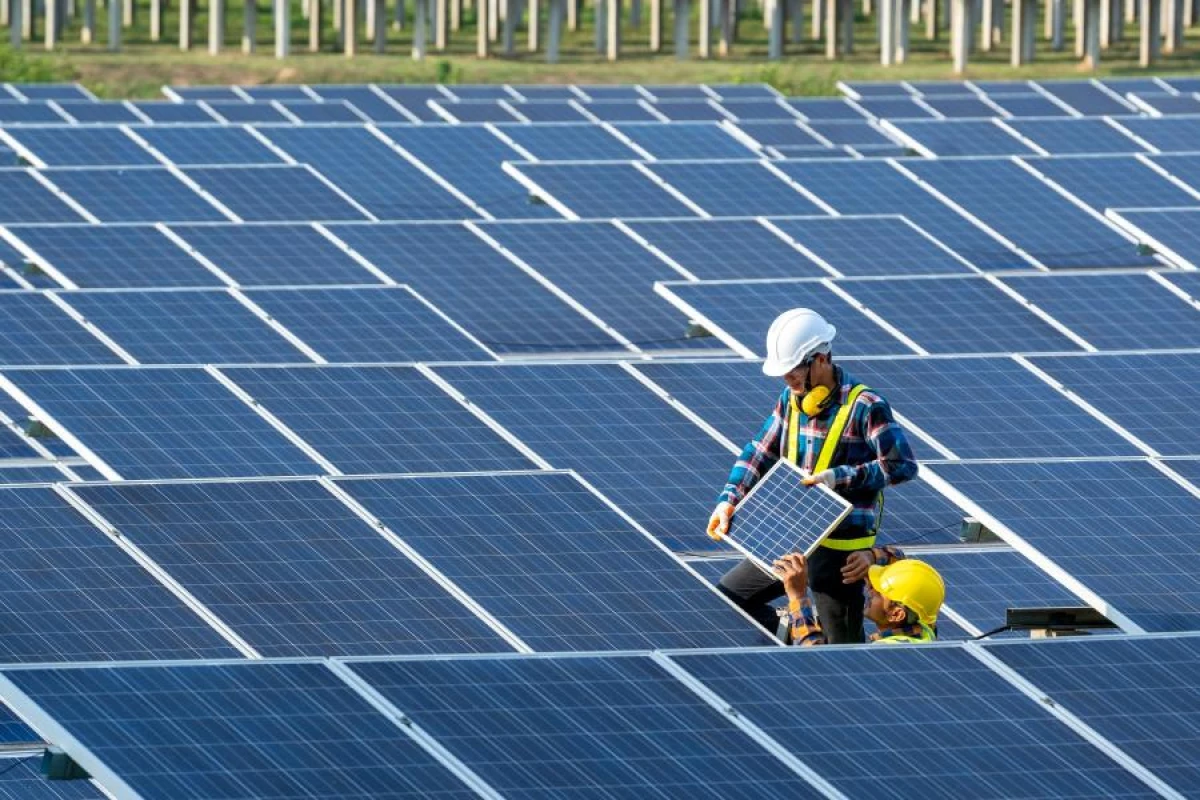
The placement of about 10 million solar panels in the Sahara Desert could lead to noticeable changes in the local climate, including the formation of rain clouds and increased precipitation. This conclusion was reached by scientists who modeled the impact of large-scale solar power plants on one of the driest areas on the planet, reports ecoportal.net.
Researchers note that the Sahara is considered an ideal region for the development of solar energy due to the large number of sunny days. However, the desert ecosystem is characterized by climatic stability and sensitivity to any changes.
A key factor identified by scientists is the difference in solar light reflection. Light sand reflects a significant portion of solar energy back into the atmosphere, while dark panels, on the other hand, actively absorb heat. When millions of panels are installed, the effect becomes large-scale: the heated surface enhances the temperature contrast and leads to a faster rise of hot air.
According to the model, moisture contained in the atmosphere rises along with the air. Although its amount in the desert is small, during a sharp rise and cooling at altitude, the moisture begins to condense, contributing to the formation of dense clouds and potential precipitation.
Scientists emphasize that solar panels do not create moisture but change the mechanisms of its movement in the atmosphere, which may be enough to trigger rainfall events.
Moreover, the possible increase in precipitation could lead to vegetation growth, which can amplify changes through the so-called "feedback loop," further affecting heat exchange and humidity.
The authors of the study note that solar energy remains an environmentally important direction; however, even "clean" technologies, when implemented on a large scale, can significantly impact natural processes and climate.