The new type of electric engine consumes significantly less fuel and could become the basis for future crewed missions to Mars — if the technology can be scaled.
In February 2026, NASA engineers conducted tests of a prototype magnetoplasmadynamic engine at the Jet Propulsion Laboratory (JPL) in California. The system operates on lithium vapor and uses an electromagnetic field to accelerate plasma. During the tests, the engine reached a power output of 120 kilowatts for the first time in the U.S. — a record for such systems. The data obtained will serve as the basis for the next phase of testing.
The main difference of the technology is its efficiency. Electric engines consume up to 90% less fuel than traditional chemical rockets. Instead of a powerful short-term impulse, they create a weak but constant thrust, gradually accelerating the spacecraft to high speeds. This makes them particularly promising for long-duration missions beyond low Earth orbit.
The new engine belongs to the class of magnetoplasmadynamic engines. Such developments have been underway since the 1960s, but have not yet been used in real space missions. Unlike existing ion engines, this system uses powerful electric currents and a magnetic field to accelerate lithium plasma, which potentially allows for higher thrust.
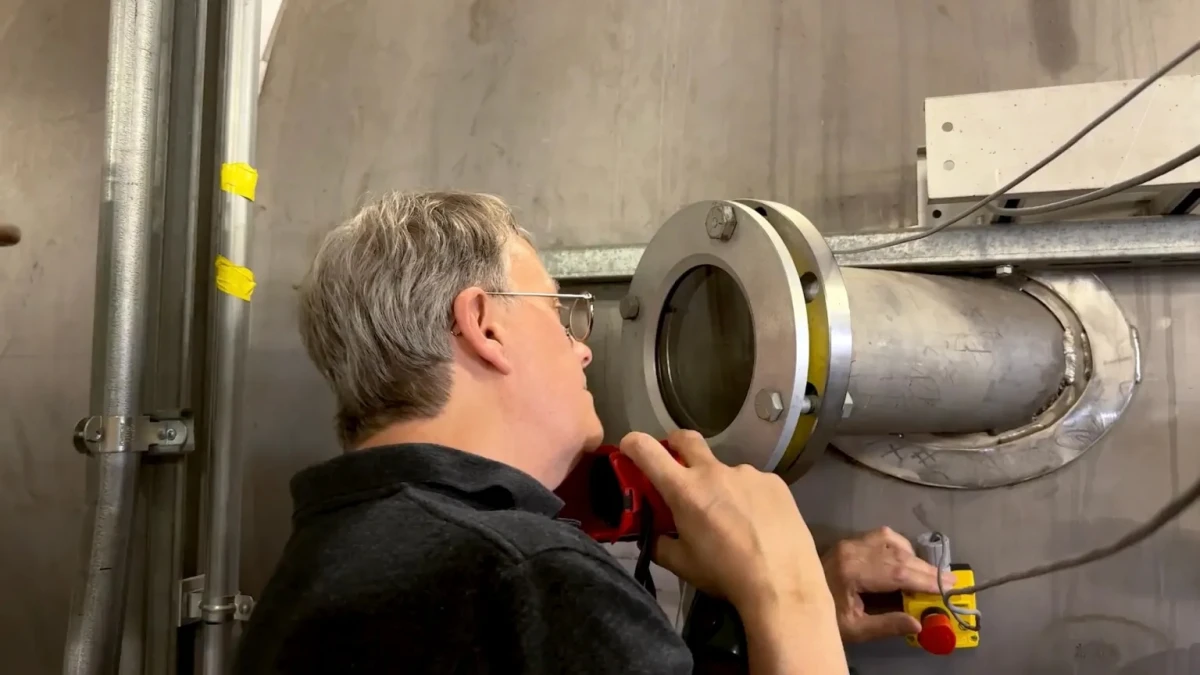
During the tests in a vacuum chamber, the engine heated up to extreme temperatures: the tungsten electrode reached about 2800 degrees Celsius and emitted a bright white light. The prototype was launched five times, recording performance parameters and material behavior.
Today, the most powerful electric engines are used in individual space missions; however, the new prototype surpasses them in power by more than 25 times. In the coming years, developers plan to increase the power to 500 kilowatts — one megawatt per engine. A crewed flight to Mars will require a system with a total power of 2–4 megawatts, capable of operating for tens of thousands of hours.
According to the developers, the first launch confirmed the technology's operability at the target power levels. Now the main task is to verify whether the components can withstand prolonged loads and high temperatures.
In the future, such engines could work alongside a nuclear power source, which would reduce the mass of spacecraft and provide the necessary thrust for long-distance expeditions.
The testing showed that the technology is approaching practical application, but there are still challenges to address regarding reliability and scalability before it can be used in real missions to Mars.