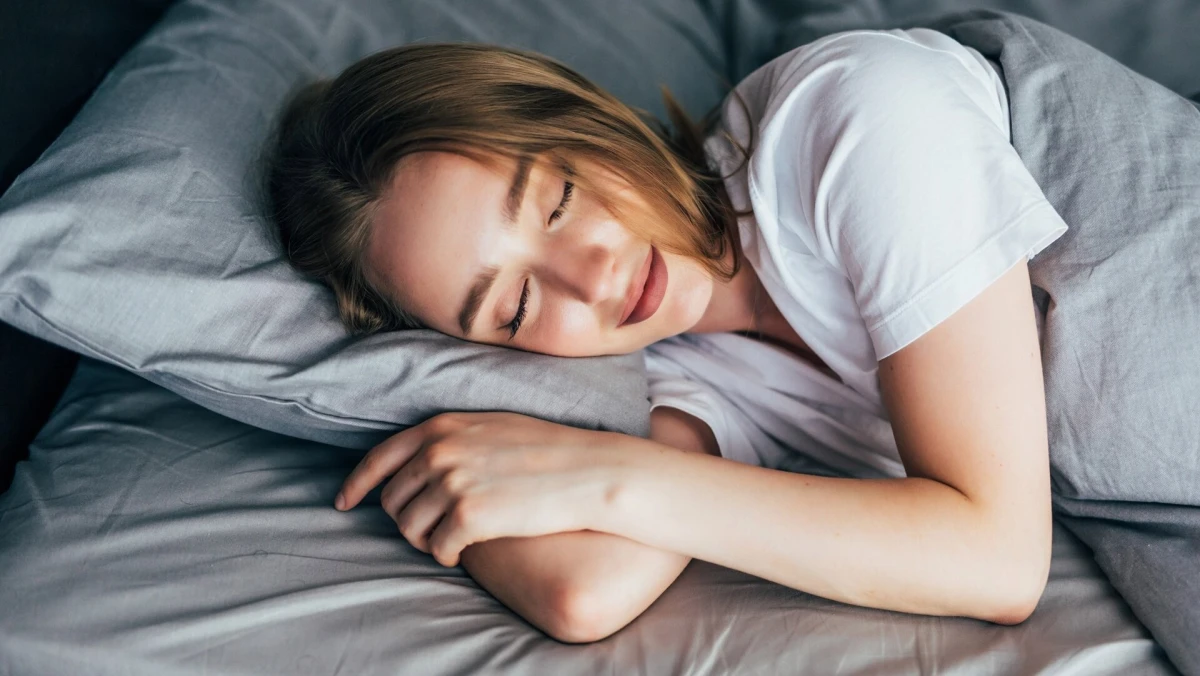
Forget about randomness! A new large-scale study encompassing thousands of dreams reveals how personality and life experience influence the content of our nocturnal adventures.
Forget about French myths regarding cheese before bedtime that promise wild nocturnal adventures! Science decisively disproves this idea, asserting that the content of our dreams is shaped not by camembert, but by a complex intertwining of personality traits and life experiences. So why do our dreams sometimes seem so chaotic, while at other times they are surprisingly cohesive and captivating? A new study convincingly demonstrates that there is no randomness here.
Scientists from the IMT School for Advanced Studies in Lucca, Italy, challenged the outdated notion of dreams as a mere byproduct of brain activity. Their groundbreaking work, published in the prestigious journal Communications Psychology, reveals that dreams are a complex system influenced by our thoughts, emotions, and the surrounding context.
For this large-scale project, over 3,700 detailed descriptions of dreams and daytime experiences were analyzed. Data was collected from 287 volunteers aged 18 to 70, who meticulously recorded their nightly and daily impressions over two weeks. The researchers painstakingly gathered information on sleep quality, thinking patterns, personality traits, and the overall psychological state of each participant.
To conduct a deep analysis of the collected data, the researchers employed advanced natural language processing (NLP) methods, a subset of artificial intelligence. This allowed them to closely examine how participants described their everyday lives and, importantly, their dreams.
Dreams Are Not Random
The results unequivocally confirmed: dreams are not chaotic but follow clear patterns. They serve as a mirror reflecting the unique combination of our internal characteristics and external influences. For instance, people whose thoughts often "jump" from one topic to another during the day frequently reported fragmented and rapidly changing dreams, while those who attributed special significance to their dreams described them as incredibly vivid and fully immersive.
External events also play a colossal role in shaping night visions. The study showed that during the COVID-19 pandemic, dreams became significantly more intense, often touching on themes of restrictions and confinement. As life normalized, these anxious motifs gradually disappeared, vividly demonstrating the direct connection between dream content and our current psychological state.
Everyday Life, but in a Different Form
It turns out that dreams do not simply reproduce our everyday life; they actively transform it. Familiar elements such as workplaces, hospitals, or schools rarely appear in dreams in their exact form. Instead, they are transformed into unusual, sometimes surreal scenarios, blending various contexts and perspectives.
"Our results show that dreams are not just a reflection of past experiences, but a dynamic process shaped by who we are and what we go through," explained Valentina Elche, the lead author of this fascinating study.
This work also vividly demonstrates how artificial intelligence can radically advance dream research. NLP models analyze dream descriptions with astonishing accuracy, comparable to assessments made by experienced human experts. This opens unprecedented opportunities for studying consciousness, memory, and mental health on large samples while adhering to uniform standards.
Thus, attempts to influence one’s nightly adventures by diligently eating cheese before bed are likely to be in vain. However, we now know for certain: dreams themselves are shaped by the powerful influence of measurable factors acting both within and beyond our consciousness.