New data indicate that seasonal upwelling in the Gulf of Panama did not occur for the first time in at least 40 years, disrupting an ancient oceanic pattern.
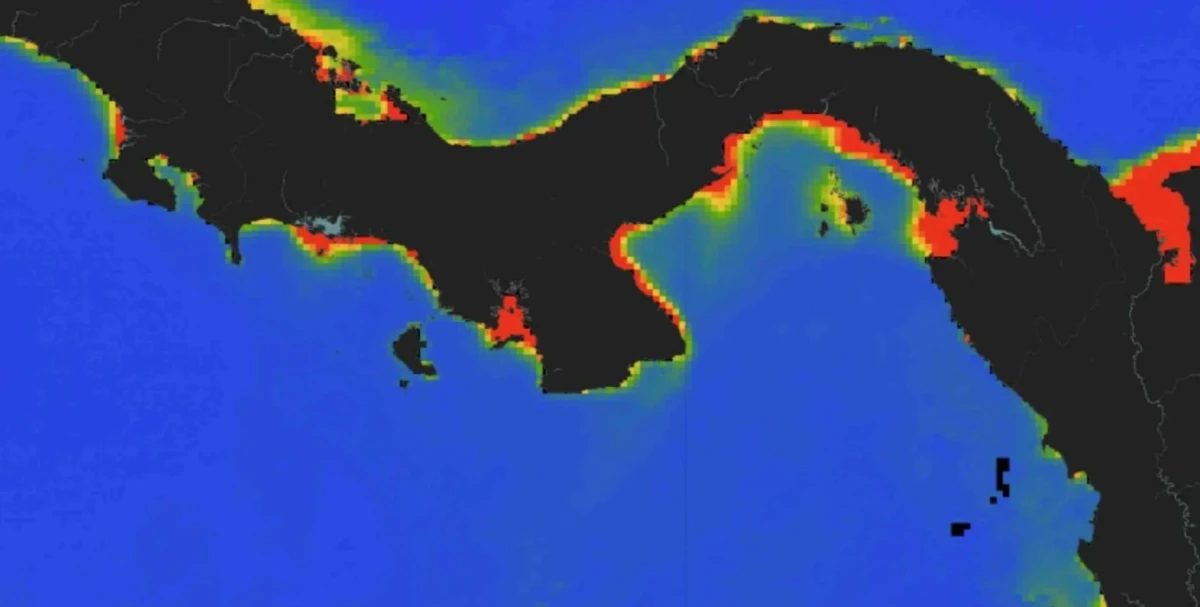
Along the Pacific coast of Panama, waters that typically cool during each dry season have instead remained unusually warm. Aaron O'Dea and colleagues analyzed long-term observations and found that the expected temperature drop and productivity surge did not occur in 2025, as scientists had anticipated, writes Focus.
It is noteworthy that for the past 40 years, this seasonal shift has occurred predictably every year, so its complete absence in 2025 is a clear violation of historical patterns. Experts believe that this disruption indicates a change in the forces driving this cycle, raising concerns among scientists. They are now eager to find out what exactly went wrong and why.
Every dry season, strong northern winds push surface waters out to sea, allowing colder, deeper water to rise to the surface. Scientists refer to this rise as "upwelling" — when deep ocean water reaches the surface and brings nutrients with it.
These nutrients are known to serve as food for phytoplankton, and this algal bloom spreads energy through the food chain. However, this process also cools coastal waters, and fish and corals typically enter Panama in the dry months with additional help. History has made it easy to detect this anomaly, as the seasonal temperature drop occurred by January 20 of each previous year.
However, in 2025, something strange happened: scientists found that the ocean did not cool until March 4, more than six weeks later than usual. Observations show that the cooling period lasted only 12 days instead of the usual two months, and the water did not reach the low temperatures observed in previous years. Water column profiles showed layered warming instead of the usual cold upwelling, leaving no doubt that something went wrong.
According to scientists, the wind strength was not the main surprise, as the gusts that did occur were close to normal. Instead, the frequency of northern winds sharply decreased: they blew 74% less frequently throughout the season. Interestingly, the breaks between winds also lasted longer, reducing the overall impact on surface waters, even when individual gusts remained strong. Once this recurring effect weakened, the cold water stopped reaching the surface, helping to explain the absence of the season.
Earlier studies have shown that seasonal cooling helps many coral reefs avoid the worst heat during El Niño. Without this relief, thermal stress, the heat that pushes corals beyond their limits, can build up faster and last longer. It is worth noting that one warm season is unlikely to destroy a coral reef, but such a trend could be harmful.
Next, scientists plan to determine whether the 2025 disruption was a one-time shock or the first sign of a changing pattern.