
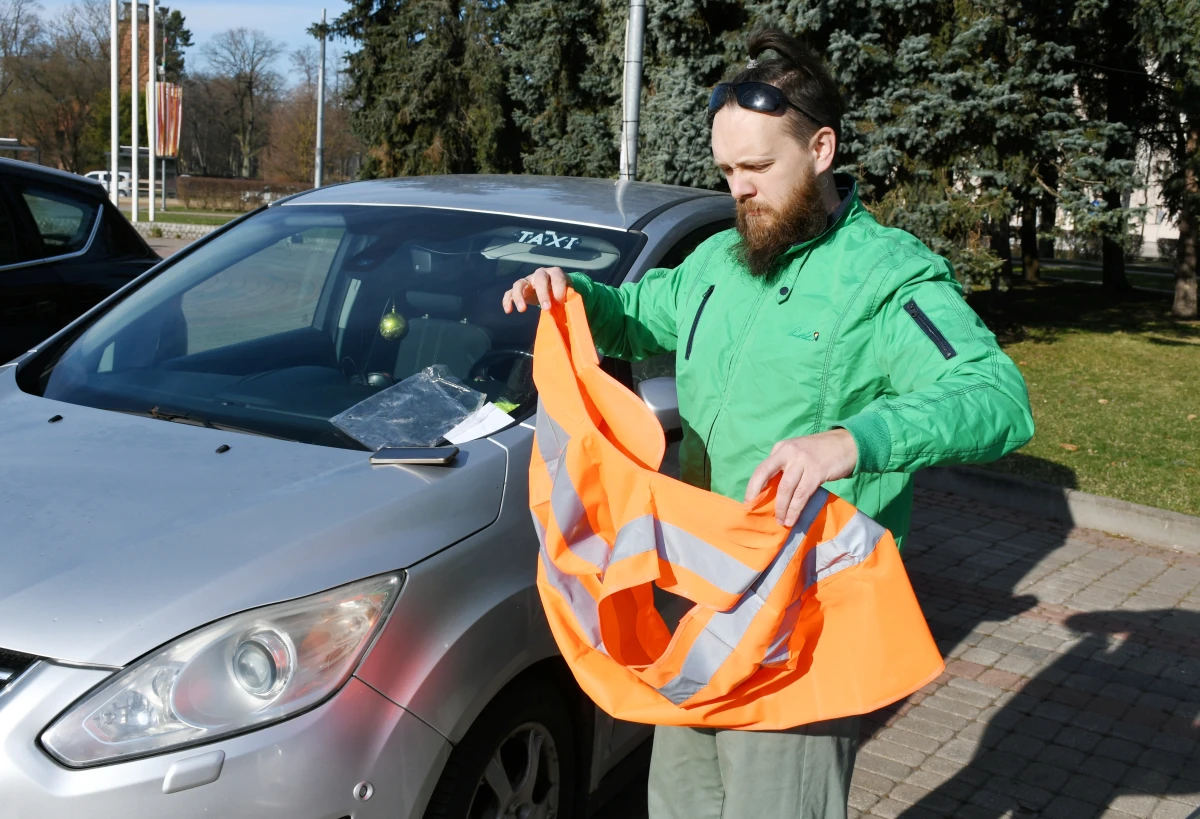
Taxi driver is a profession in Riga with at least a century of history, filled with self-respect and inclined to group solidarity. In a state where it is becoming increasingly difficult to earn a living, the masters of the wheel united and held a mass action blocking central streets and bridges. Motivation: rising fuel prices and dominance, as the initiators of the event expressed it, of a monopoly.
The authorities of the capital have quite kindly allocated a place and time for the protesters, even considering the possibility of stopping public transport. But let’s think – what would happen if a similar procession were organized by... well, I don’t know, bank depositors dissatisfied with the absence of a menu in their native language. They would probably immediately recall state security and hybrid warfare.
From Personal Experience
I am probably the last among my colleagues at our dear newspaper "Today’s WEEK" who finally decided to download an app promising exciting car rides. Because I had relied for too long, firstly, on my own car; secondly, on the capital's public transport.
And here’s the thing: it’s minus 20 outside, the flight time is 7 a.m., which means I need to leave by 5. Everything is ankle-deep in snow, dragging a suitcase from the airport parking is quite a pleasure. In general, I give in and accept the conditions of the taxi app.
"Waiting time – 3 minutes," the electronic device reported, and the dot of the approaching transport glided among our snow-covered nine-story buildings. Well, they didn’t lie.
The return flight also arrived at a wonderful time – around midnight. But then I had to call the driver, who was wondering if he could drive up to the upper ramp of the airport terminal. Usually, such phone-enabled drivers are strictly not allowed there. "There’s no one here," I shouted to him. And off we went.
In total, the trip from Purvciems to the Airport and back cost 40 euros. Approximately half of the price of my car’s stay in long-term parking, not including, of course, money for fuel, as well as time and effort spent on searching and clearing snow...
We Reached the Government
The Cabinet of Ministers of Latvia, despite its extreme busyness, highlighted the taxi issue in the April agenda. The topic was worked on by senior advisor of the Ministry of Transport Ruta Veidlinja.
"Currently, the regulation of commercial passenger transport by taxi and passenger cars in Latvia is developing fragmentarily, accompanied by significant changes in the organization of transport and the increasing role of digital platforms in the industry – websites and mobile applications," the document states.
Now let’s return to what taxi drivers called a monopoly in justification of their protest. This is not the case. The State Road Transport Administration, responsible for licensing carriers, has registered a total of 6 companies providing services through network or mobile applications. Of these, 3 have their legal address in Tallinn!
"BOLT confidently dominates the market," the Ministry of Transport further reports. "The majority of commercial passenger transport by taxi and passenger cars is organized using the services of this provider. In 2024, there were 9.28 million trips made, of which 98% were organized using the BOLT platform. Of the trips organized on the BOLT platform, 90% were in Riga."
From Here On – It’s Up to You: Rezekne Is Left Without Taxis
Of course, the Estonian BOLT does not cancel the traditional private Latvian taxi services: as of April 8 this year, a total of 3,760 special permits (licenses) for commercial passenger transport by passenger cars and 1,885 license cards have been issued in Latvia. It is important to note that in the provinces, companies or individuals who have obtained licenses can only provide services in their region, in the administrative territory. That is, one car can have several permits – in different districts.
The Ministry of Transport emphasizes: "When transporting a passenger to an area where the carrier has not obtained a license for commercial passenger transport by taxi, after dropping off the passenger, the taxi driver is not allowed to pick up another passenger on the return trip. At the same time, the recommendations of the European Commission include the need to reduce the number of empty trips, which affects prices and leads to increased emissions per passenger..."
Although, let’s agree, it would be strange with today’s diesel prices for one of the 8 official drivers from Ventspils to head to "bank" in Jurmala – even if, for example, some summer mass festival were to resume there. It would cost more.
By the way, in Jurmala, over the past 3 years, the number of licenses for commercial taxi services has slightly increased – from 177 to 205. However, in Riga, there is a sharp decline – from 849 to 297. But the worst situation is in Rezekne – there is currently not a single active license!
Moreover, to serve passengers at Riga Airport, formally, a driver must have a permit issued by the Riga Planning Region administration (not in the capital itself!), as our air harbor is located in the Marupe municipality. Of course, in reality, it is impossible to monitor everything...
Some even worked during the times when you could stop a general's "Volga" on the street in the evening, and a soldier would take you home for 3 rubles. So, taxi services with foreign capital – today they exist, tomorrow they don’t...
The State Wants Its Cut
As expected, the government responded to the taxi drivers' protests in its own way. Considering the link of trips through mobile applications to bank cards, the authorities came up with another tax: "The state fee will be set at 2.4% of the total cost of each trip and will be calculated automatically based on trip data."
The government is ready to share: "Of the total amount of the state fee, exactly one-third will be directed to the corresponding municipality, with revenues tied to the trip's departure address. This approach will ensure a direct link between the intensity of taxi operations in the municipality and the revenues received. The municipality's funds can be used to ensure control over commercial passenger transport, including performing the functions of municipal police and transport control, as well as improving urban mobility and road order. At the same time, municipalities will no longer have to perform the administratively labor-intensive function of licensing, allowing them to focus resources on supervisory and control measures.
The remaining two-thirds of the fees will be transferred to the Republican Road Transport Administration."
The Road Transport Administration is already anticipating that it will receive an extra 1,039,360 euros per year.
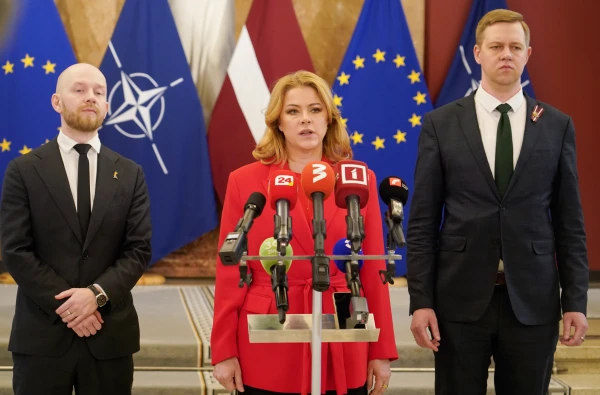
However, a "shared ride," where only fuel costs are covered and no profit is made, will not be taxed. This is stated in the document signed by Minister Aitis Shvinka ("Progressives"). Although this is precisely where all future concerns of taxi drivers began.
IMPUTED TAX
A few years ago, the subject of disputes was the social tax, which taxi drivers do not pay. Now, when obtaining a license card for each vehicle, a prepayment must be made – 130 euros for each month. This leads to the fact that commercial operators choose only monthly permits.









Leave a comment